L'Ambroisie Revisited
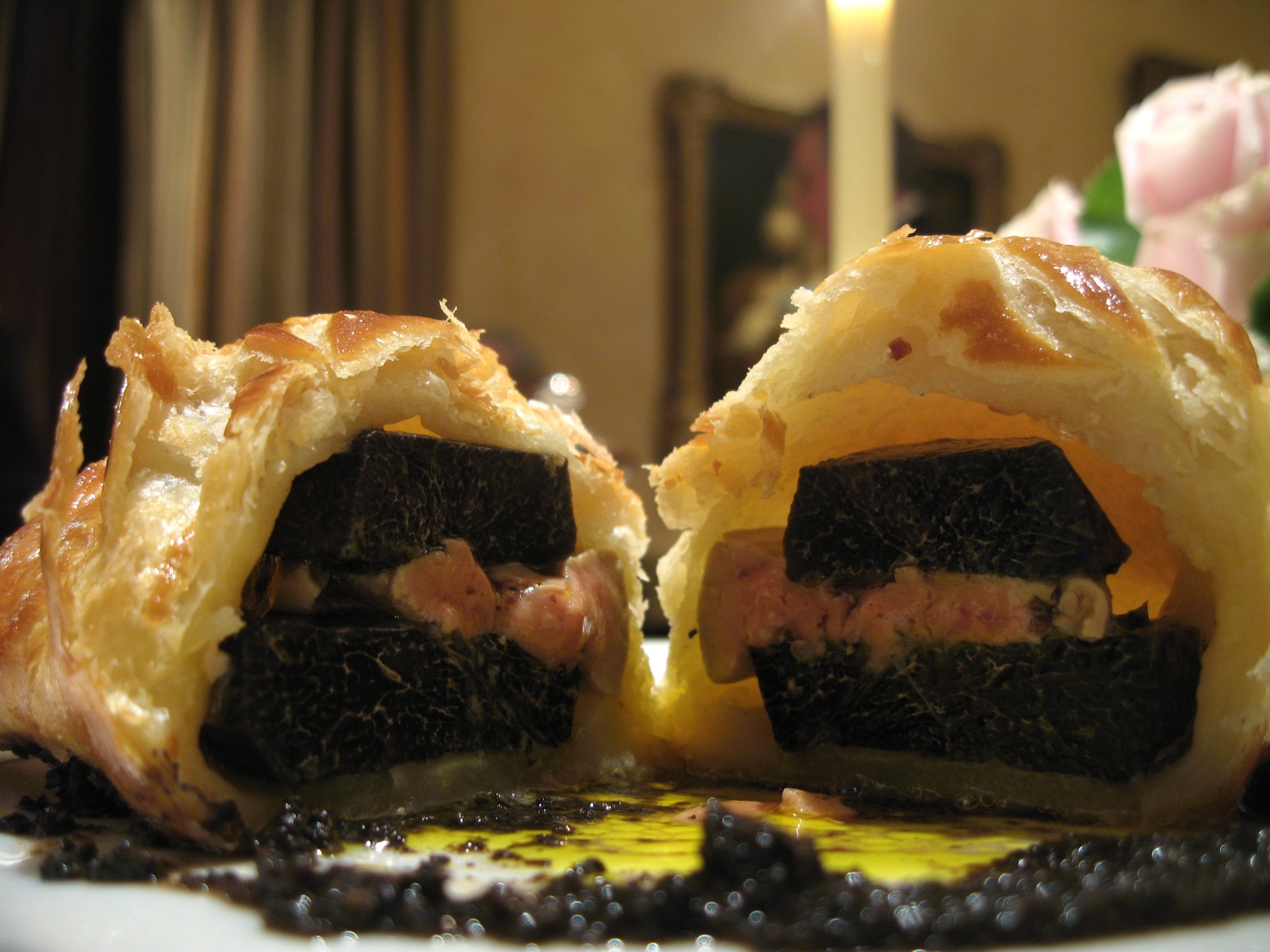
I wrote about L'Ambroisie a few years ago. At that time I wasn't sure what to make of the restaurant. On the one hand, I experienced tremendous difficulty making a reservation. And when I actually showed up the night of my reservation: I was turned away. The staff didn't seem that friendly. On the other hand, once I actually experienced the cuisine, the black truffle feuillantine haunted me for years after. I've since lived in Paris for nearly three years. While the restaurant may have evolved a bit since my first meal three years ago, it was I who changed the most. My expectations of a Parisian restaurant are different now. In the US, a meal at a three star Michelin restaurant is often reserved for special occasions: birthdays, anniversaries, congratulatory dinners and the like. The restaurants cater to the food as much as they do to customer enjoyment: they make guests feel special. Things are different here. Aside from say Guy Savoy, the impromptu gifts and unexpected culinary surprises such as tours of the kitchen, chef handshakes, and take-home goodie bags are severely limited. Ego-stroking is almost non-existent. Here, the fine dining ecosystem is designed for regulars.
Entrance
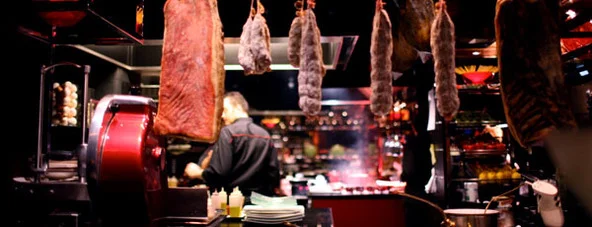
It was with this new perspective that I revisited L'Ambroisie. My second meal was quickly followed by twenty more. A staff that once seemed cold and unfriendly, over time, opened up to reveal warmth and humor, even. It took a few subsequent meals for them to open up, but they're actually quite funny. In all my visits I've only seen Pacaud leave the kitchen once, and it was on a day when I arrived before service had started. Of all the Michelin three star restaurants in Paris, L'Ambroisie is the only one where its chef is always in the kitchen. It is also the only such restaurant that does not advertise. At L'Ambroisie, it is truly all about the food.


I am now certain that this is the finest French restaurant in the world. The indulgent menu, which is updated once per season, consists of only a handful of dishes. There are no weak choices on the menu, ever. Every dish is a speciality. The menu reads very straightforward, each dish described in a single line with all its ingredients listed. There is no tasting menu. There is no lunch discount. There are no exceptions.
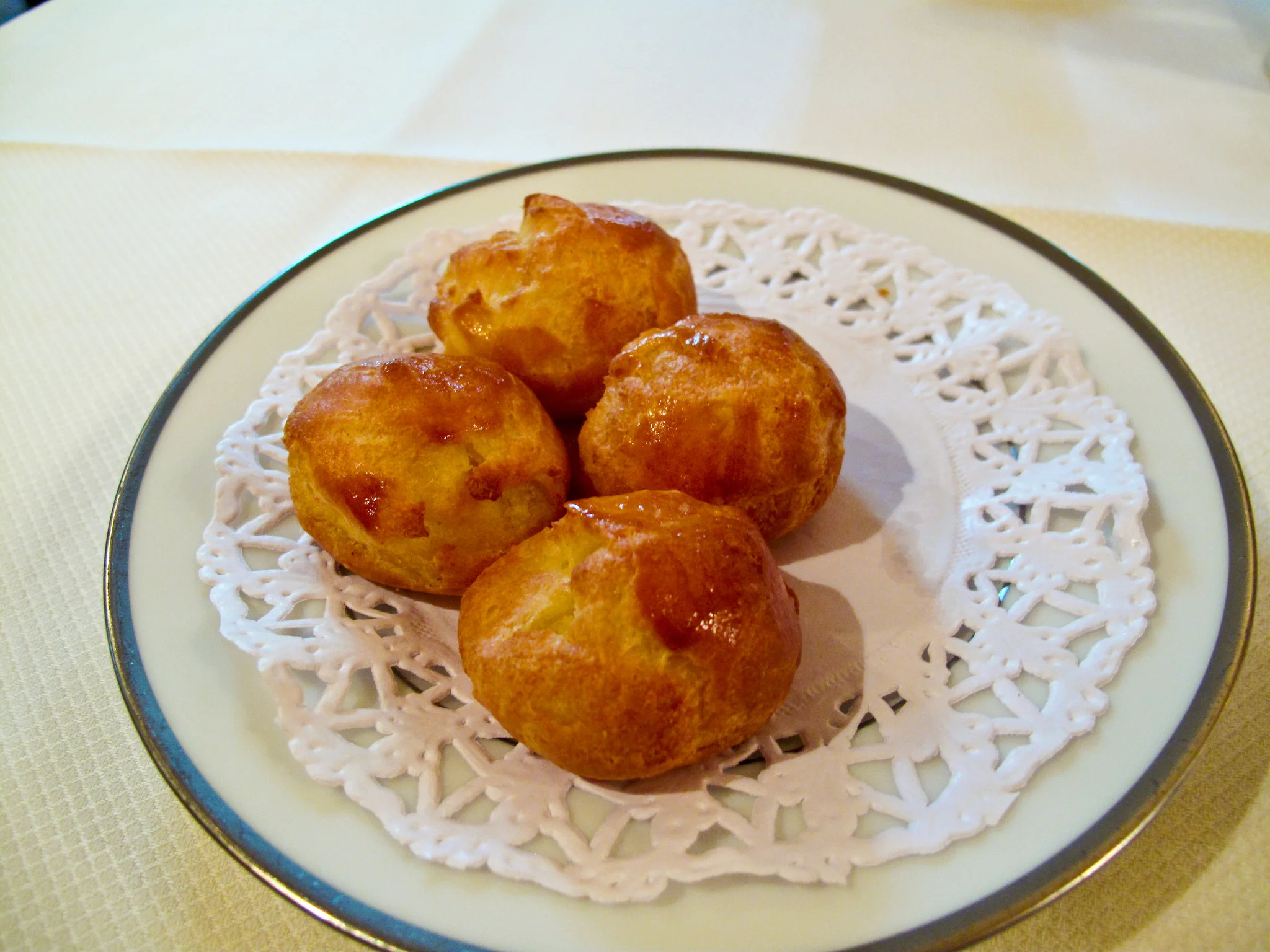
All meals start with a plate of piping hot gougères, a cheesy puff pastry fresh from the oven. Most notably they lack salt. At first I didn't like them; but the more I returned the more I appreciated the delicate cheesy taste without a heavy salting. It's difficult to get tired of these, reinforcing the restaurant's model of catering towards regulars.
Pacaud has a unique ability to craft an inspiring and decadent dish from the simplicity of only two or three main ingredients. Diners will never see decorative flowers or spherified olives served here. The only machines in Pacaud's kitchen are a blender and refrigerator. His cooking philosophy represents the opposite of Ferran Adria's. Pacaud only adds elements that significantly contribute to the dish's flavor. Often making use of radial symmetry, Pacaud turns the ingredients themselves into edible art.
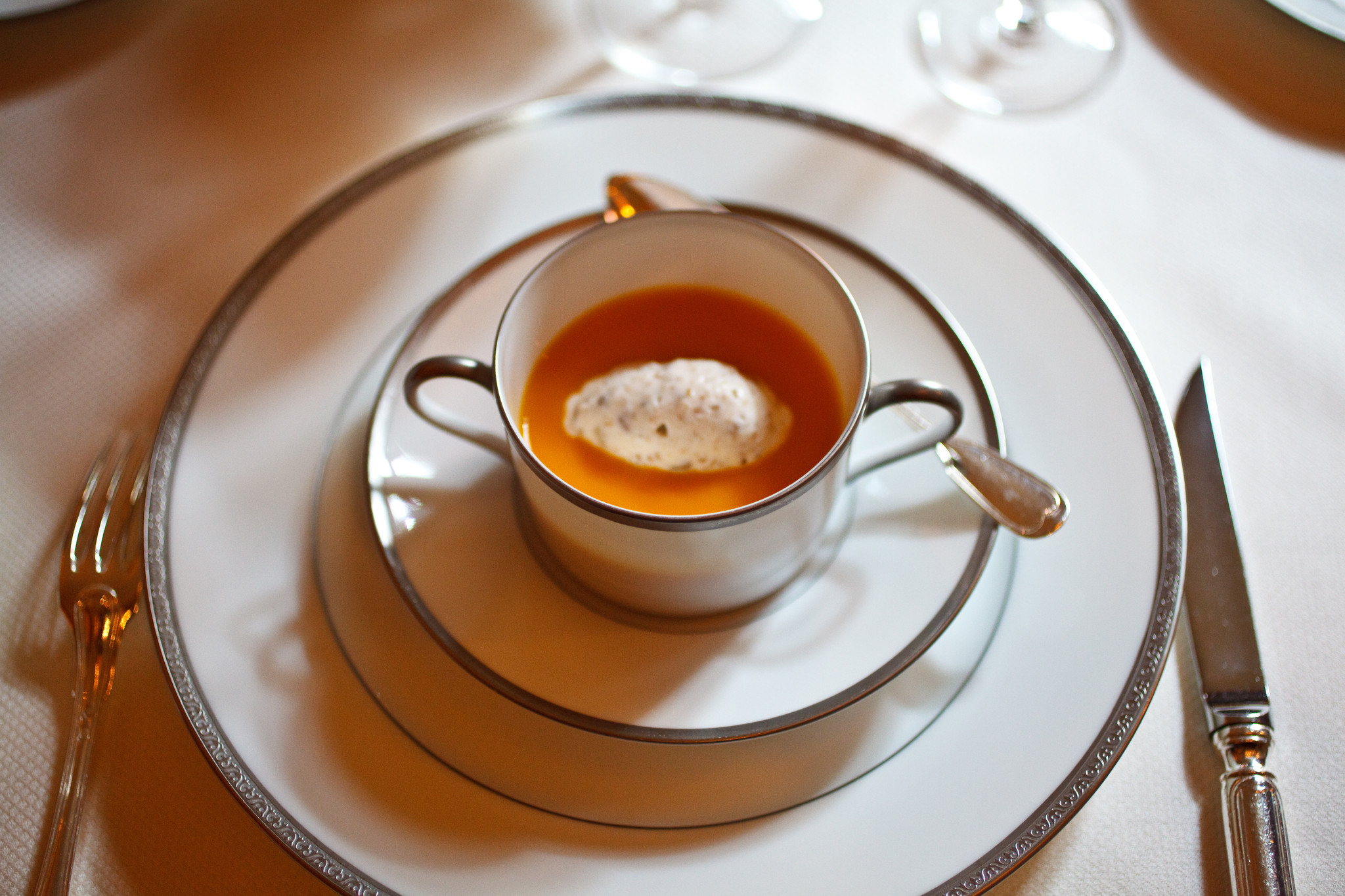
Salmon, dill creme fraiche, potato crisps
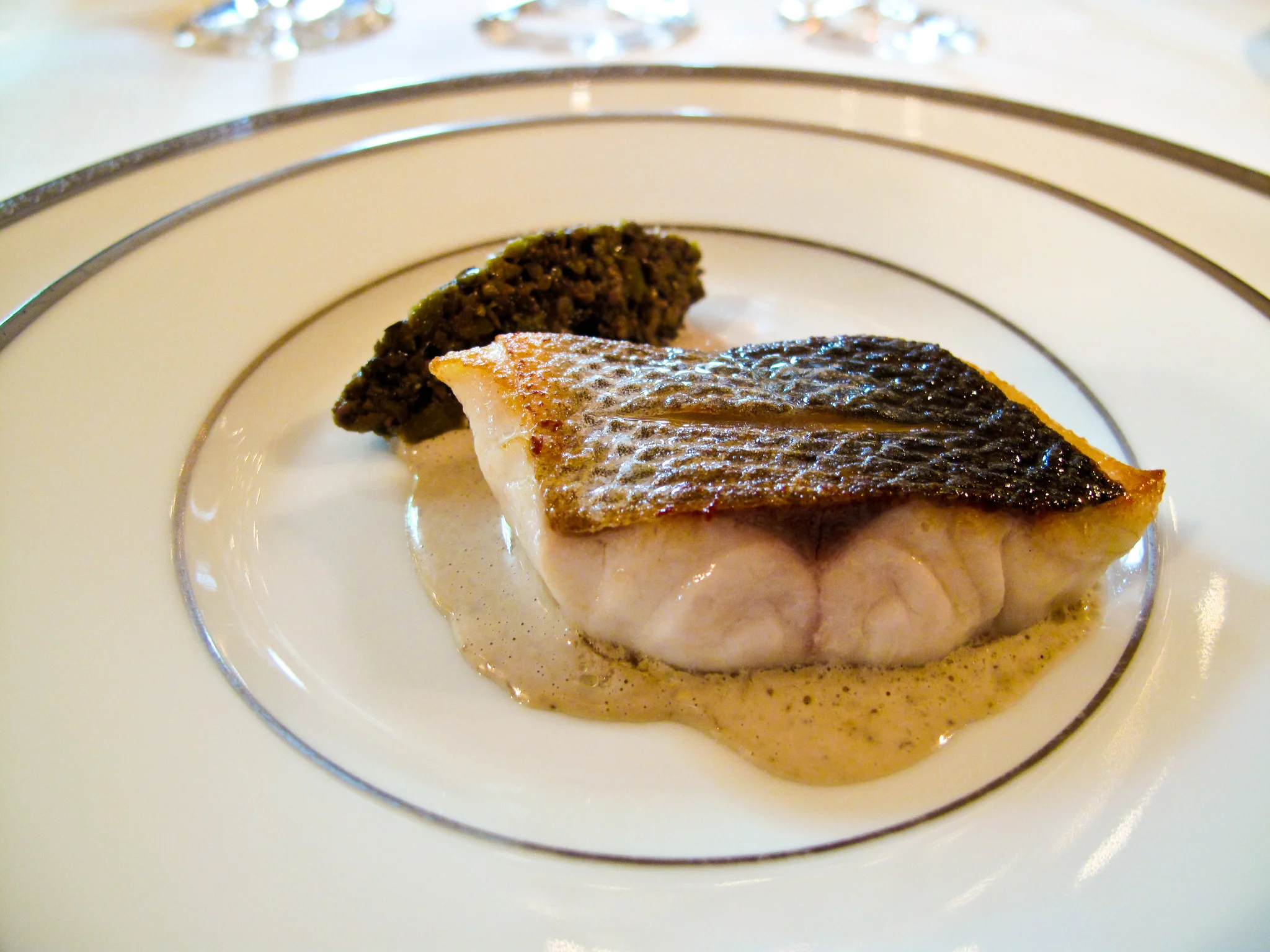
The amuses here are quite simple, either a single filet of fish or cream-based soup. The olive tapanade that accompanies the sea bass is exceptional. I've only experienced it once. The olives were fresh, neither acidic nor sour. They tasted more like sweet fruits. My friend Ulterior Epicure makes note of the strange geometry of the soup bowl with its right-angle base: it's a bit of a challenge to eat this soup as holding the spoon at any angle leaves much of it behind.
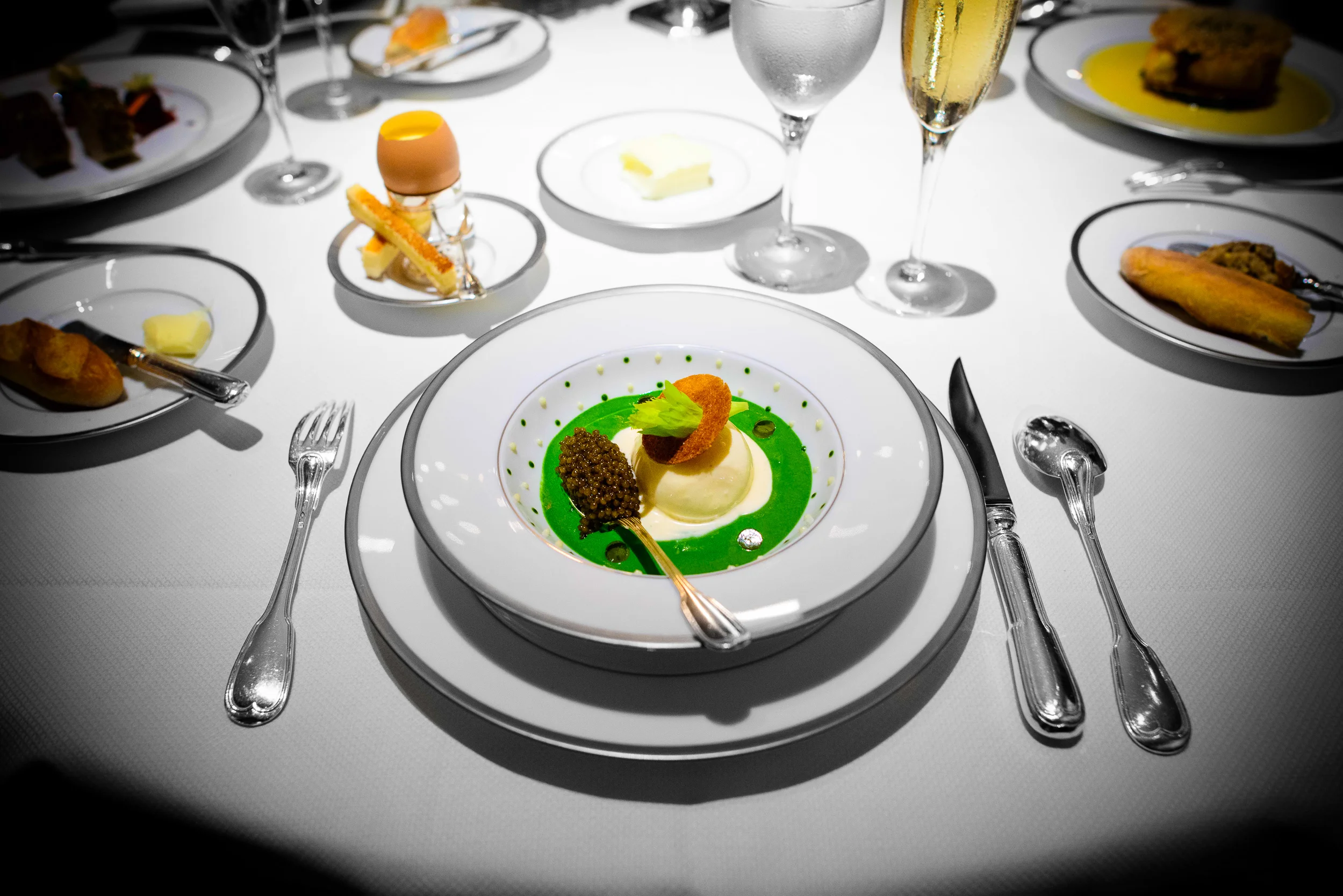
Chaud-froid d'oeufs mollets au cresson, asperges vertes et caviar osciètre gold
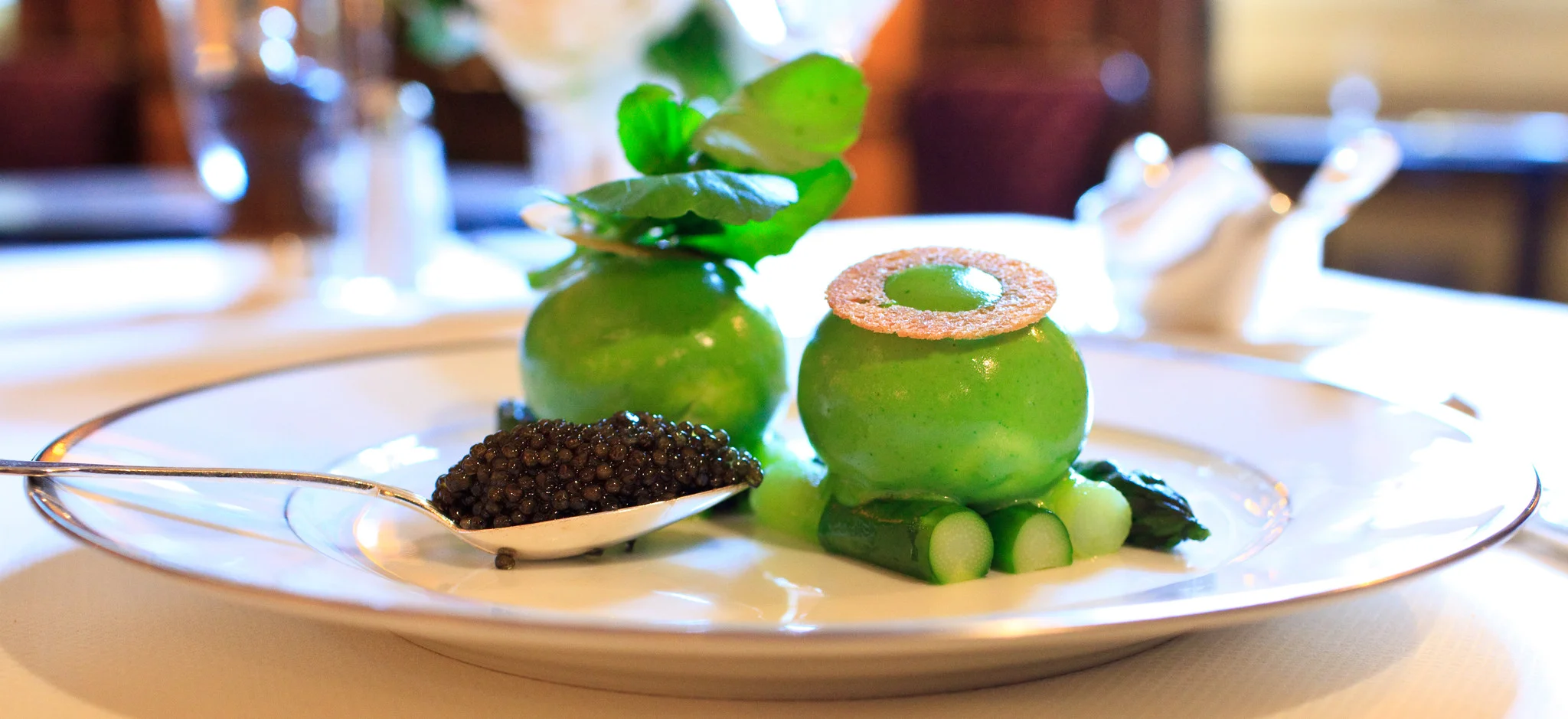
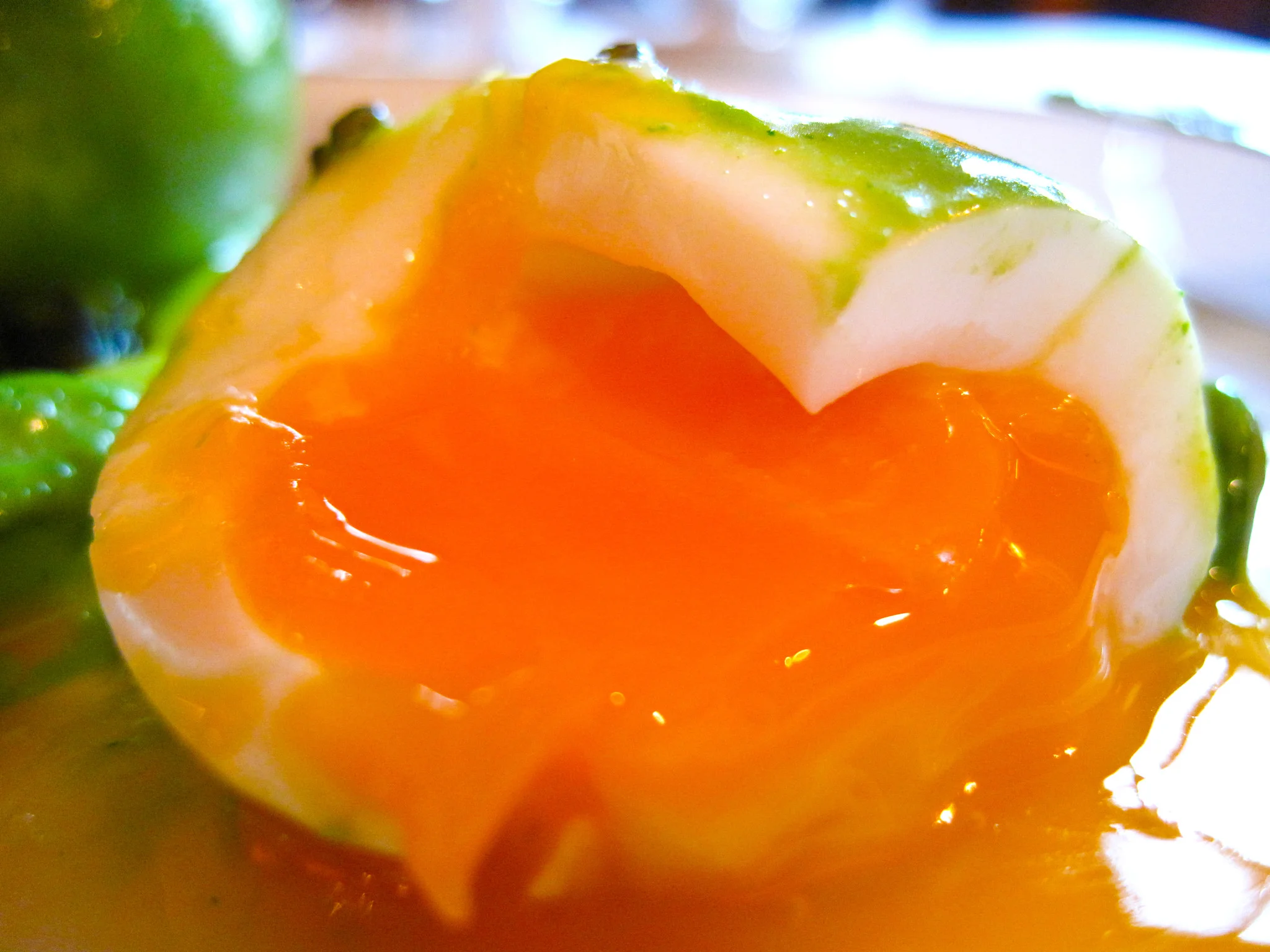
Chaud-froid d'oeufs mollets au cresson, asperges vertes et caviar osciètre gold - Two lightly poached eggs garnished with asparagus, watercress, and golden ossetra caviar. The cold briny caviar cuts right through the warm and thick yolk, leaving behind a constantly changing whirlwind of flavors up until the last bite.
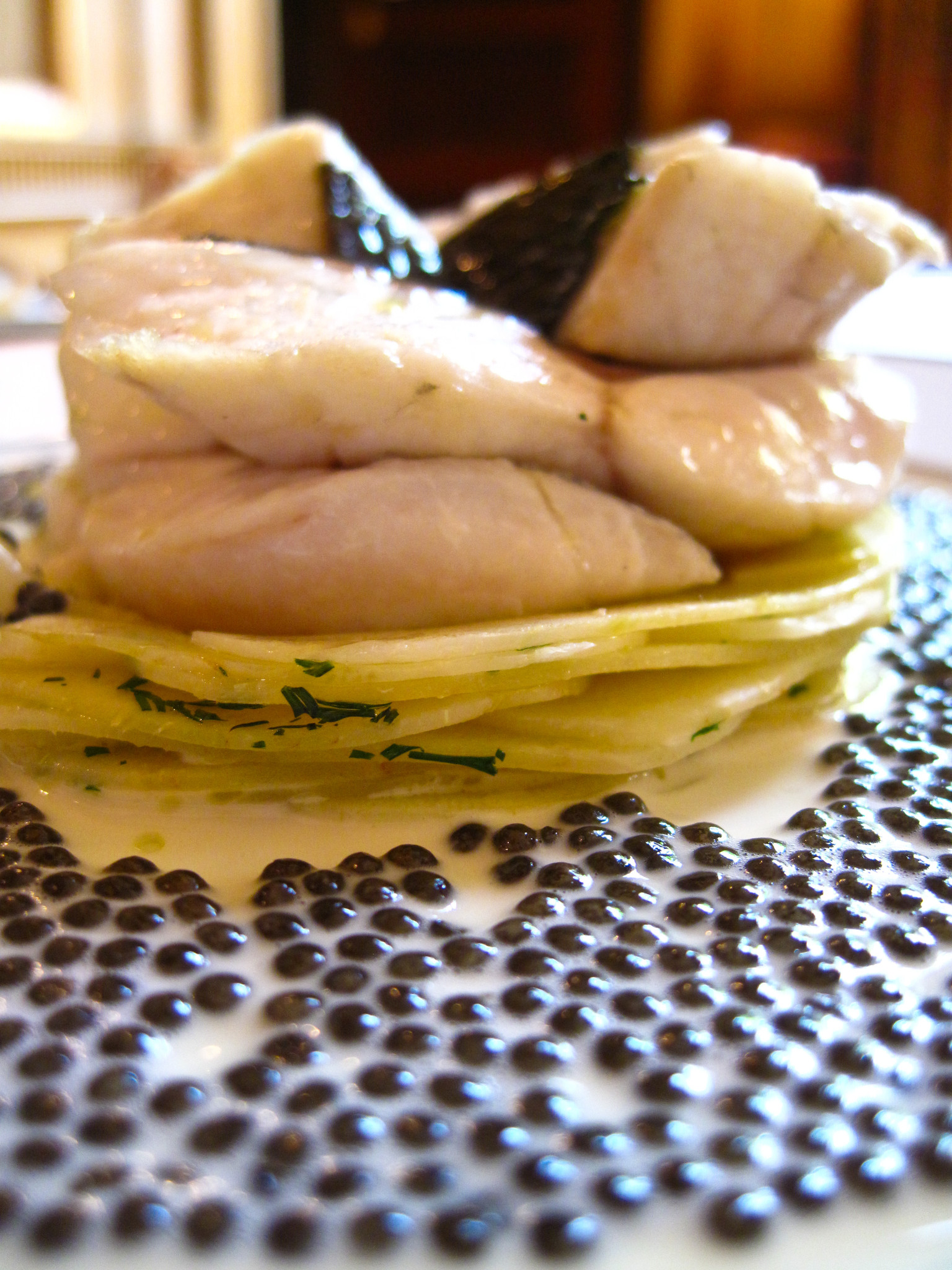
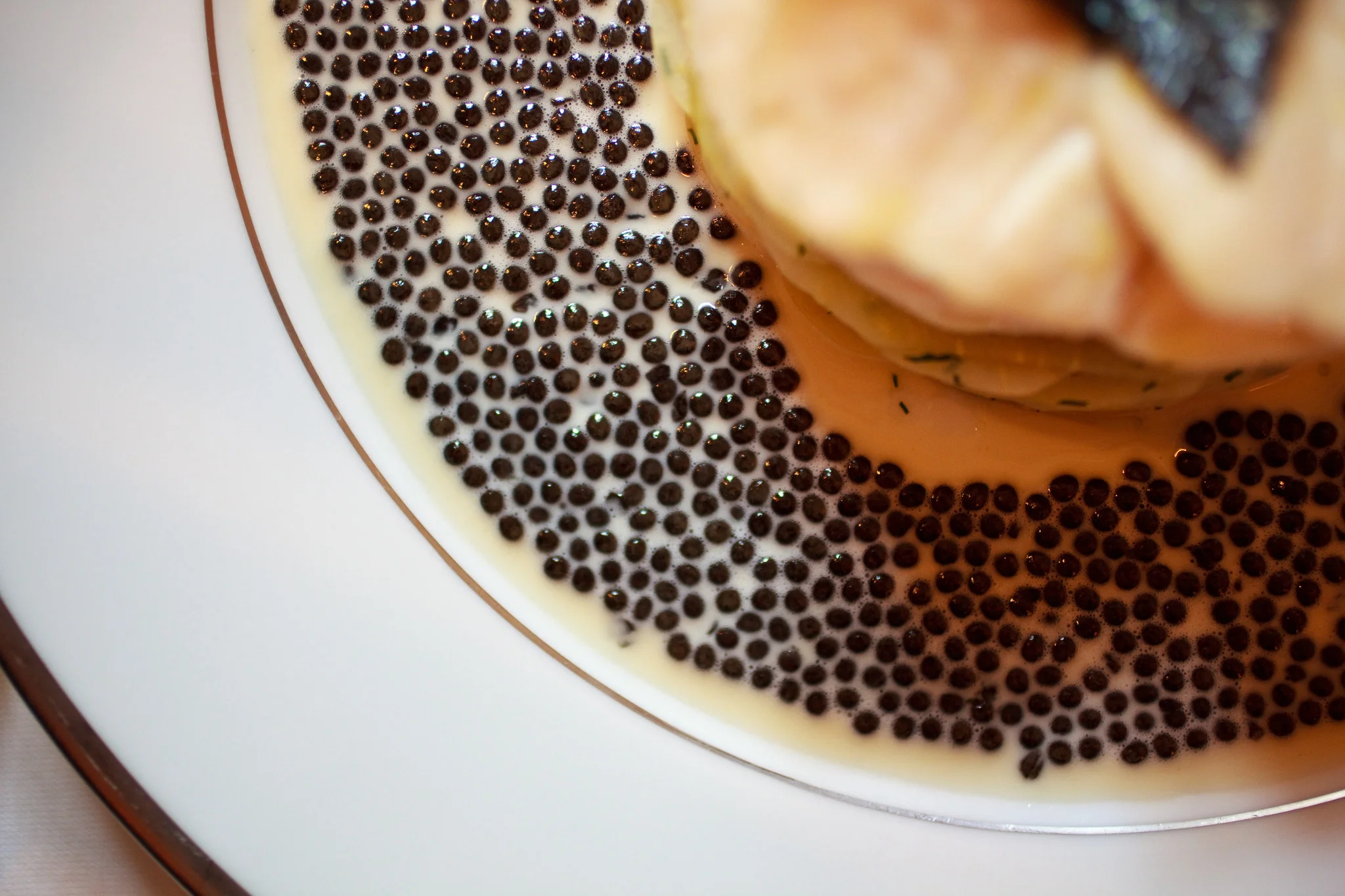
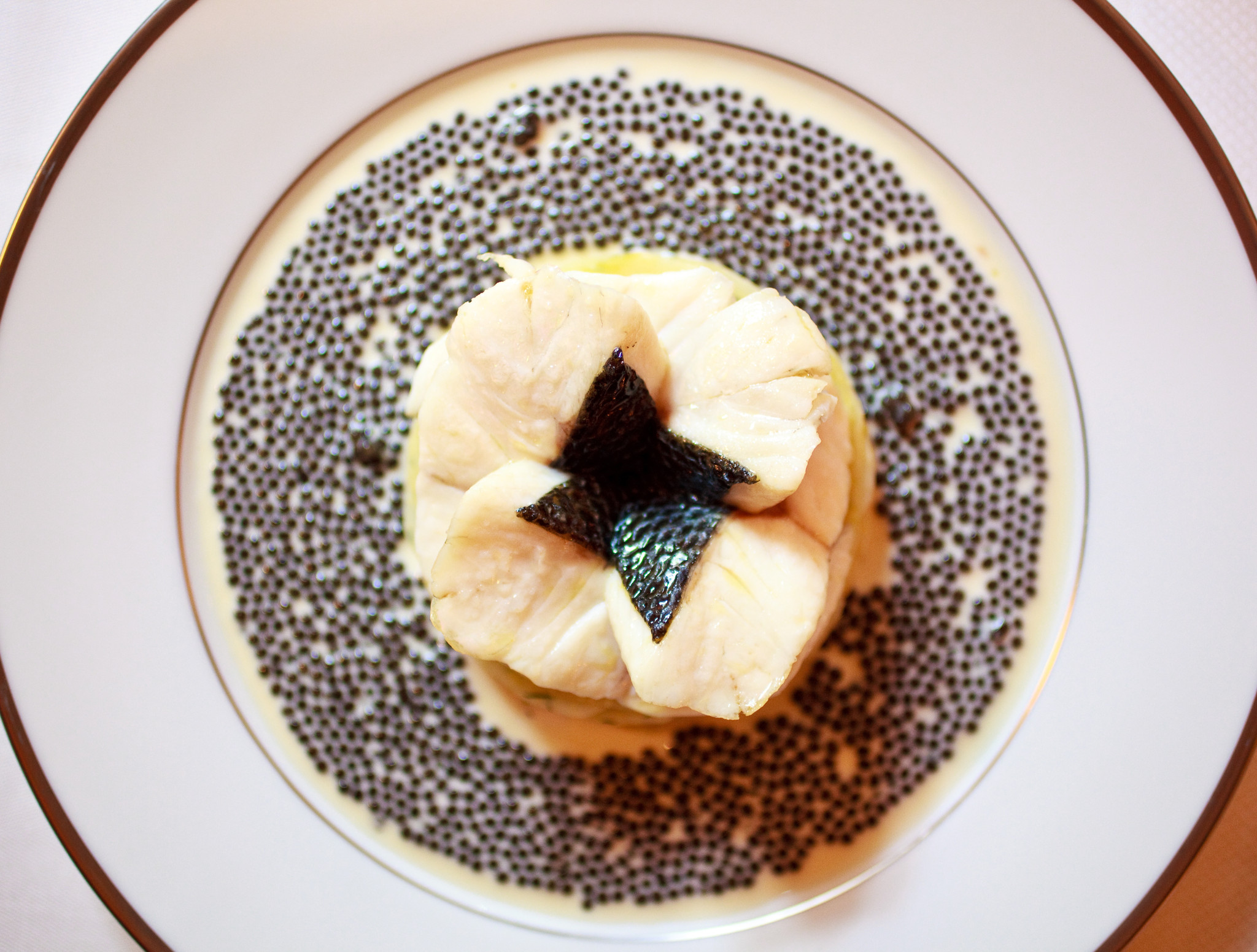
Escalopines de bar à l'émincé d'artichaut, nage réduite, caviar osciètre gold - Four wedges of sea bass, their skins interlocked in radial symmetry atop a bed of acidulated artichoke and surrounded by a moat of caviar. The changing sweetness of the artichoke actually makes the caviar taste sweet, a melange of sweet, salty, acidic, creamy, warm, and cold all mixing together. The sea bass is just lightly cooked, its creamy texture accentuates the creamy broth. This is the first time I'd tried warm caviar. It was amazing how the caviar didn't disintegrate in the heat, each pearl held its shape and texture like delicate tapioca. Aside from visually incredible, this is one of the most delicious dishes I have ever tasted.
Feuillantine de langoustines aux graines de sésame - Soft and supple langoustines sandwiched between a sesame wafer and pooled with a gritty sesame sauce. The sesame sauce offers a tannic texture that excentuates the delicate langoustines. The thin wafer adds a light crunch. These are the best langoustines I have ever tasted in my life, each bite softer and richer than the previous.
Supreme de volaille de Bresse aux morilles
Supreme de volaille de Bresse aux morilles - A lightly cooked Bresse chicken filled with morel mushrooms and a mix of a white wine cream sauce and jus. The chicken is ultra-moist, the sauces are more to compliment the spongy texture of the squeaky morel mushrooms.
Morel Mushrooms
Morilles - On one special day, at the height of the short three weeks of morel mushroom season, I ordered a simple bowl of mushrooms and cream.
Daviole de foie gras aux morilles
Daviole de foie gras aux morilles - An off-menu classic French dish guaranteed to send chills down any foie gras lover's spine. A generous medallion of whipped foie gras atop bed of morel mushrooms and cream. Pacaud is able to serve hundred year old dishes without the stale and boring feeling that often accompanies them. The flavor of the hearty foie gras jumps off the plate in excitement. It is both buttery and airy, its cooler temperature blending with the warm mushrooms in a dance of chaud-froid.
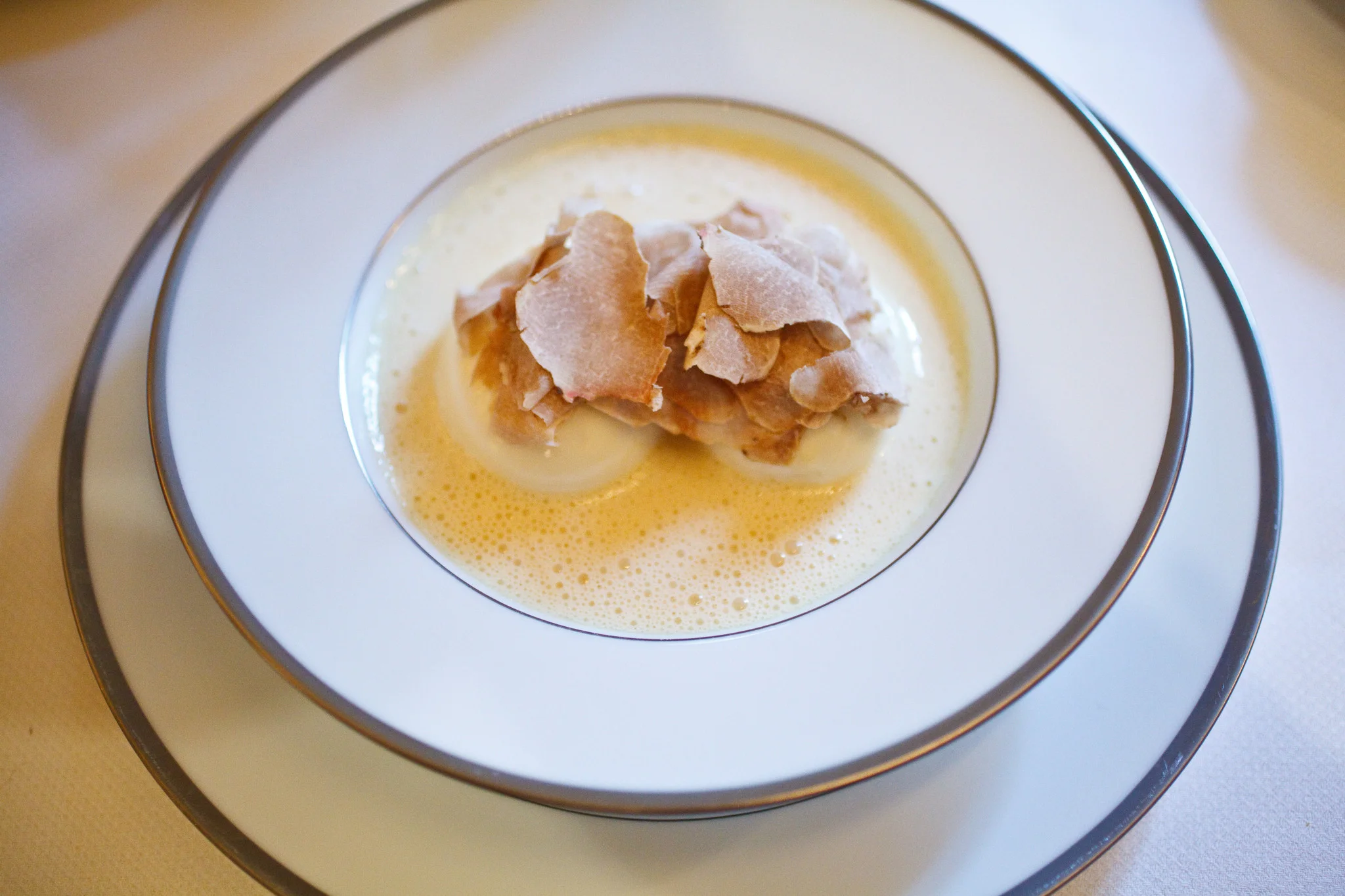
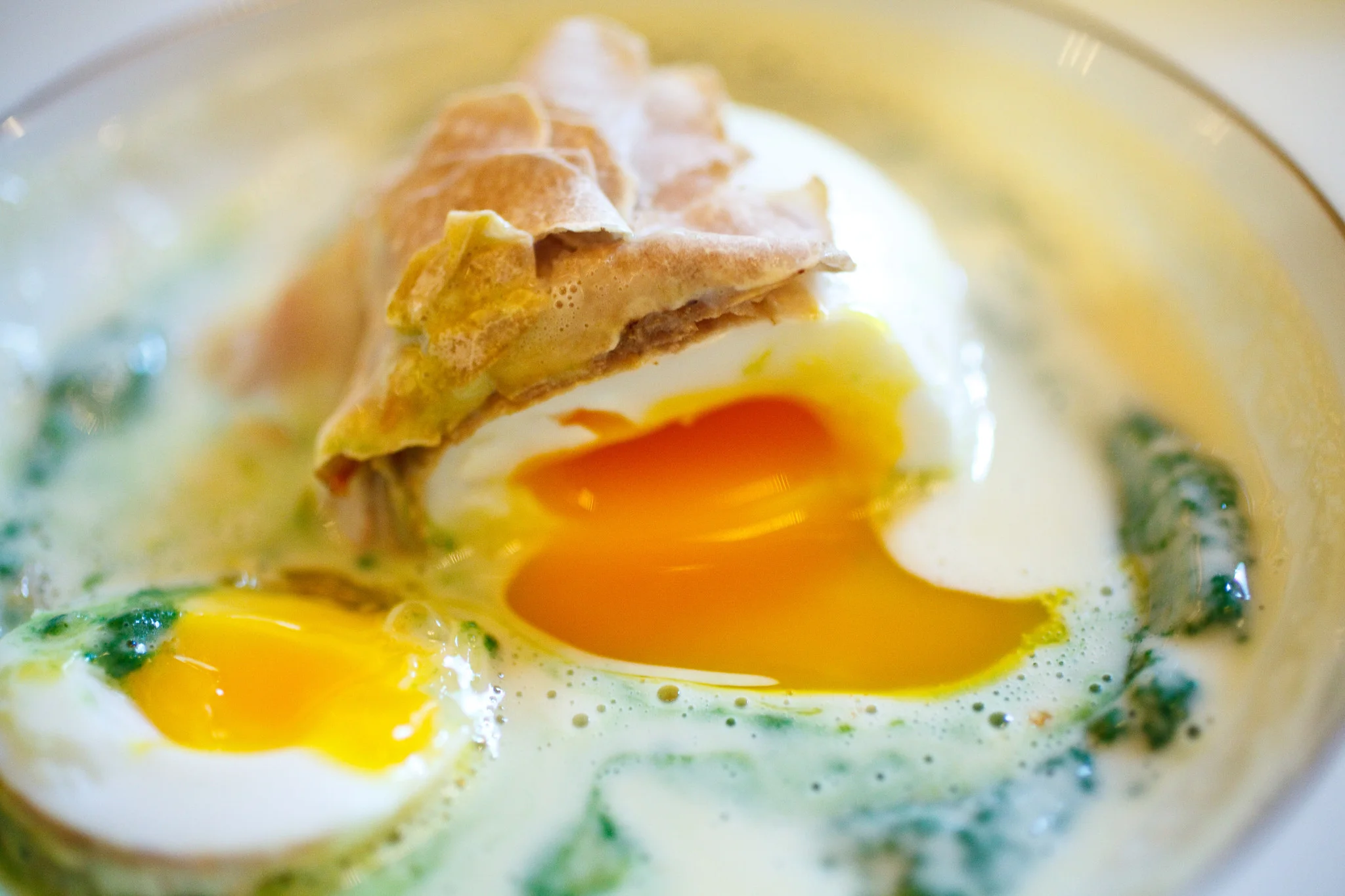
Oeufs mollets à la florentine, râpé de truffle blanche d'Alba - Two poached eggs in a pool of spinach and cream, crowned with potent white truffles. White truffle and egg is nature's generous gift to the palate. Pacaud understands the magic of the egg, how its incredibly versatility is the foundation for most French classics. It was amazing how the warmth of the egg incubated the truffle's aroma, making its scent permeate throughout the entire dining room. Pacaud reminds us that a simple combination of a handful of ingredients, each executed perfectly, can sometimes create the most intoxicating flavors in the world.
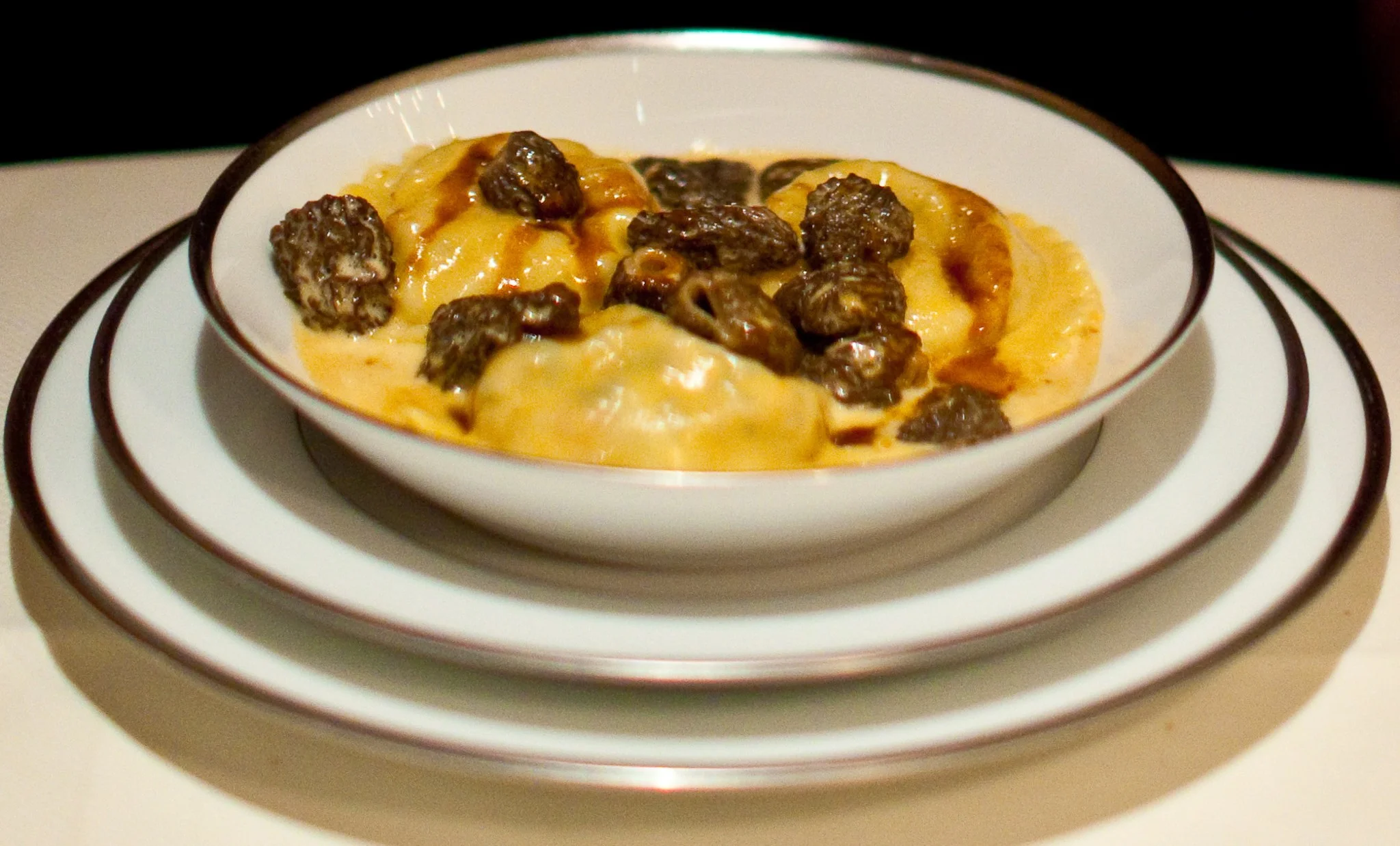
Raviolis de Homard aux Morilles - Layers of generous lobes of folded raviolis, filled with lobster, and garnished with chunky morel mushrooms.
Corolle de noix de Saint-Jqcques et brocoli à la truffe blanche d'Alba, Overhead
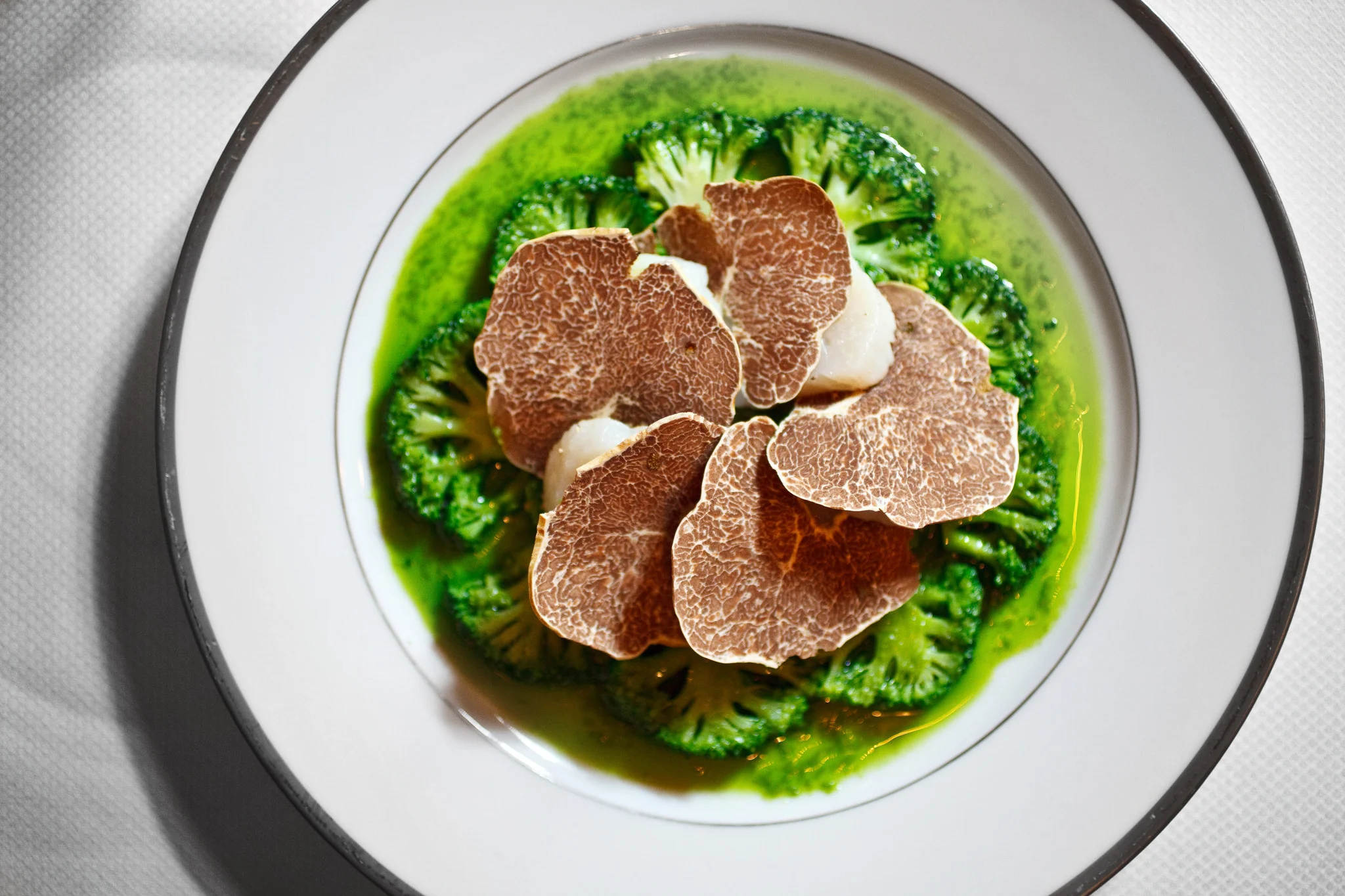
Corolle de noix de Saint-Jqcques et brocoli à la truffe blanche d'Alba - Perhaps the real reason Pacaud never leaves the kitchen is because his halo would scare away diners. This is one of the magical dishes of L'Ambroisie, a dish so seemingly simple yet brilliantly executed in form and flavor. Branches of bright green broccoli supporting layered wedges of scallop medallion and white truffle. It is impossible to not like broccoli after trying this dish. What is most amazing is how the broccoli actually makes the scallop taste sweeter. The paper-thin layer of clarified butter serves as the binding agent holding all the ingredients together. This dish is served at room temperature which allows for the broccoli's natural flavor to be fully enjoyed.
Navarin de homard et pommes de terre de Noirmoutier au romarin
Navarin de homard et pommes de terre de Noirmoutier au romarin - Chunks of Breton lobster with potatoes and rosemary. This lobster is served consistently firm, a function of the firmer texture of France's northern lobsters. Unlike the sweet Maine lobsters, to which I was used to, these bright red tails are less sweet and more meaty. They even border on dry. The real highlight of this dish, however, is the sauce reminiscent of a thick seafood bisque.
Noix de ris de veau à la grenobloise, purée de persil aux graines de moutarde
Noix de ris de veau à la grenobloise, purée de persil aux graines de moutarde - A giant lobe of sweetbread punched with rosemary and served with a parsley and mustard puree. This is a very filling dish. The light cooking of the sweetbread makes it develop a texture like wet tofu, its creaminess barely holding form. The rosemary highlights the dish's earthiness. I did not like the bitter puree by itself, but when eaten in combination with the creamy meat, it somehow cuts through the fatty mouth feel lending to excellent balance.
Dos de saint-pierre poele, maraichere de coquillages a la citronnelle
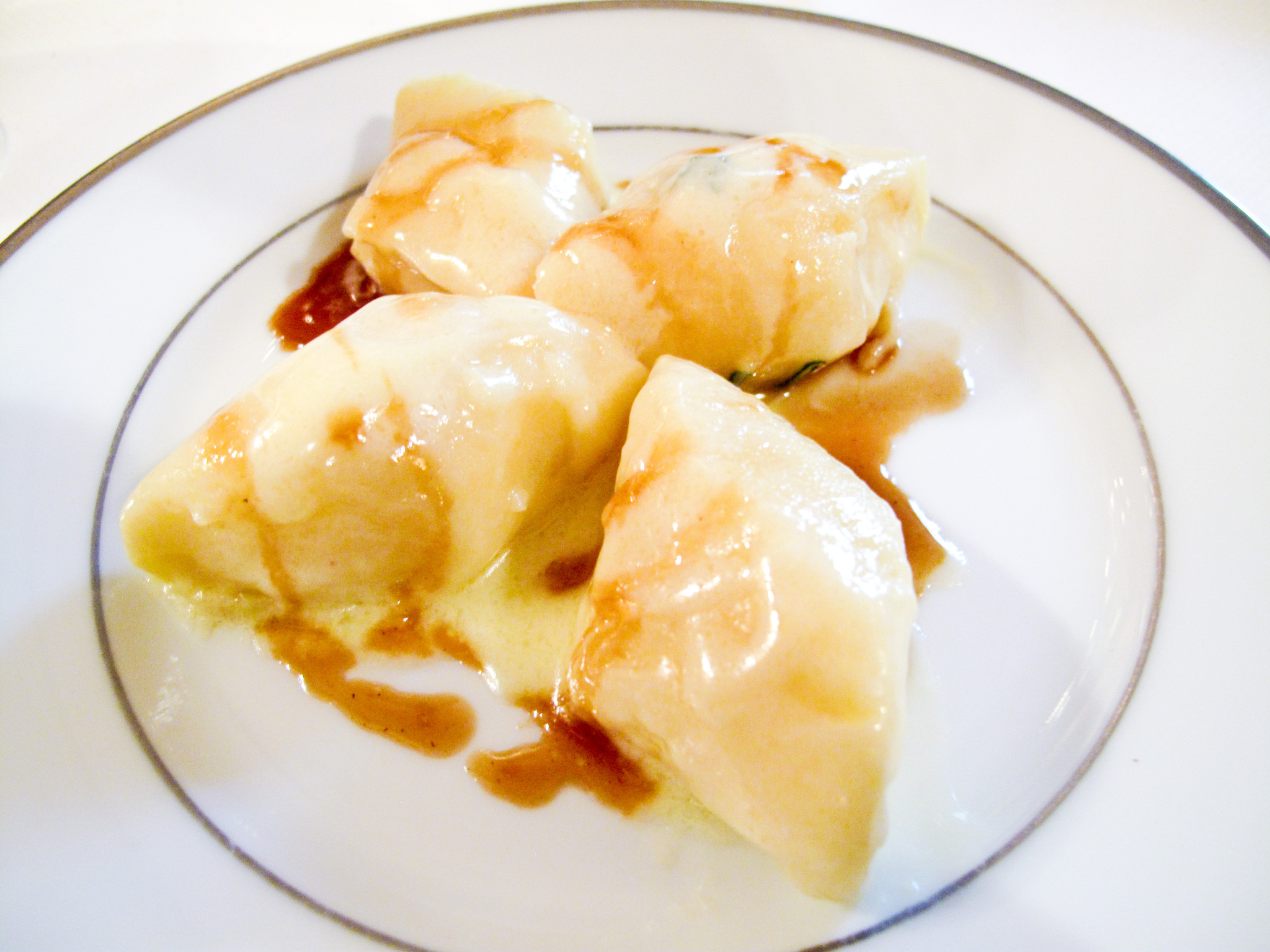
Dos de saint-pierre poele, maraichere de coquillages a la citronnelle - Potentially the lightest fish dish on the restaurant's menu. A lightly seared filet of John Dory served with sauteed vegetables and lemongrass.
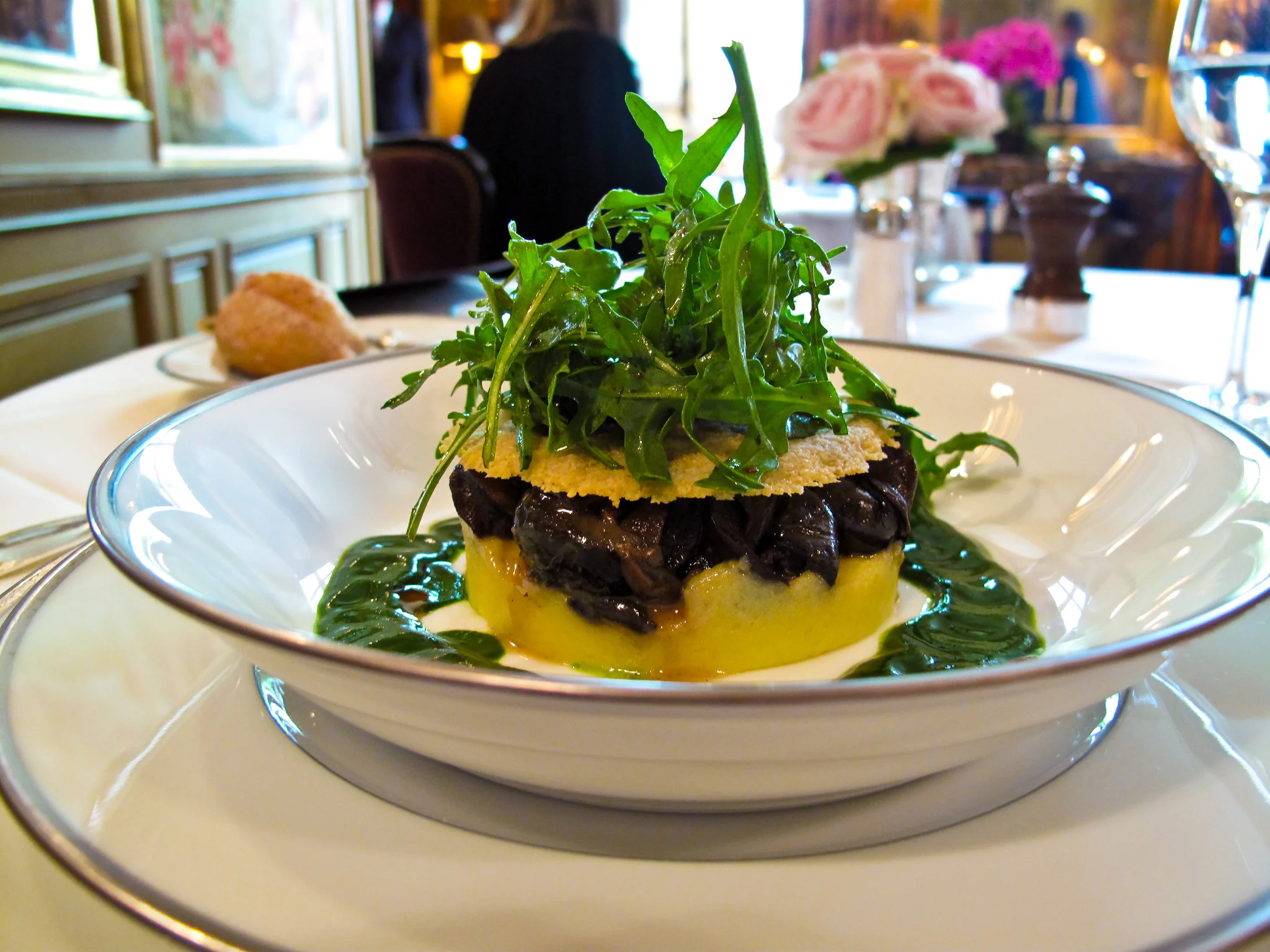
Parmentier d'escargots a l'ail des ours, salade de roquette et Parmesan - Thick snails, a thin wafer of parmesan, and rocket lettuce.
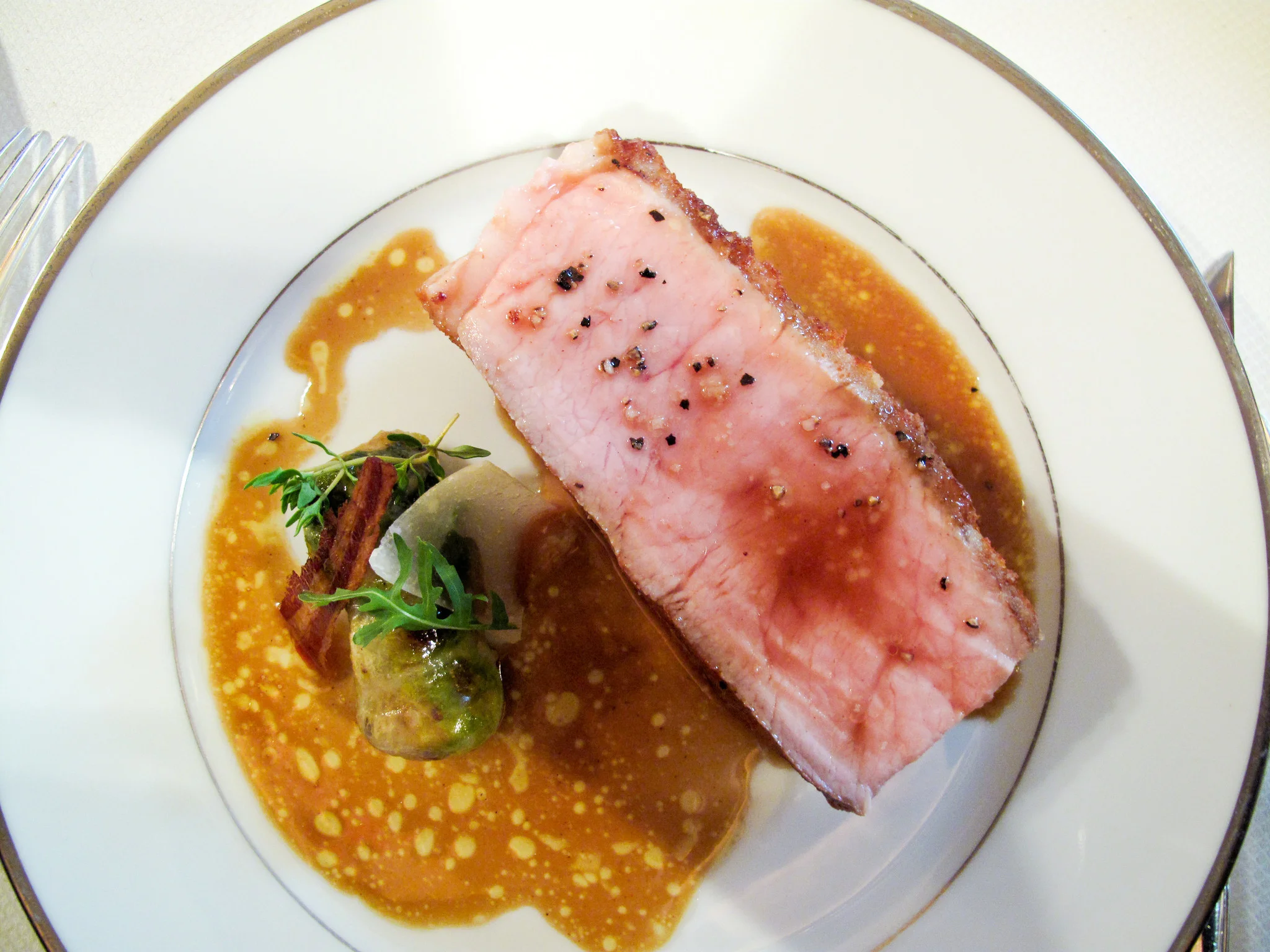
Cote de veau double, coeurs de sucrine braises au jus, gnocchi - A beautifully pink filet of veal served with potato gnocchi. The veal's thin layer of fat was seared into a crisp locking in the moisture while cooking. This left a smooth and uniform texture throughout. This dish was generously salted. This was the finest filet of veal I have ever tasted.
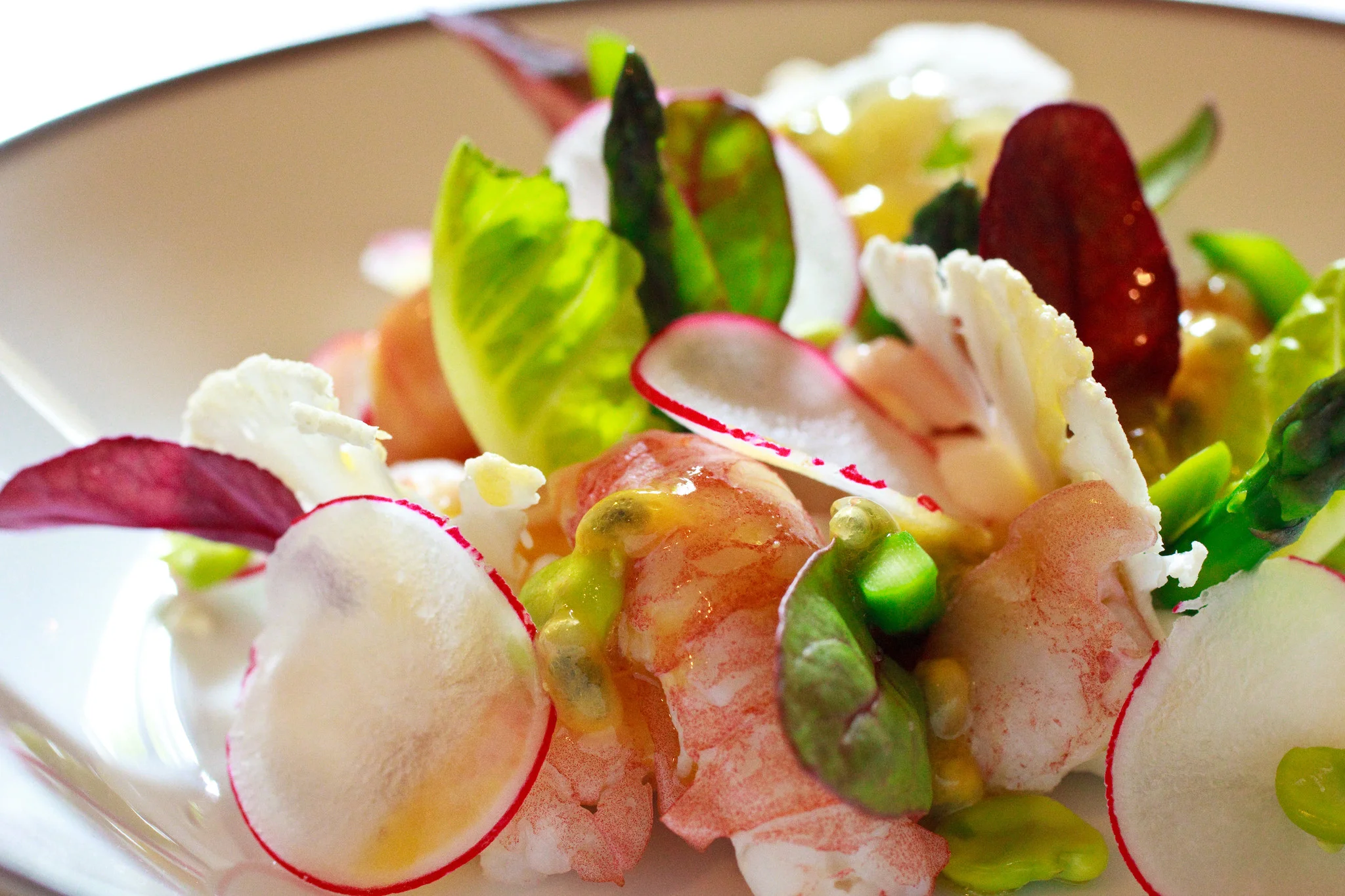
Salade d'écrivisses, mousseline de chou-fleur, vinaigrette aux fruits de la passion - Crayfish salad with a cauliflower mousseline and passion fruit vinegar. This is the lightest dish on the L'Ambroisie menu. It's also the only dish I don't care for. The dish is served very cold, and reminds me of airplane food. From a menu of all-star dishes, this is the oddball. It doesn't belong. But then again, I suppose every menu should have one ultra-light salad option.
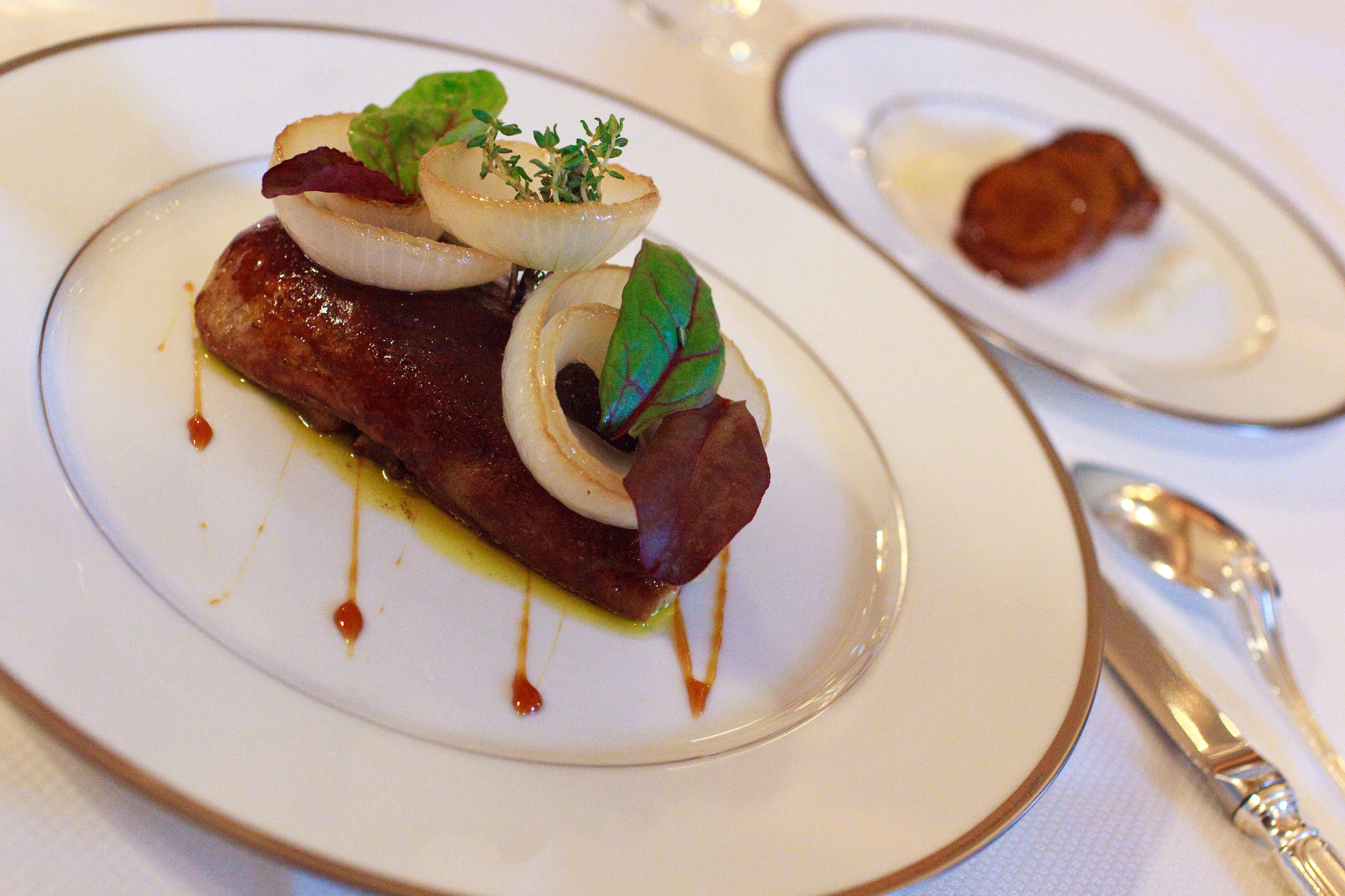
Lobe de foie gras de canard roti, navets primeurs a la reglisse - A lobe of duck foie gras with spring turnips cooked in liquorish. It's amazing how the flavor of foie gras changes so dramatically when served cold in a paste, or cooked as a filet. Here the fatty oil oozes out, tempered by the cool sweetness of the liquorish. It's an exquisite dish, though quite heavy.
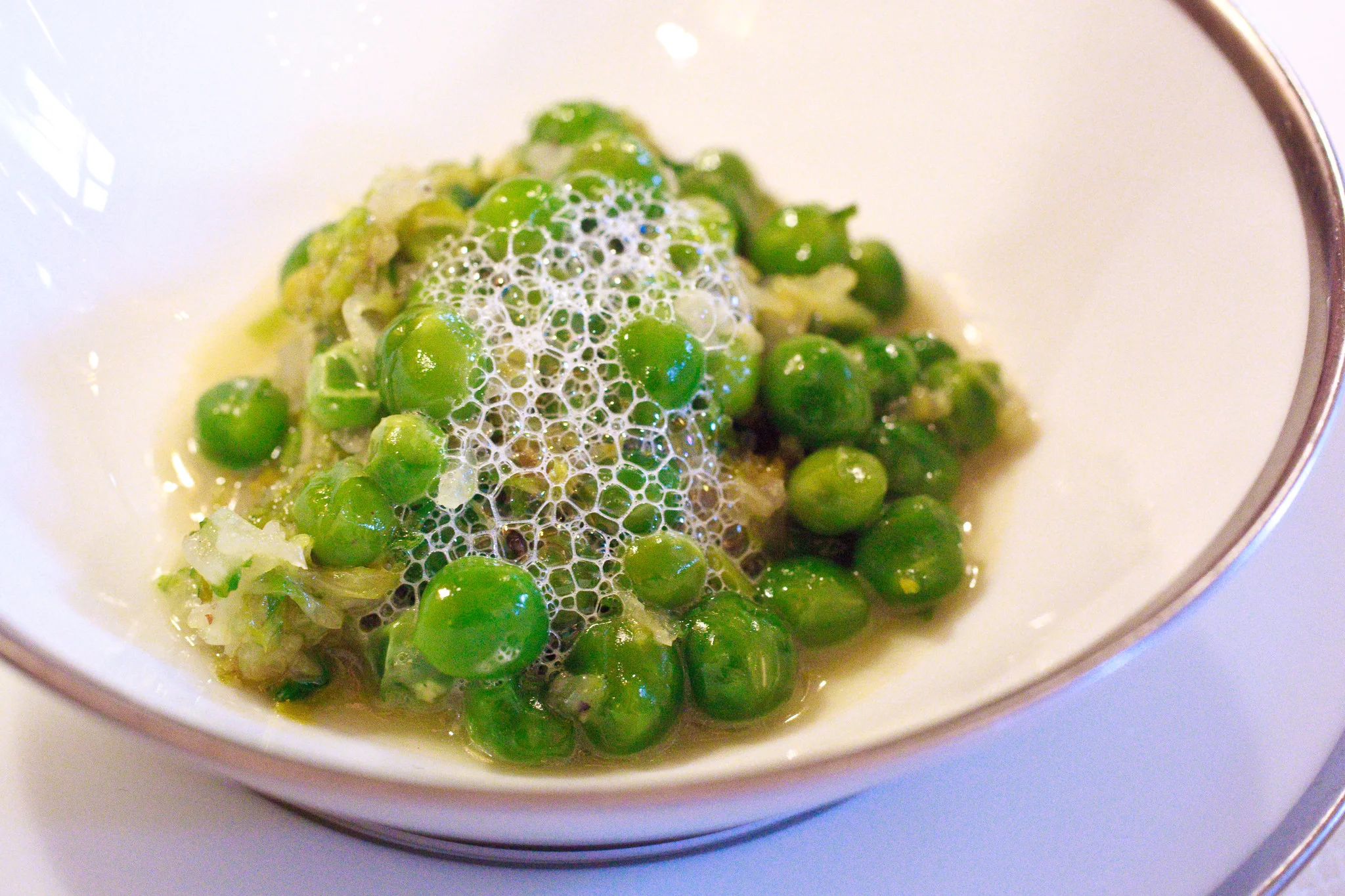
Petit pois - Sometimes, as in the case of these lightly sauteed peas, nature speaks for itself. Pacaud served this dish by itself during the height of spring when peas were at their sweetest.
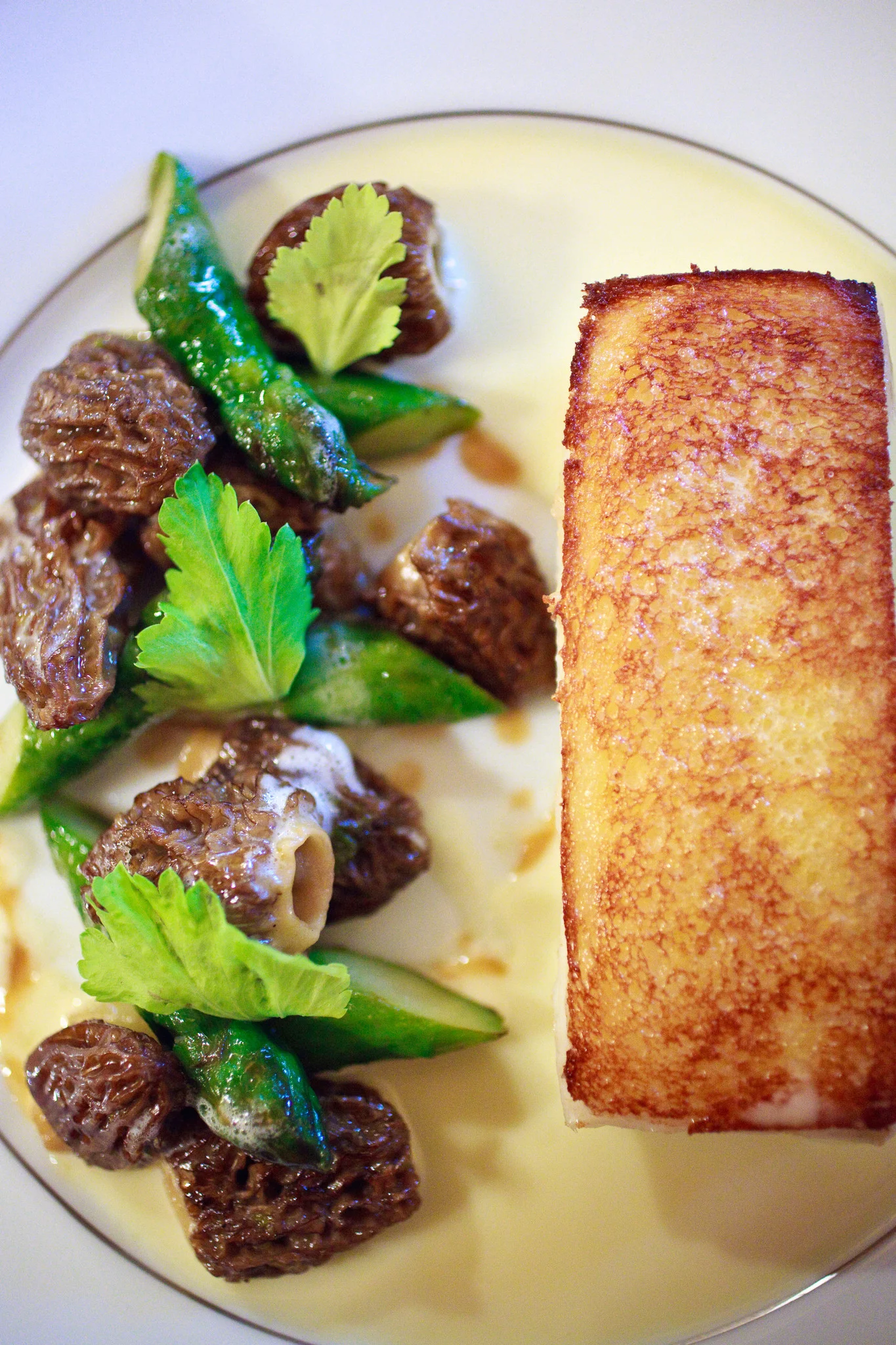
Viennoise de sole meunière, étuvée d'asperges et morilles au vin jaune - A thick filet of juicy sole topped with one of France's most delicious and simple sauces of butter, lemon, and parsley. Some say it was this dish that seduced Julia Child and introduced her to fine French cuisine. Here Pacaud adds a thin layer of breading to increase absorbency, and adds a touch of poetic freedom by including the parsley alongside the morel mushrooms rather than garnishing the fish itself. The net effect is the most incredible piece of cooked fish I have ever tasted.
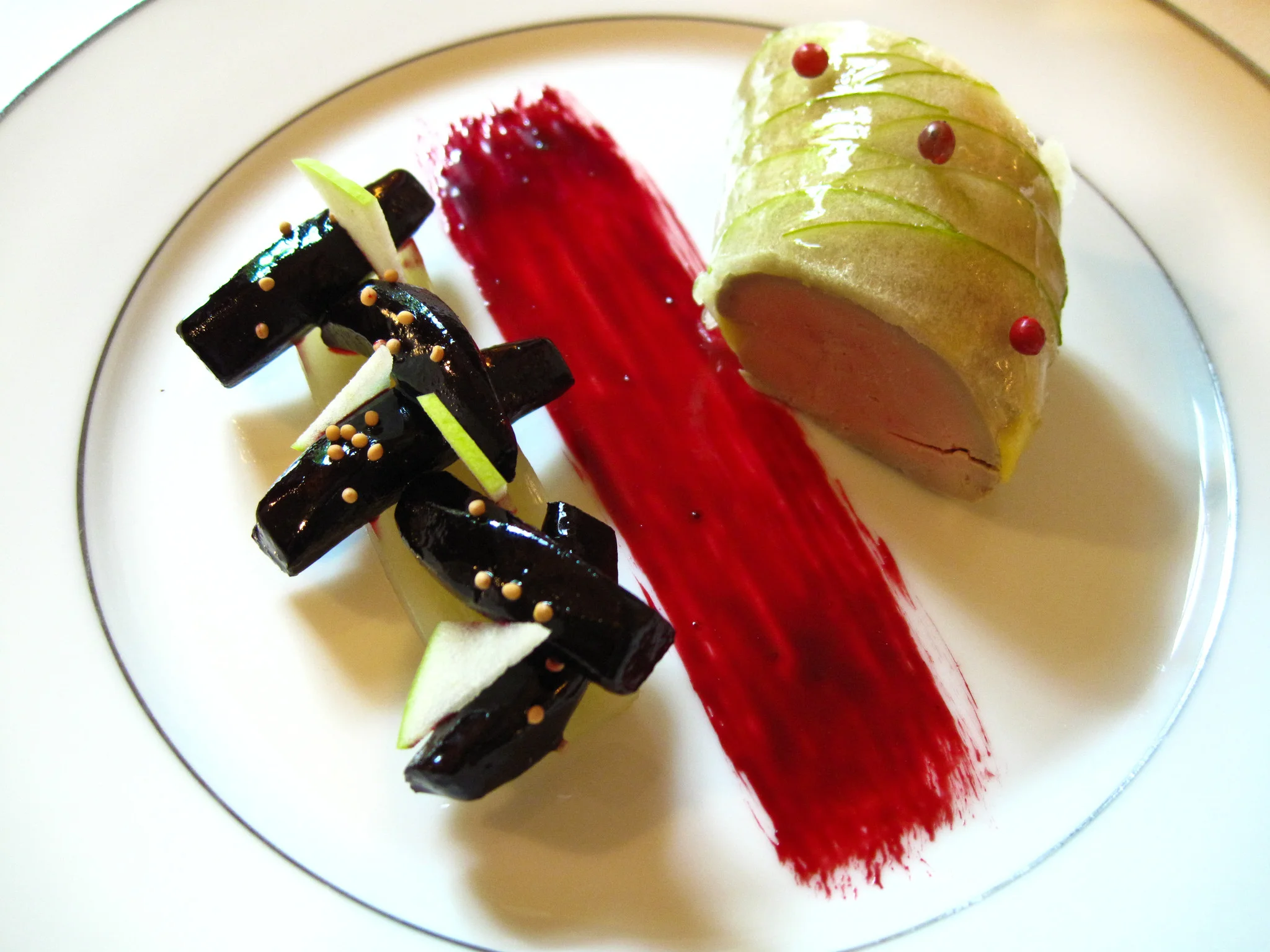
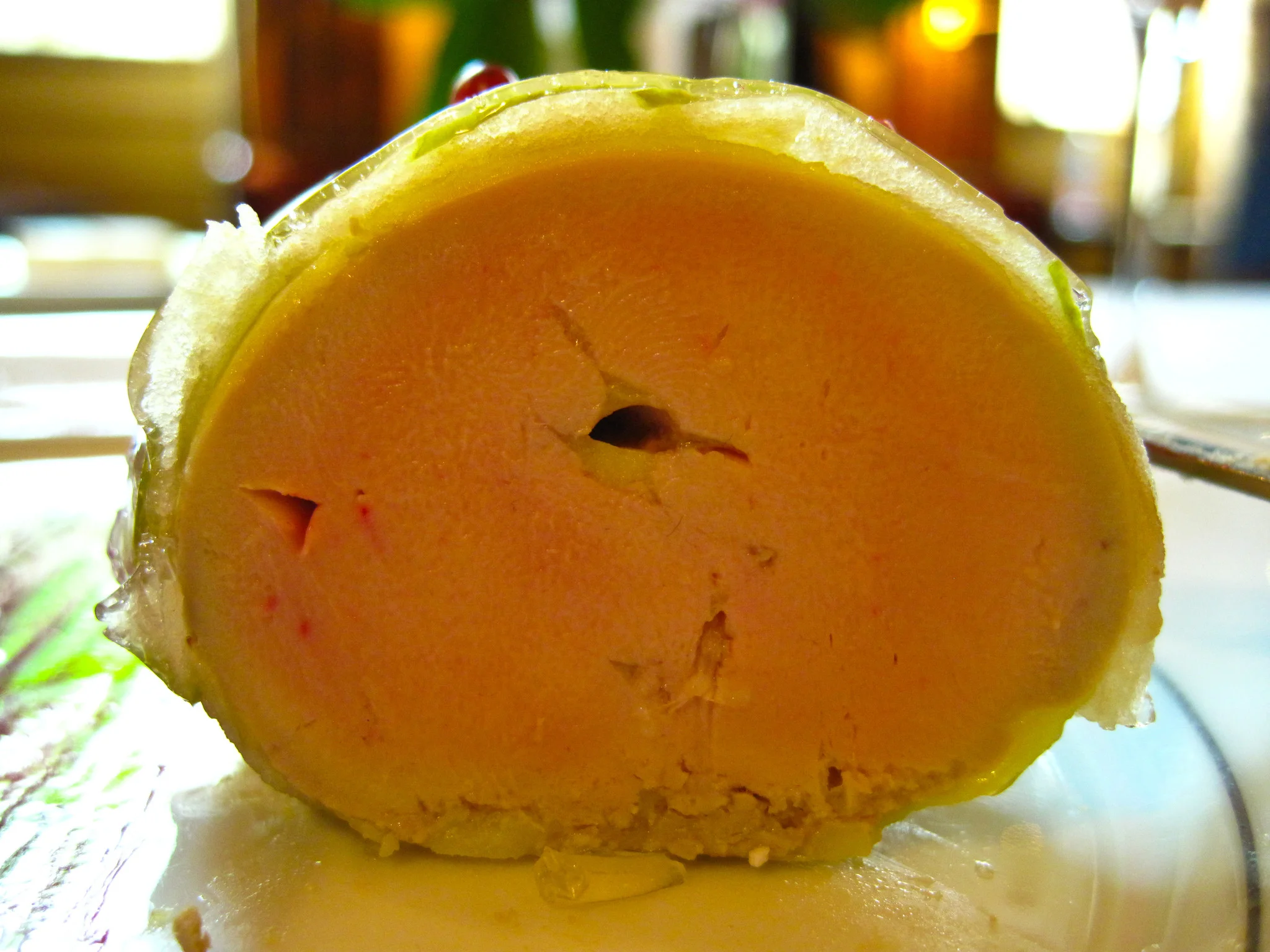
Foie gras de canard en gelee de pomme, betteraves - An obscenely thick cylinder of foie gras wrapped in apple and dotted with red peppercorns. Served alongside is a modern looking salad of beets. Another beautiful combination both to the eyes, and the palate.
Viennoise de dos de sole meunière, salsifis à la truffle blanche d'Alba
Viennoise de dos de sole meunière, salsifis à la truffle blanche d'Alba - During white truffle season, Pacaud serves the classic sole meunière, only instead of morel mushrooms he serves it alongside white asparagus and a dusting of layers of white truffle.
Tourte de canard et foie gras
Tourte de canard aux foie gras - An off-menu classic dish that my girlfriend says is the single best dish she has ever tasted. I might have to agree. An airy puffy tourte stuffed with layers of rare duck and buttery foie gras. I have been told that there is a better chance of meeting God than being serve this exquisite dish, but after relentless requests one special night the clouds parted.
Pigeonneau de Bresse, laque au caramel d'oignons, petits pois a la francaise
Pigeonneau de Bresse, laque au caramel d'oignons, petits pois a la francaise - Bresse pigeon with caramelized onions and peas. An incredibly tender yet lean serving of pigeon simply prepared with jus on a light bed of onions.
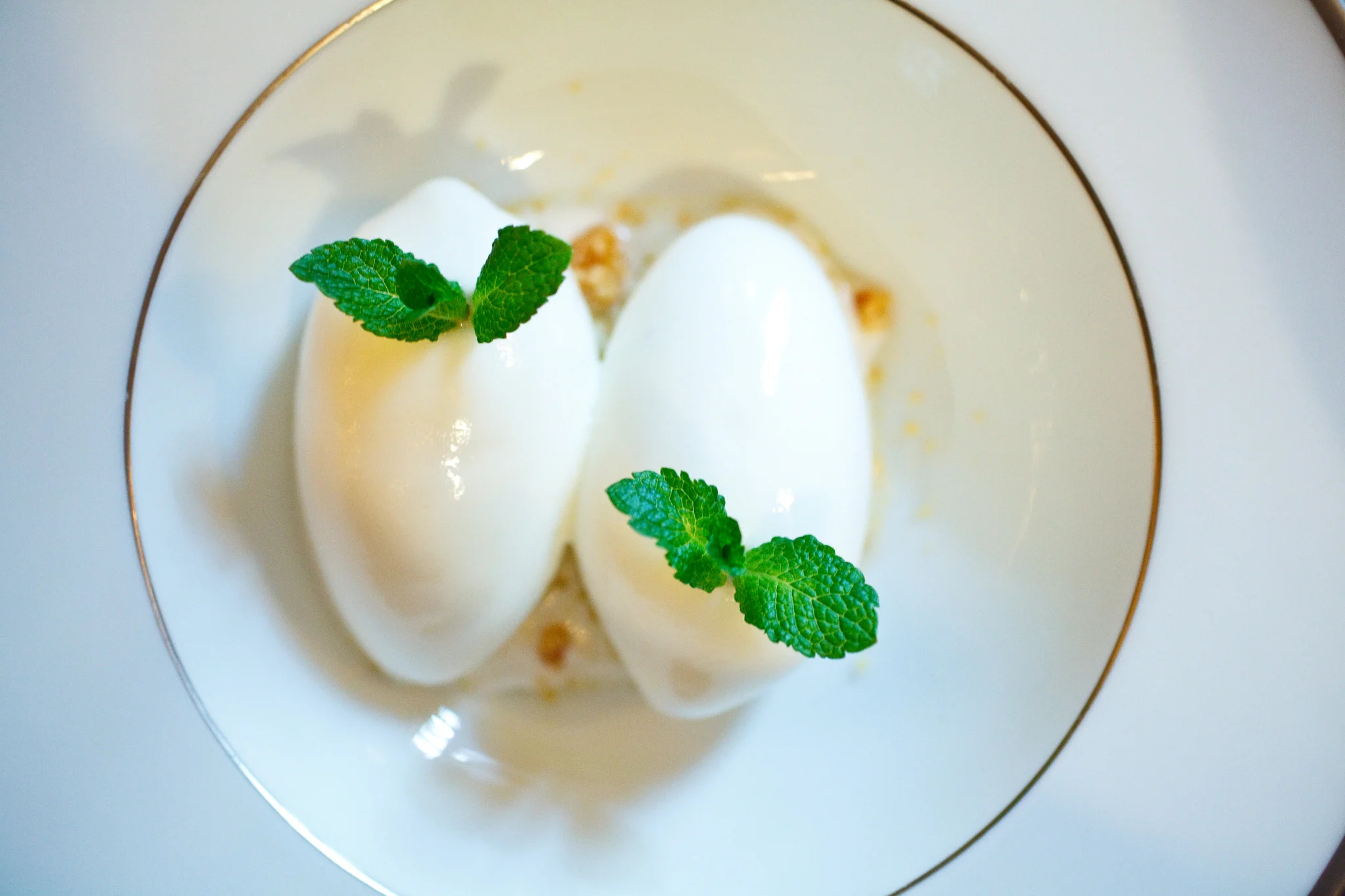
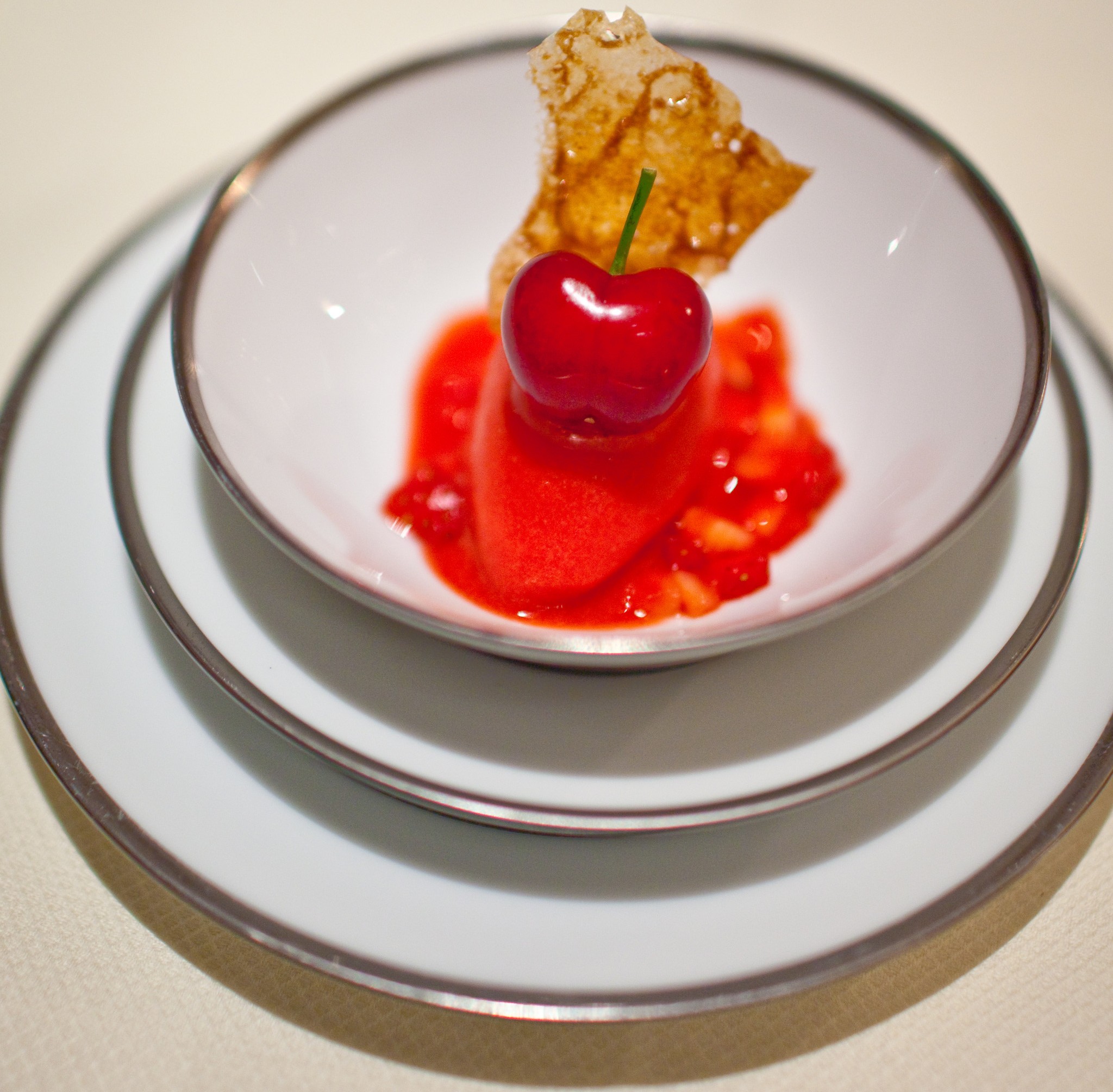
Though not on the menu, L'Ambroisie always has a sorbet ready in case diners would like something light and sweet as an alternative to some of the heavier dessert options. The two flavors that I have tried are simple, sweet, and sour: lemon, and raspberry.
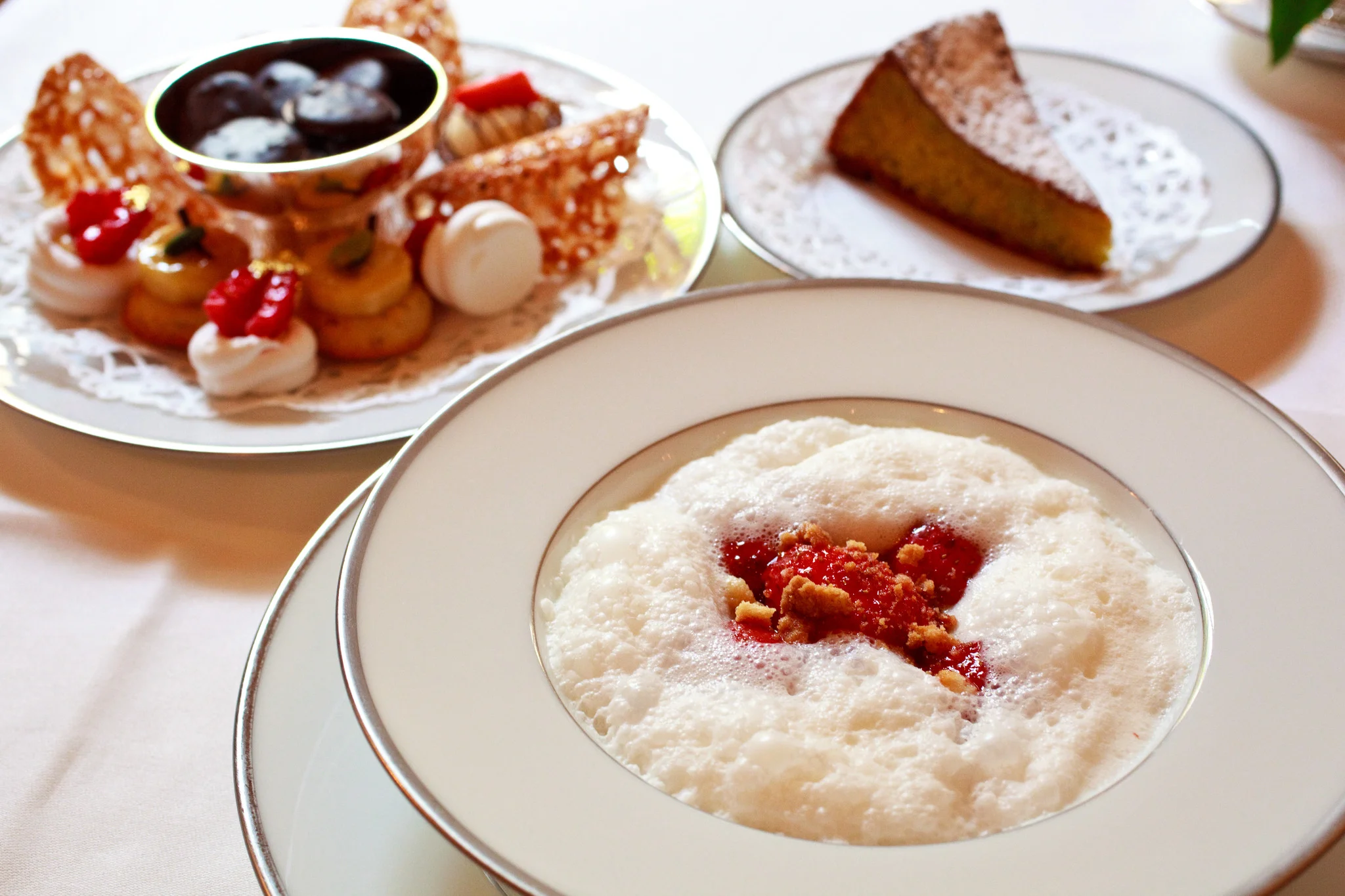

Turban de rhubarbe au fromage blanc, coulis de fraises - Fromage blanc wrapped in candied rhubarb with a strawberry coulis. I've never tasted rhubarb like this, both sweet and salty at the same time. The rhubarb's hint of acidity contrasts against the light cheese's creaminess creating balance. The light salted biscuit on which this dessert sits adds a sandy crunch.
Royale de mangue, fraises de jardin poêlées, emulsion de lait de coco - Mango, sauteed strawberries, and coconut milk all in one place. This dish is light, airy, and sweet. Somehow the coconut milk adds no weight. This is typically served with a slice of pain de Gênes, which while a bit dry, falls apart into dust with the slightest touch of the fork.
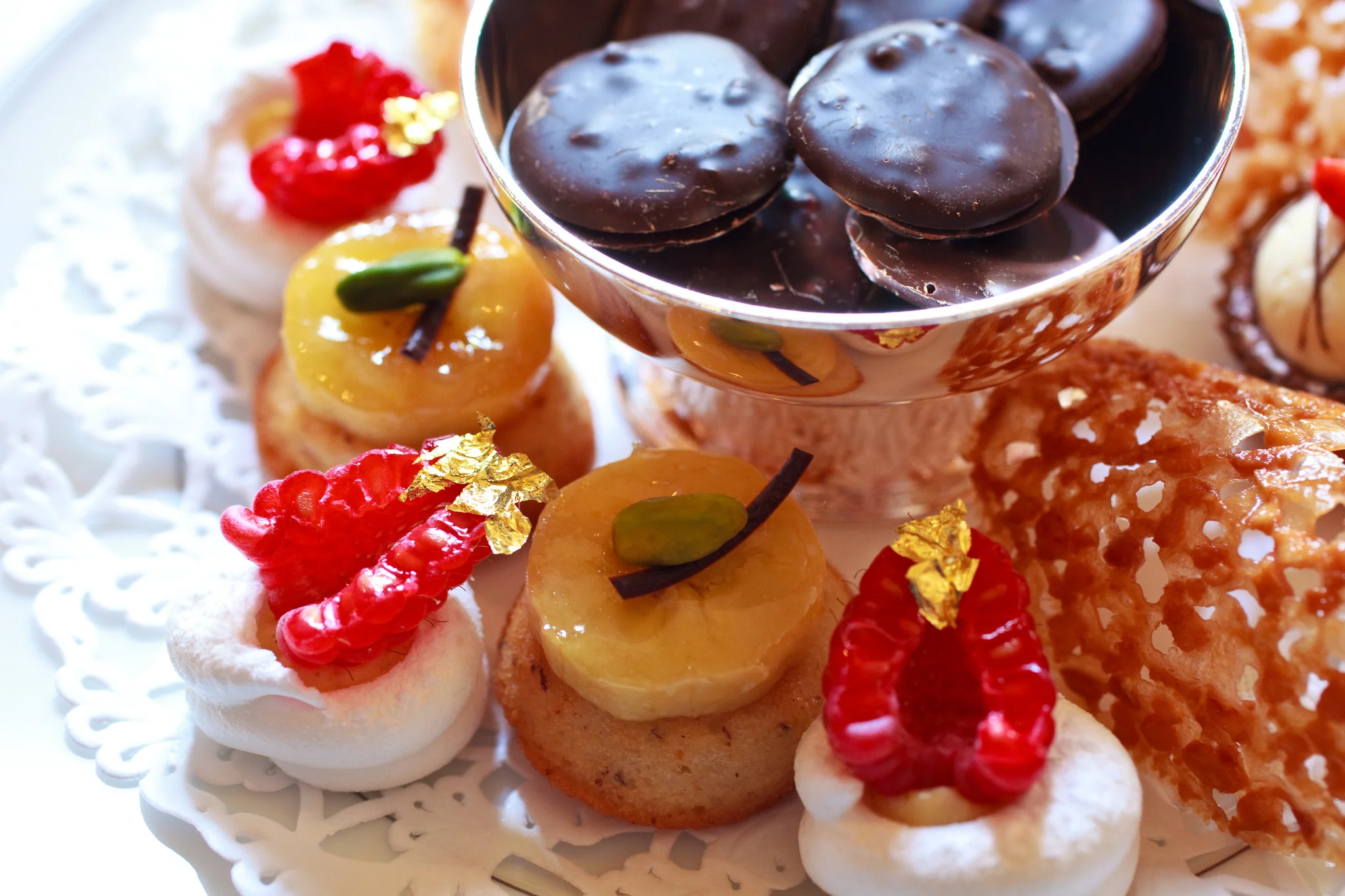
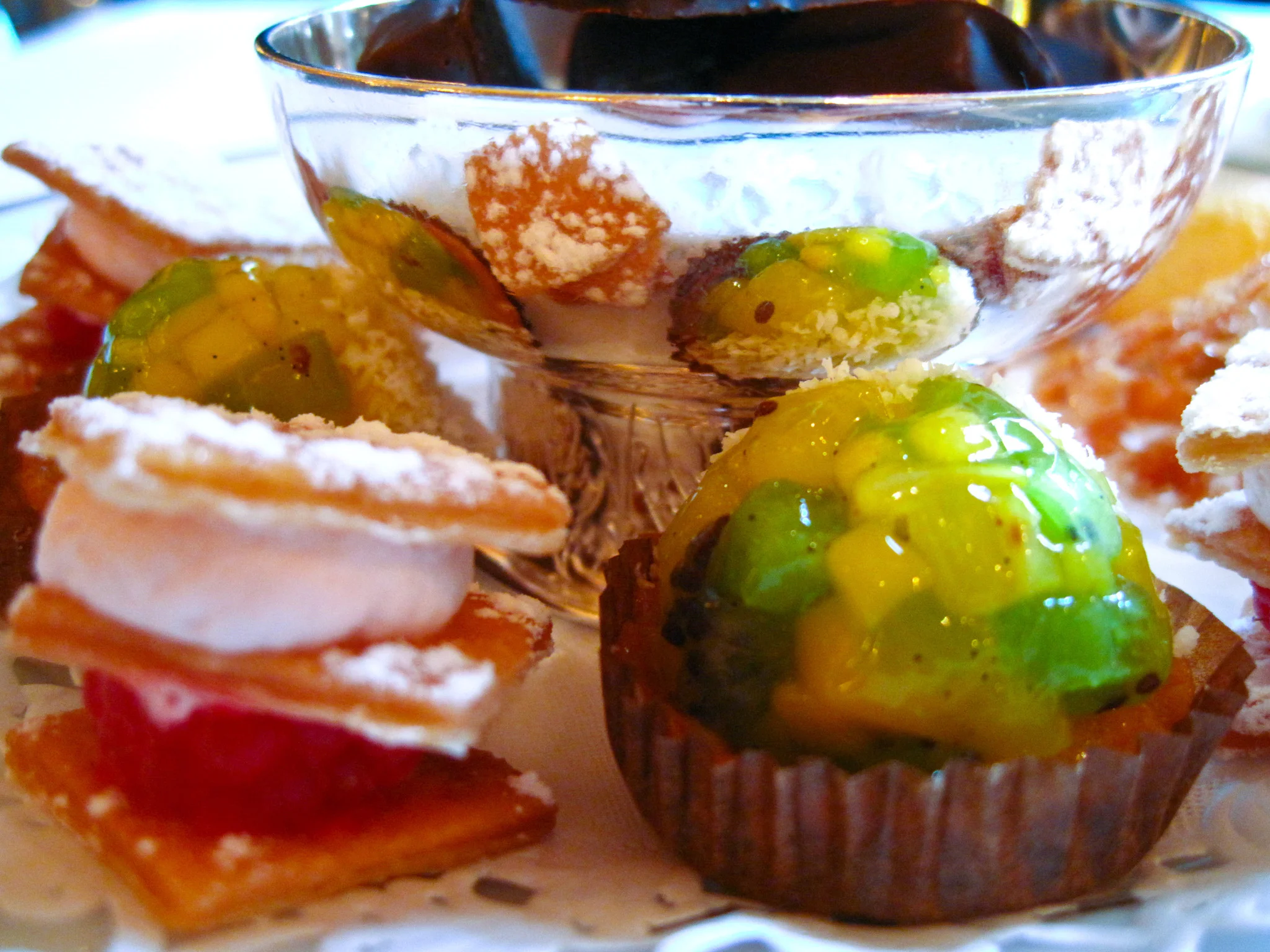
The petits fours change nearly every time, though are always centered with a bowl of dark chocolates. They are as delicious as they are beautiful, a rainbow of flavor.
Joyeux Anniversaire: Flourless Chocolate Tart with Vanilla Ice Cream
Tarte fine sablée au cacao amer, glace a la vanille Bourbon - An airy and weightless flourless bitter chocolate cake, accompanied by a dollop of vanilla ice cream laced with Bourbon. The entire volume of this cake could be compacted into a single bite, that's how light it is.
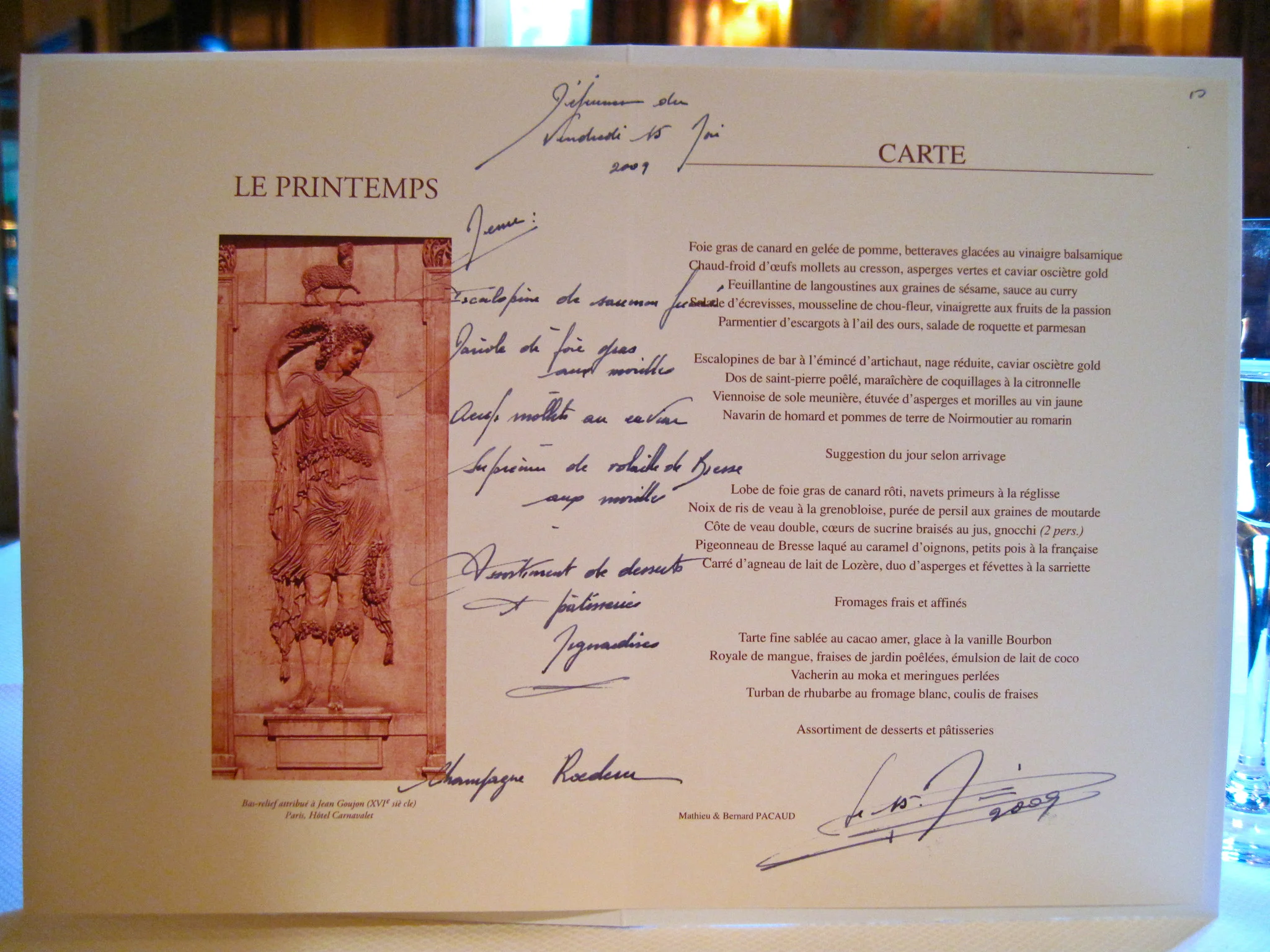
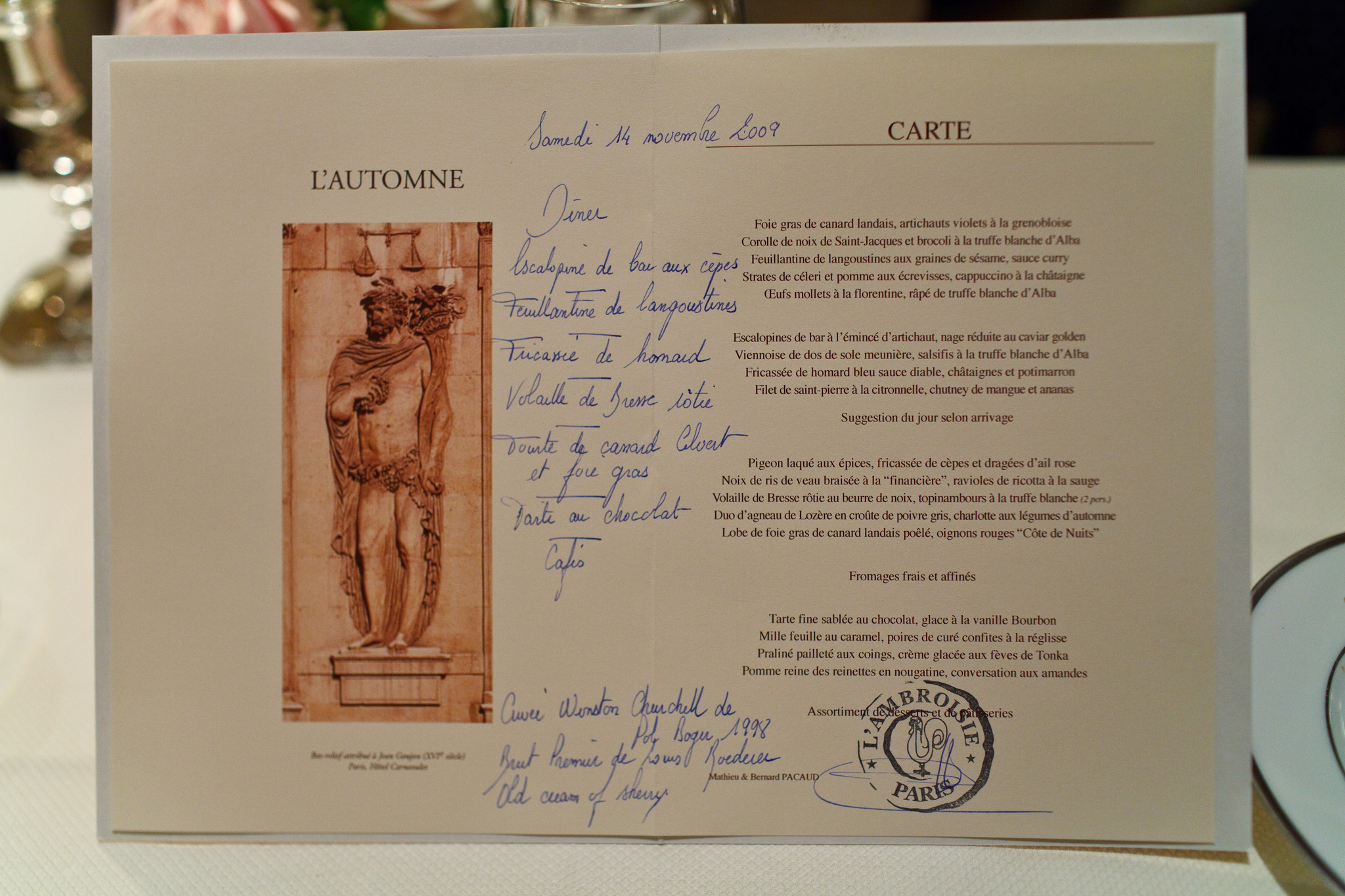
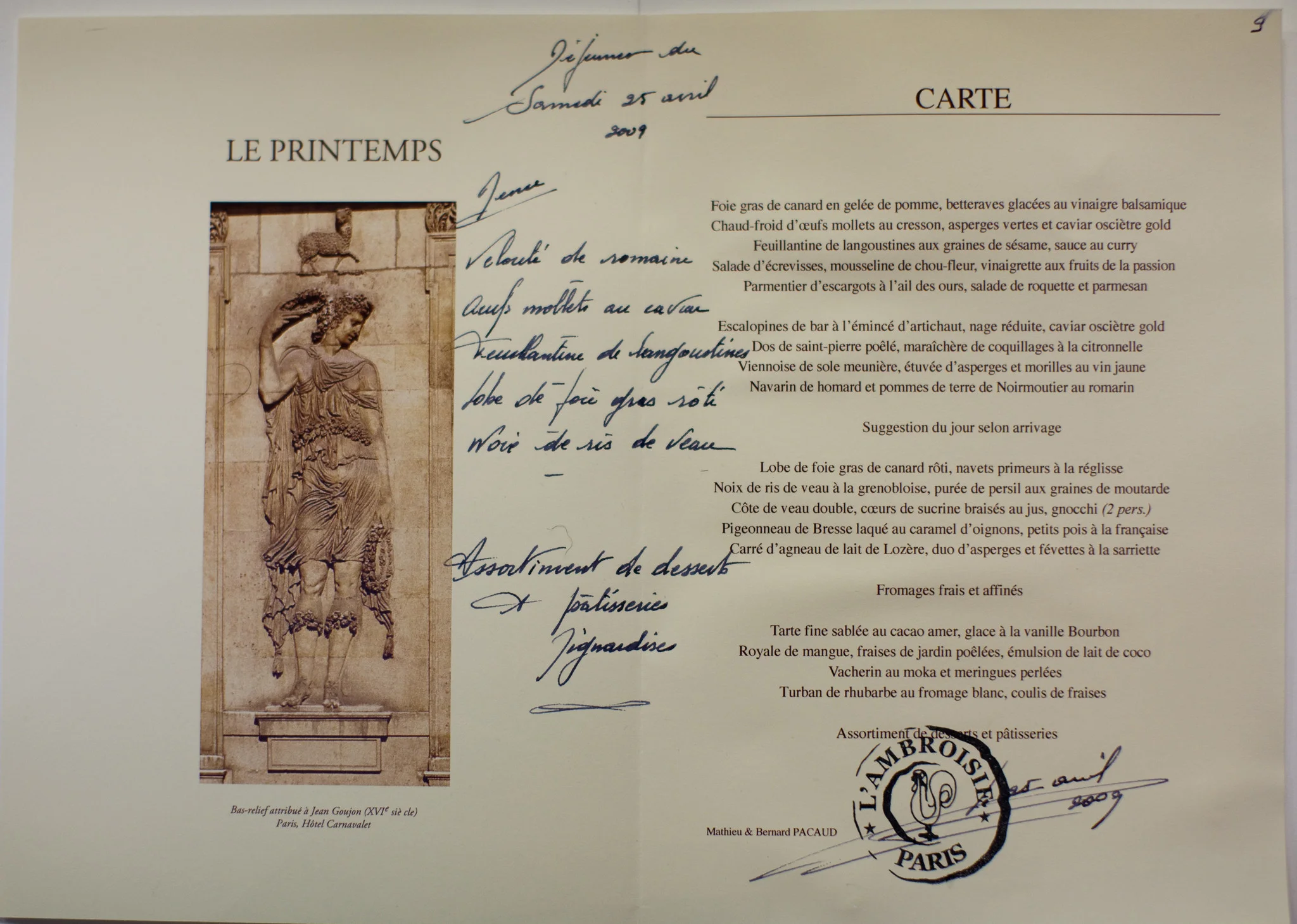
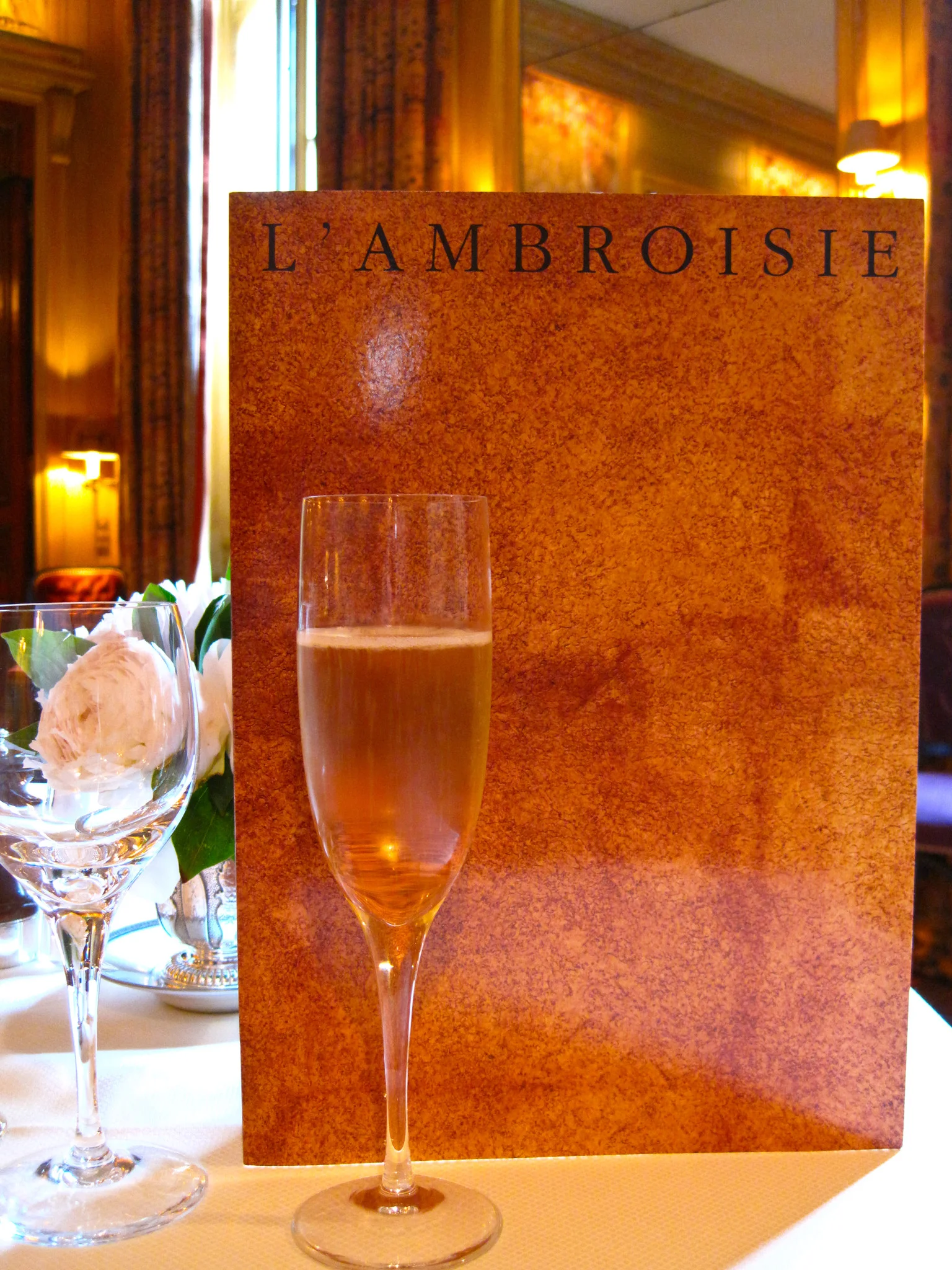
The meal ends not with a take-away surprise or a handshake with the chef, but with a prompt bill, a menu souvenir, and a subtle, "we hope to see you again soon." My stack of souvenirs makes for some of my favorite reading material, though now I am careful only to begin reading after a meal.
This restaurant has become the standard against which I compare all other French meals. Any culinary visitor to France must take a visit here, just be prepared not to mistake coldness for subtlety, and lack of personalized attention for an affinity for regularity. It is a place where magic happens.