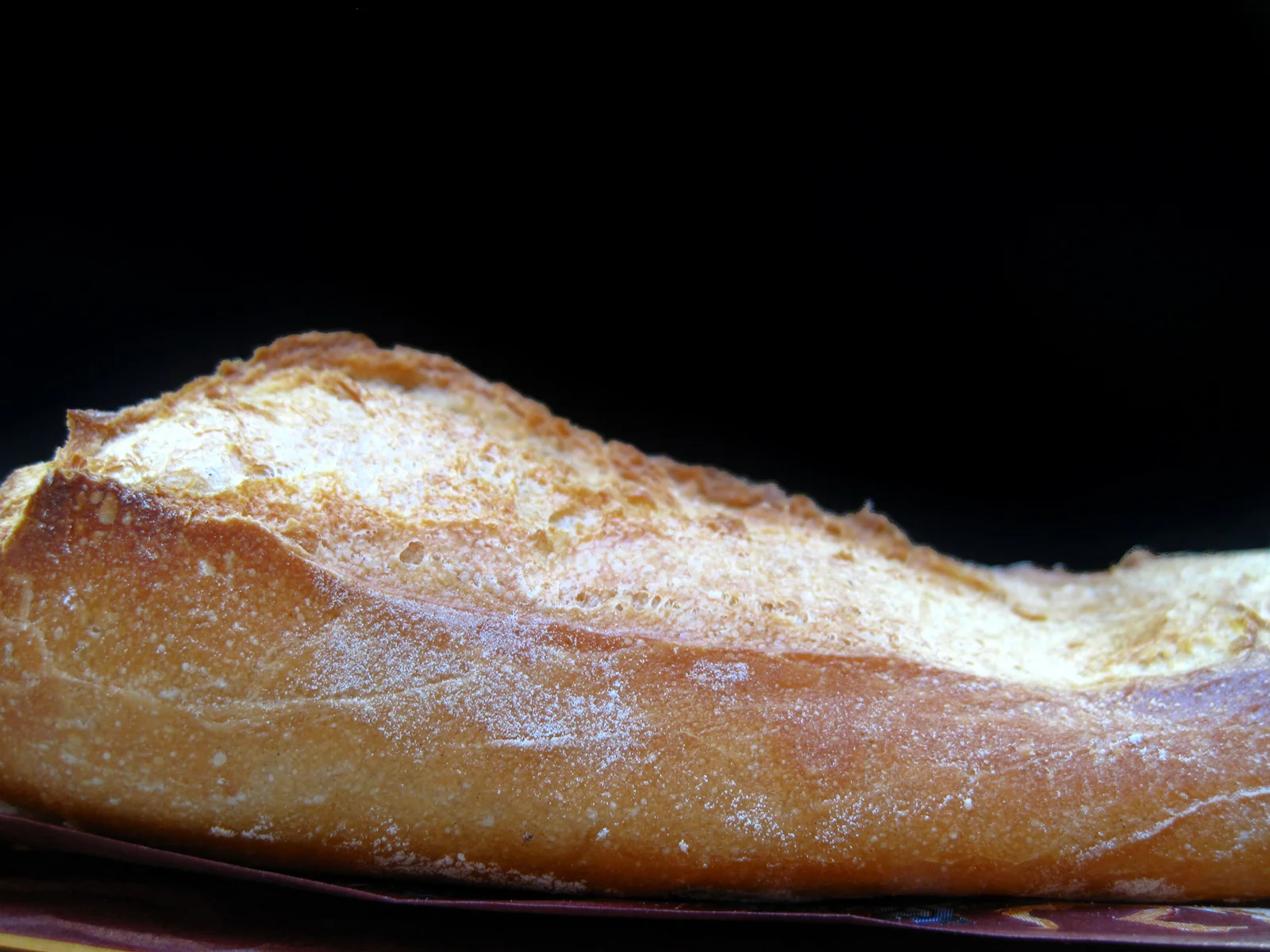
A Baguette Tour of Paris
Before I moved to Paris, I knew most of the stereotypes: cigarettes, fake dimples, accordions, and berets. And there are others, to say the least. Thankfully, with the exception of the cigarettes, they turned out to be inaccurate. One stereotype, however, was so spot-on it was comical: I cannot count the number of Parisians I've seen racing around the city with groceries on one arm and a bitten baguette under the other. The French love their bread. And they should! With the arguable exception of Tokyo, Paris has the finest bread in the world. Fine boulangeries are to France as Starbucks is to America. They're everywhere.
Think about it: a baguette is the perfect accompaniment for any course. It goes with confiture and butter for breakfast, with a "jambon fromage" sandwich for lunch, in a small bowl to the side of a glass of red wine with dinner, or with a cheese board as a snack.
So I spent my time in Paris keeping a small journal for noting particularly interesting experiences on the carb front. While the quality of most boulangeries is excellent, there are some which have baguettes that stand out in particular. Of the nine places below, four were so exceptional that I was really pressed to find anything to complain about. They're listed first. The other boulangeries are excellent as well, but only visit them if time permits after having tried the first few. Enjoy!
Thierry Renard, 113 bis Boulevard de l'Hôpital, 4e
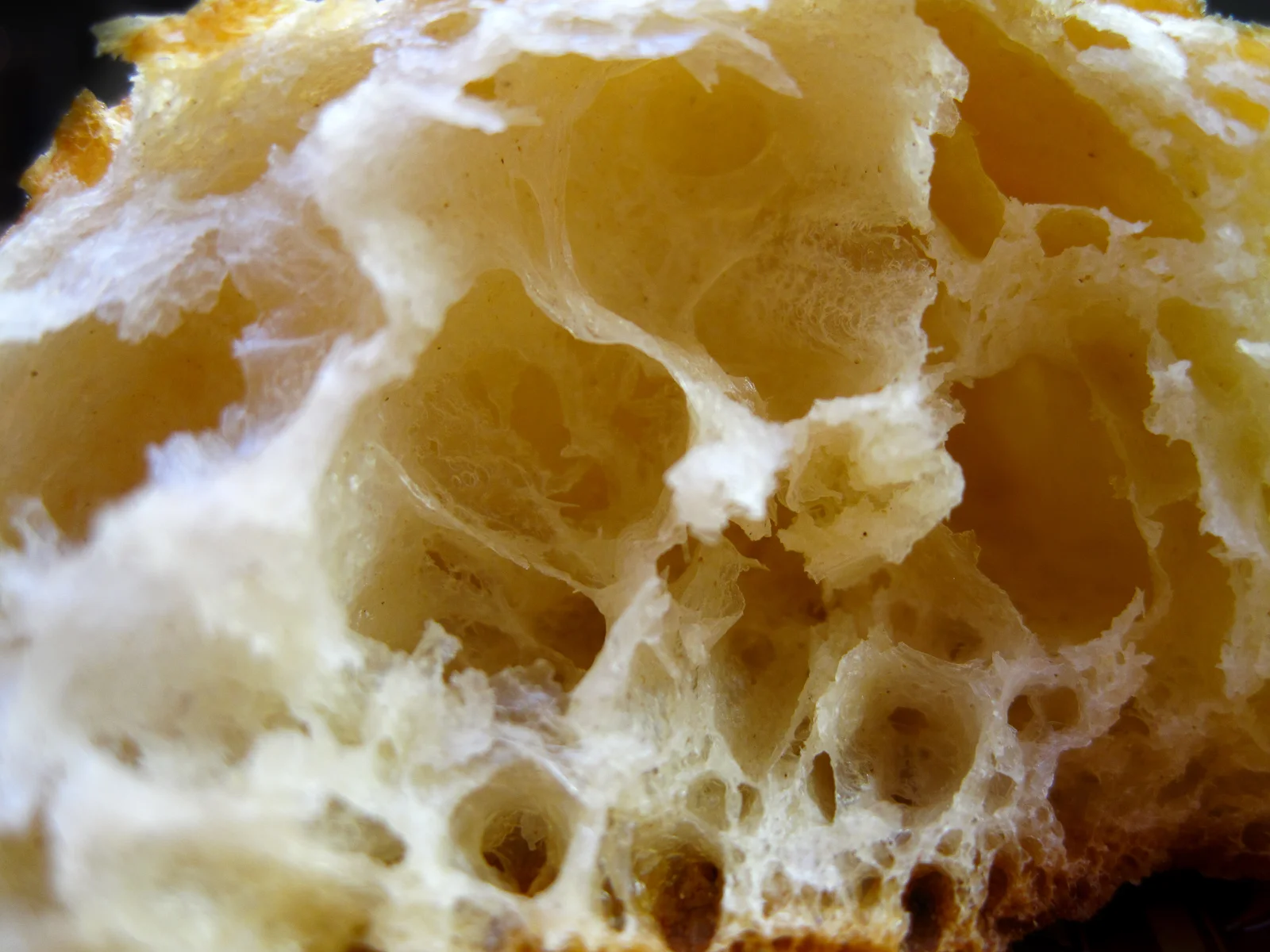
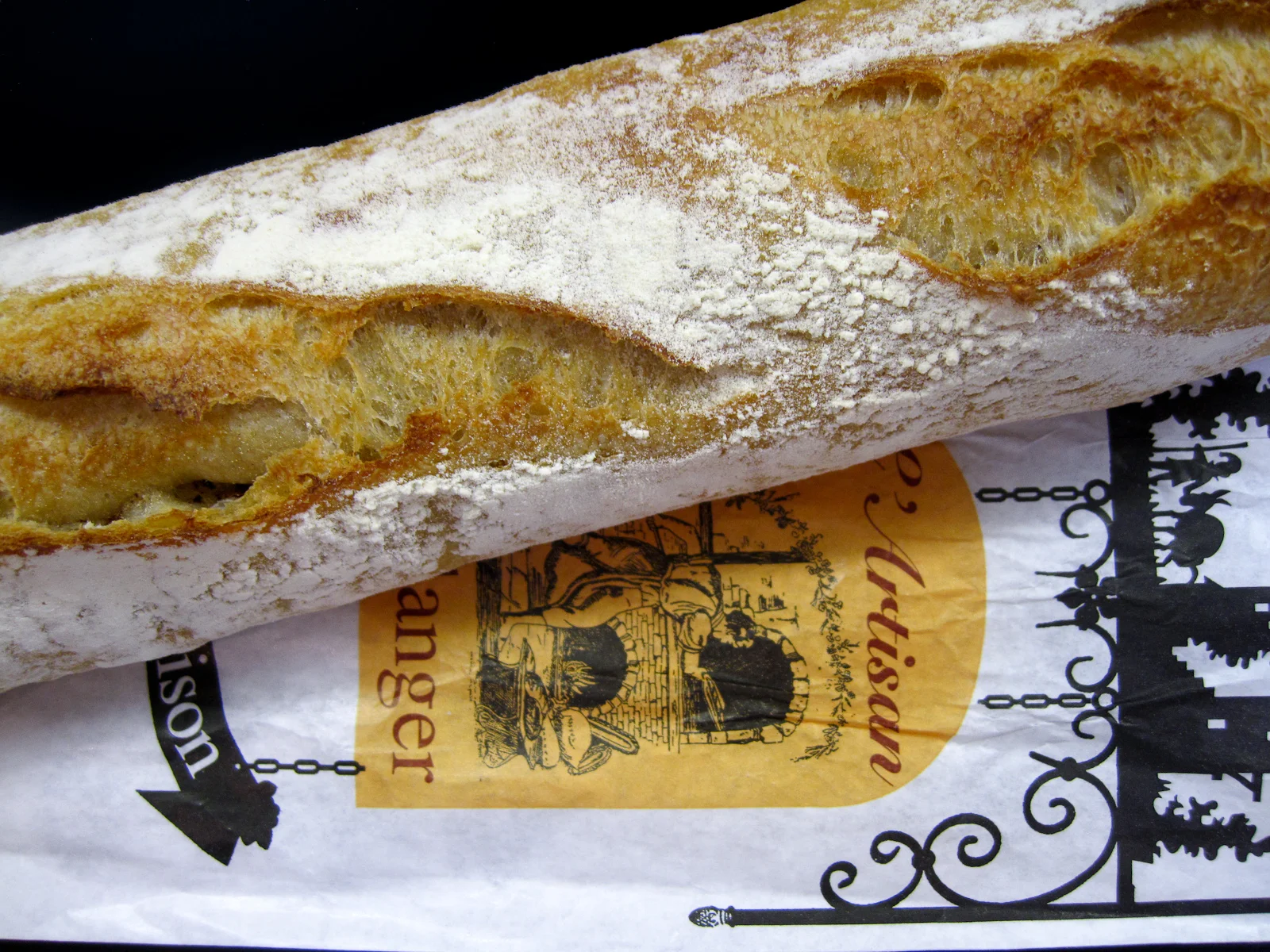
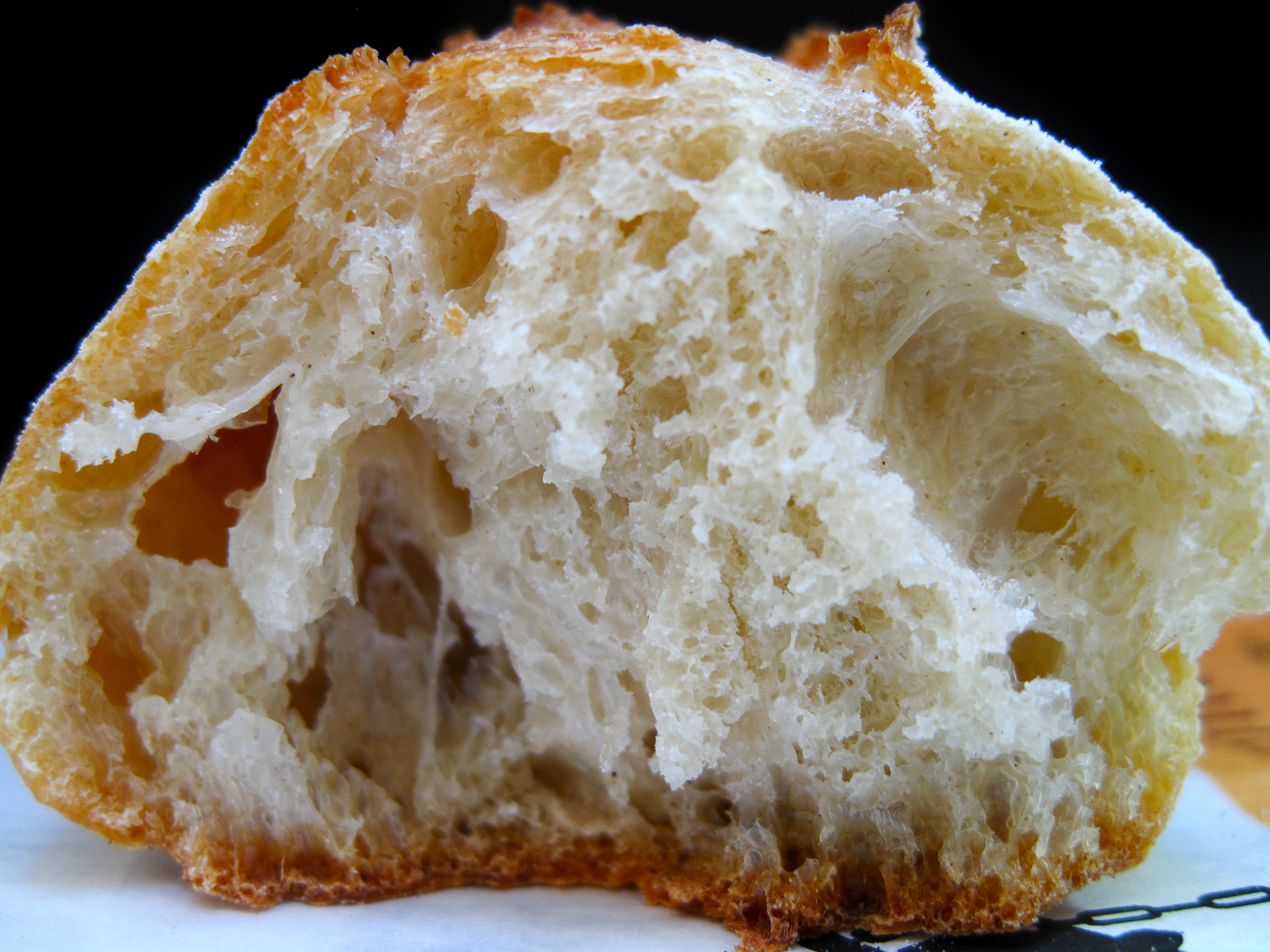
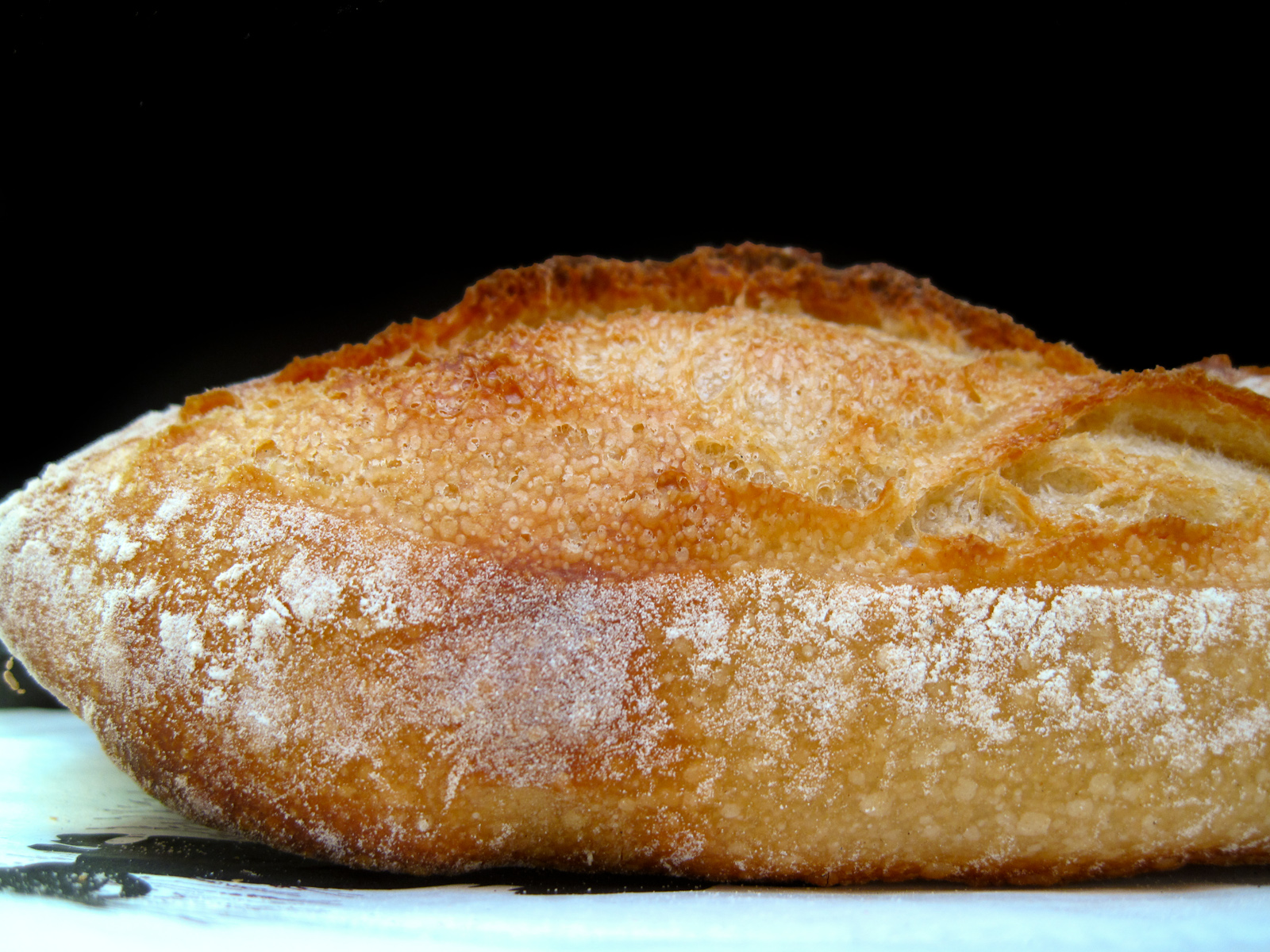
Renard's baguettes are, in one word: beautiful. The pre-baking flour placed on the surface spreads around the tear-shaped crevasses making the baguette look like it's wrapped in a snow-colored cage of rustic powder. Not only is this effect visually appealing, it also means the texture and flavor change depending on which part of the baguette is eaten first. The sides of this baguette are the softest part, with a texture like a toasted marshmallow: a thin crisp at first giving way to a springy center. The top is the most crispy part, particularly the dark brown ridges surrounding the tear-shaped fissures. This baguette is plump looking and, were it not for the different textures on the surface, it would appear rather cylindrical -- it is nearly as tall as it is wide. When I ripped a piece off and bit in, a small puff of white flour floated like magic. My tongue picked up on the dry texture of the powder first: a very rustic flavor. The baguette leaves behind small crumbs and lots of powder. The exceptionally moinst interior has clearly visible glutens with some bubbles being very large and others quite small. The flavor has the tiniest hint of toasted bread, so little that with some bites it was undetectable. The dough has a neutral, lightly salted flavor: neither tasting sour, nor of whole wheat.
This is the best baguette I've had in Paris, as well as the most interesting. Each bite tasted unique because of the infinitly different combinations of flour and crisp, making the baguette practically its own diverse meal. It's also stunning: the first baguette I've seen that is both white and gold with a snow-colored cage of flour wrapping around the light brown baguette. The flavor was neutral enough that it could be eaten with anything, though I enjoyed it best with salted butter. Renard is truly a master baker.
Laurent Duchêne, 2, Rue Wurtz, 13e
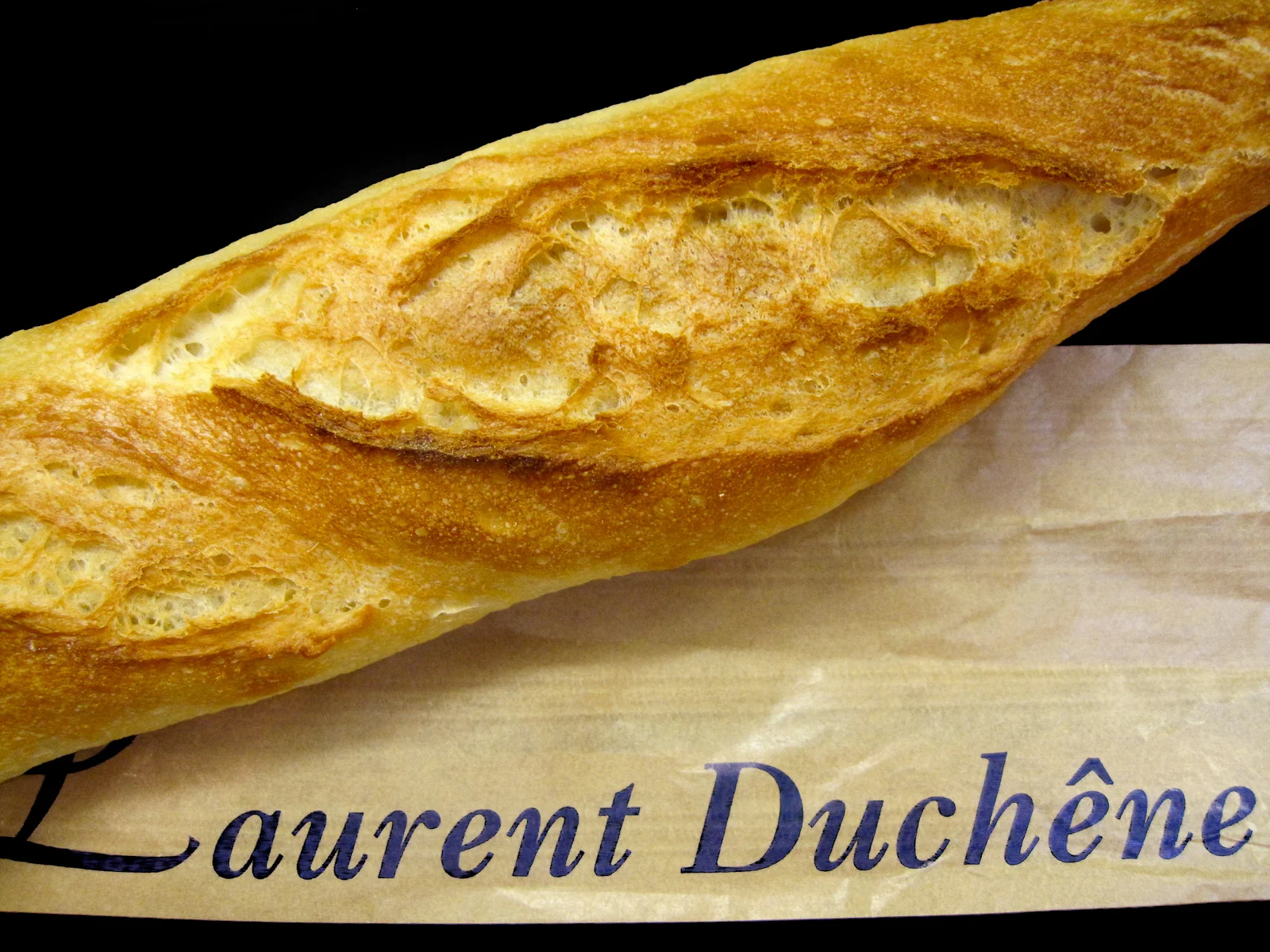
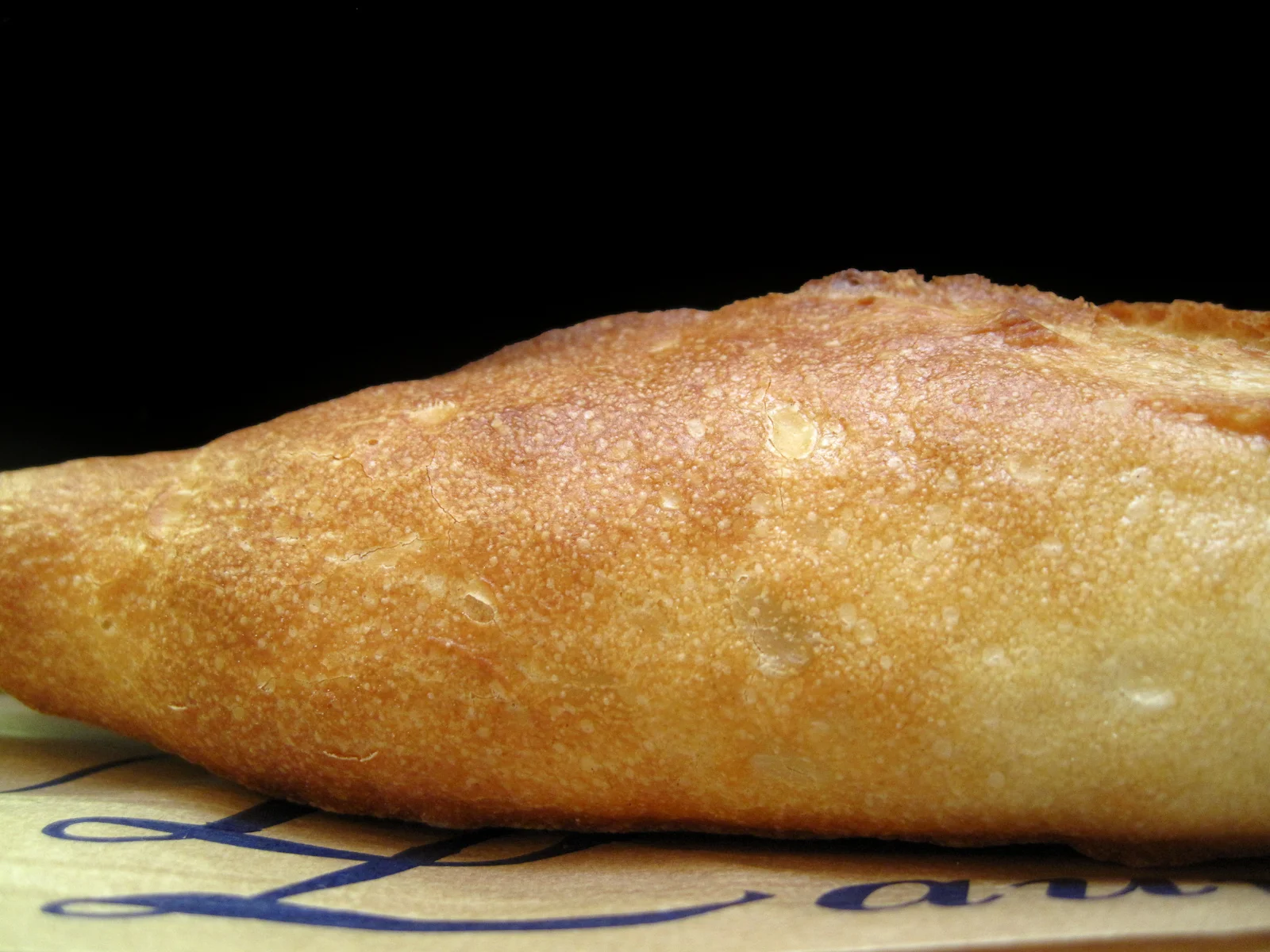
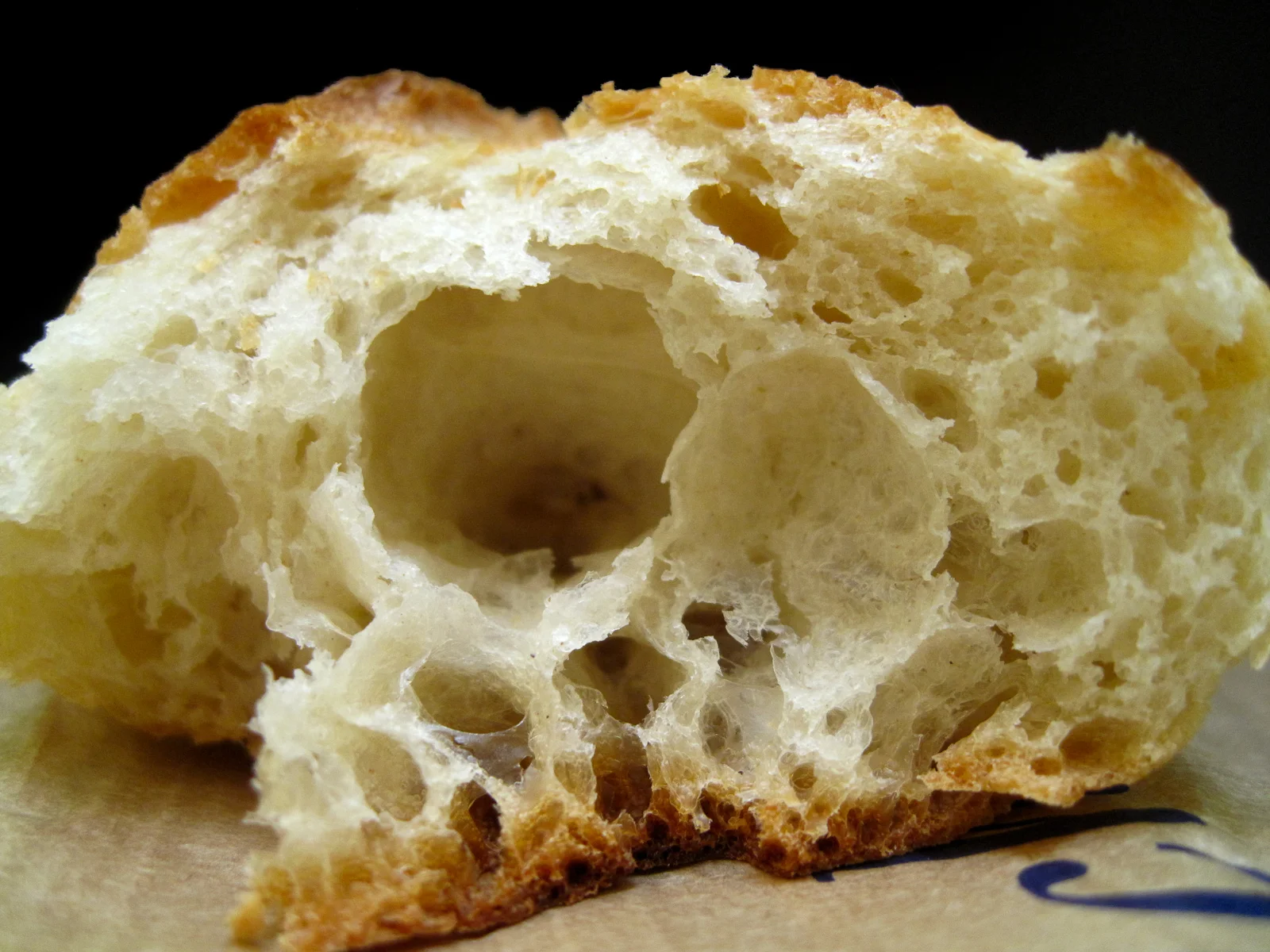
Very plain in appearance, the light brown baguettes from Laurent Duchêne have no frills. There is no flour dusting whatsoever and there are no fancy shaped stencil-like cutouts, as seen at Thierry Renard. The baguette is pure in appearance with several crispy ridges stiching the top of the bread. The ridges were very dry and crispy, even hard, providing a strong structural support. The edges were also sharp and pointy. But despite a dry crust, the inside was paradoxically as moist as possible. Tearing off pieces produced a loud crackling sound quickly giving way to the soft interior. The inside was fully of randomly sized bubbles, some quite large, forming a honeycomb of soft bread. Even though the crust was dry and crispy, it wasn't terribly thick, and so there was excellent balance between the slightly salty interior and the thin and toasty exterior. The flavor was neutral, as a baguette should taste, slightly leaning towards salty.
This baguette was outstanding. The pieces of the shell were so sharp you could probably use them as small weapons. Breaking off my first piece likely woke my neighbors. Being a person who does not crave the just-before-burnt flavor of bread, I still loved this baguette because the crust, while toasted, was thin and non-offensive. It was a beautiful balance. The flavor could sway towards sweet or savory; but, is best enjoyed by itself since its taste is so pure. It was a bit of a trip to get here, and was worth every minute.
Au Levain du Marais, 28, Blvd Beaumarchais, 11e
Au Levain du Marais' baguettes are light brown with canvass-colored parts creeping through the tears where the bread expanded in the oven. Flour can be found on the edges and ends, parts of the bread where the oven rise was minimal. This bread is not springy; but rather, has a texture similar to swedish memory foam, each squeeze would take a few seconds to come back. What's interesting about this bread's shape is that the ends are significantly taller than the middle, like a Boeing 747. I'm not sure what causes this; but it was it was evident on all the baguettes. The outside was very crispy, in fact a tear off caused continual cracking for several seconds after the tear was finished, like rice krispies. This left a large mess; a good thing for a baguette, I think.
The weight was fairly light on the inside; this was not a dense baguette. The air bubbles were very think and for the most part seemed uniformly distributed with the exception of a few large air pockets towards the center. The inside was soft, having a slightly grayish color, perhaps indicative of the type(s) of flour used. The flavor was pure and clean: the water's flavor could not be tasted. It did taste, however, slightly whole grain which when, combined with the color, makes me suspect that a mixture of whole grain was used in the flour mixture. This baguette is not sweet, has a hint of salt, and would pair well with with both sweet and savory. It was delicious in all respects.
Aux Castelblangeois, 168 rue Saint Honoré, 1e
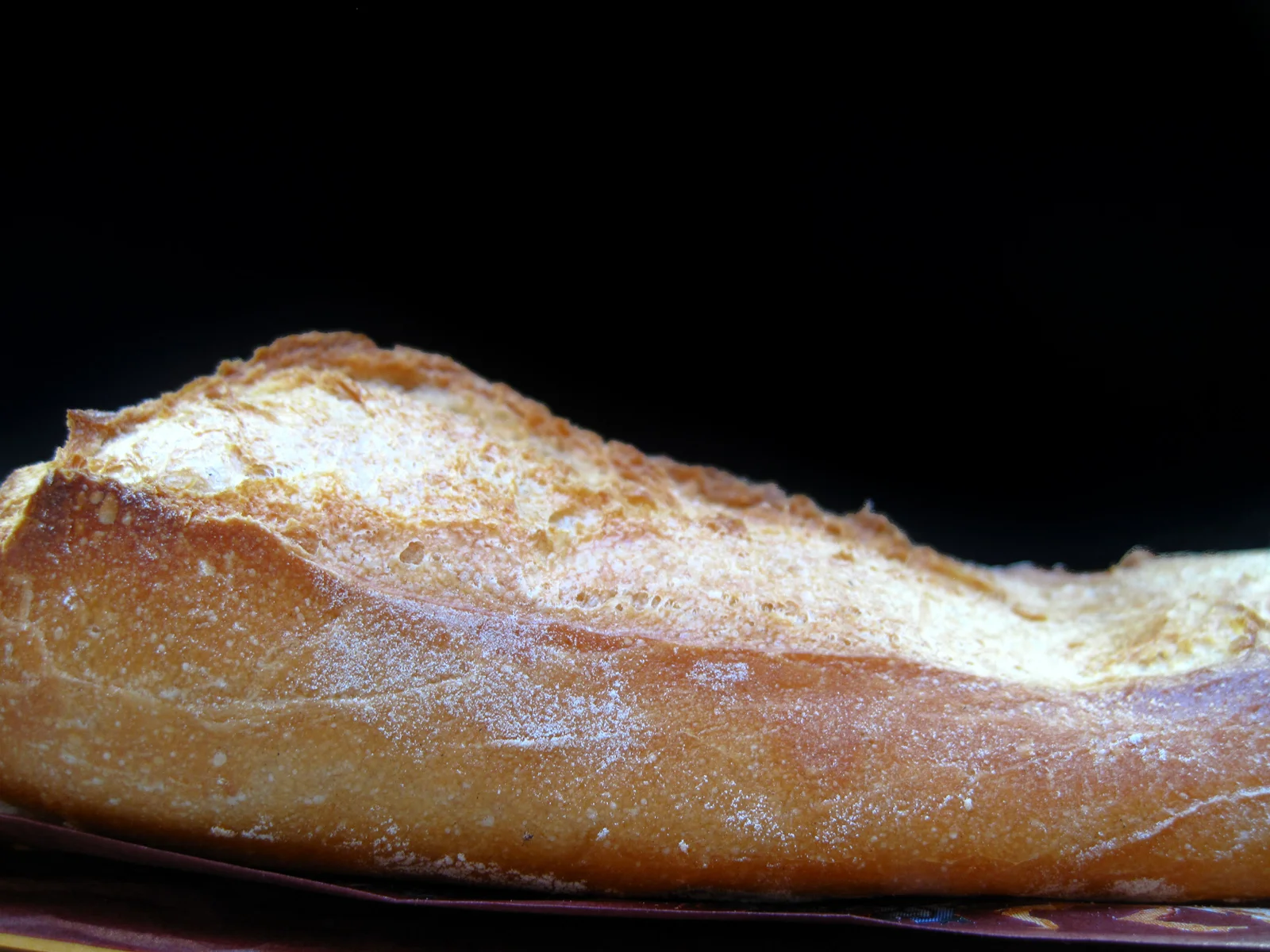
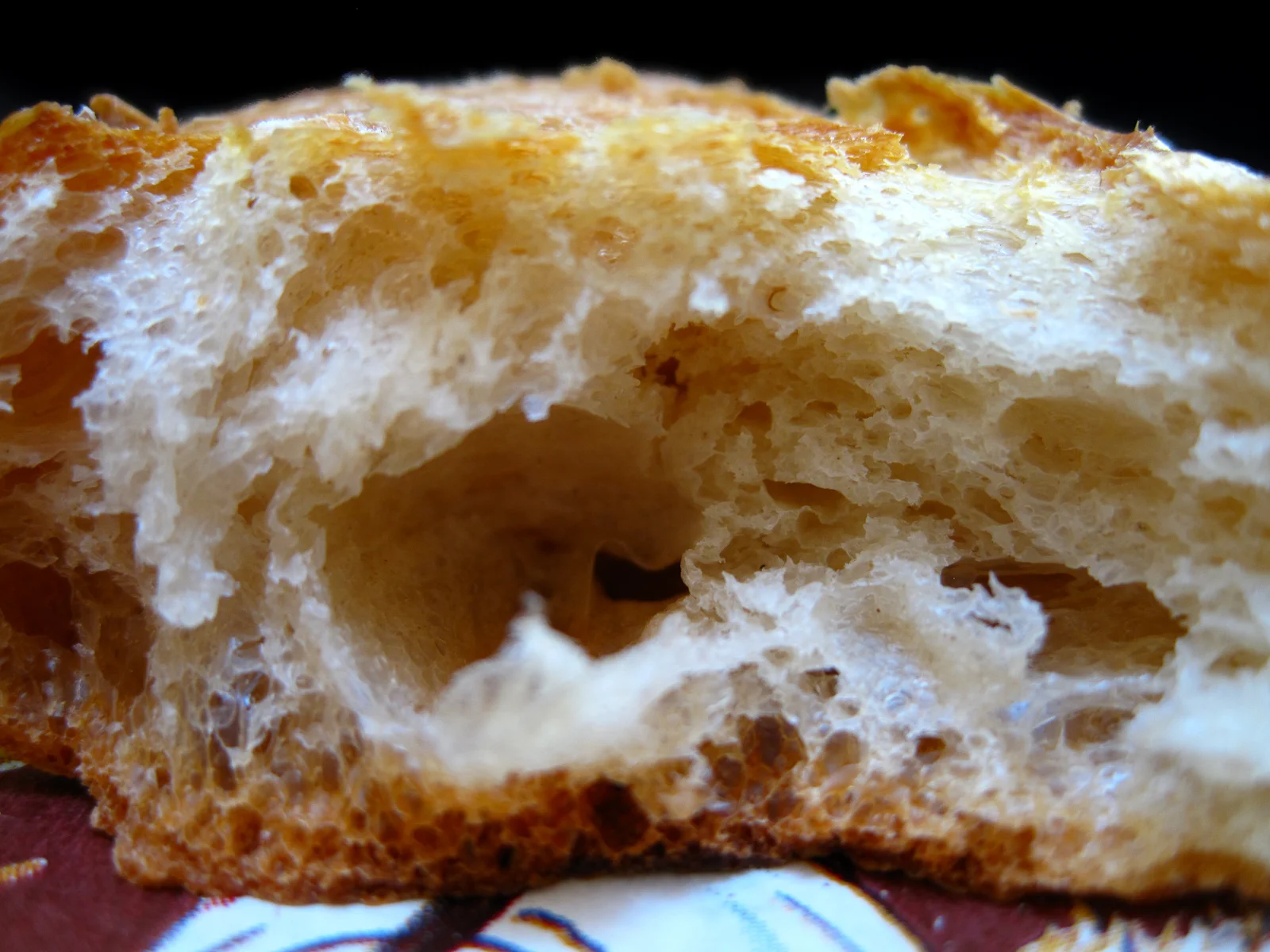
This baguette looked more like a giant pretzel than a baguette, with shades of dark brown giving way to slits of gold. The crust was very crispy; but since it was relatively thin, its flavor was not dominating. Little to no flour was sifted on the surface before baking making the flavor taste of pure bread. This was fairly messy to break resulting in hundreds of small crumbs littering my plate. When squeezed the baguette demonstrated a delayed rebound indicating the freshness of the interior. The inside was exceptionally moist with small bubbles and nets of gluten stretching across the interior. The flavor tasted ever so slightly of cornmeal, even though this was not an ingredient.
I really like these baguettes for both their texture and simplicity. The lack of sifted flour on the surface makes their use very versatile for both sweet and savory. The dark brown color really makes these baguettes distinct. It's paradoxical how they can be baked so thoroughly yet have not the faintest flavor of toasted bread. The interior is not light and fluffy, rather substantive and supportive, a quality I prefer in my baguettes when eaten with butter. These exhibit an excellent balance of crust and interior with neither part tasting more strongly than the other.
Stohrer, 51, Rue Montorgueil, 2e
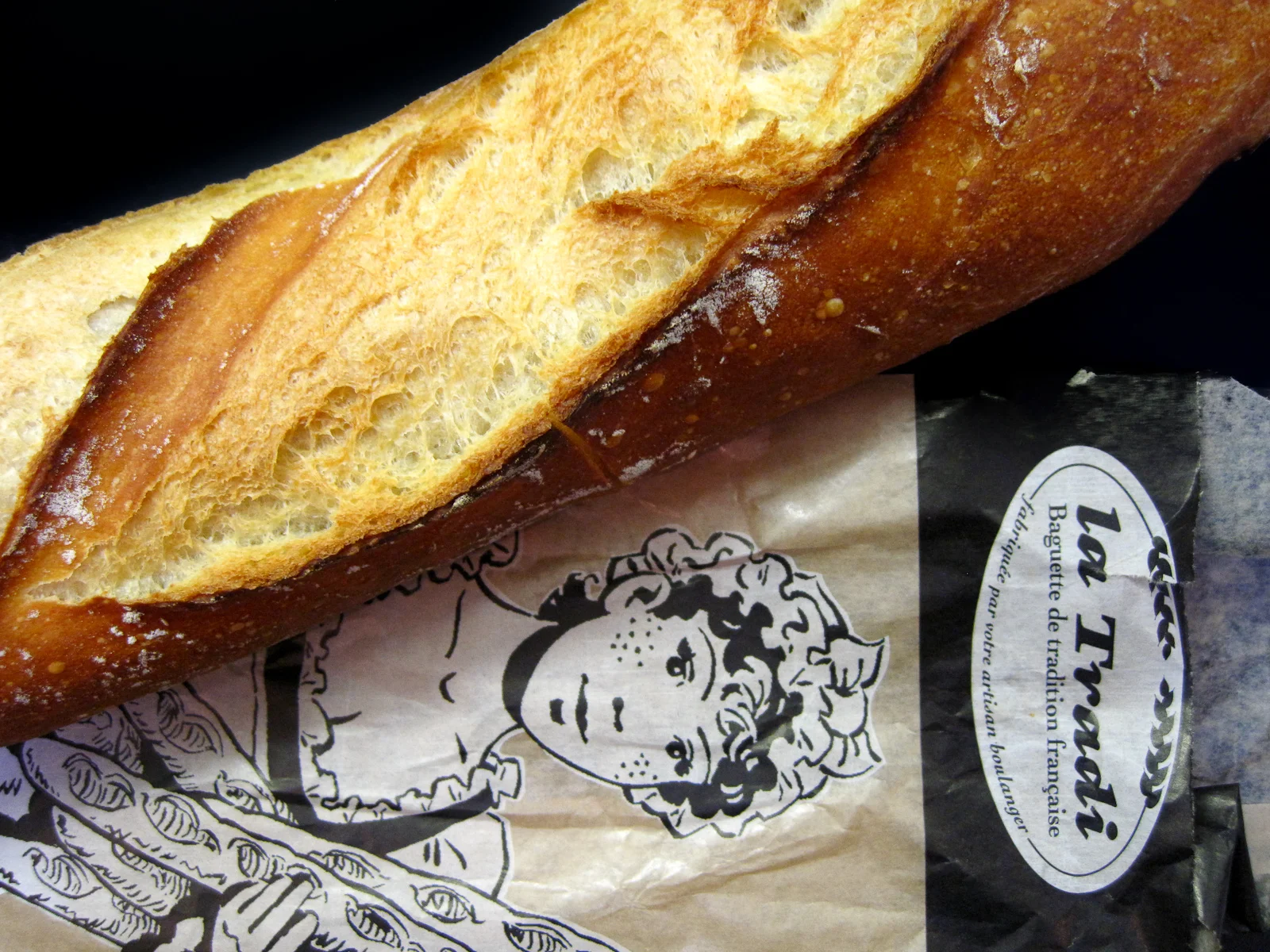
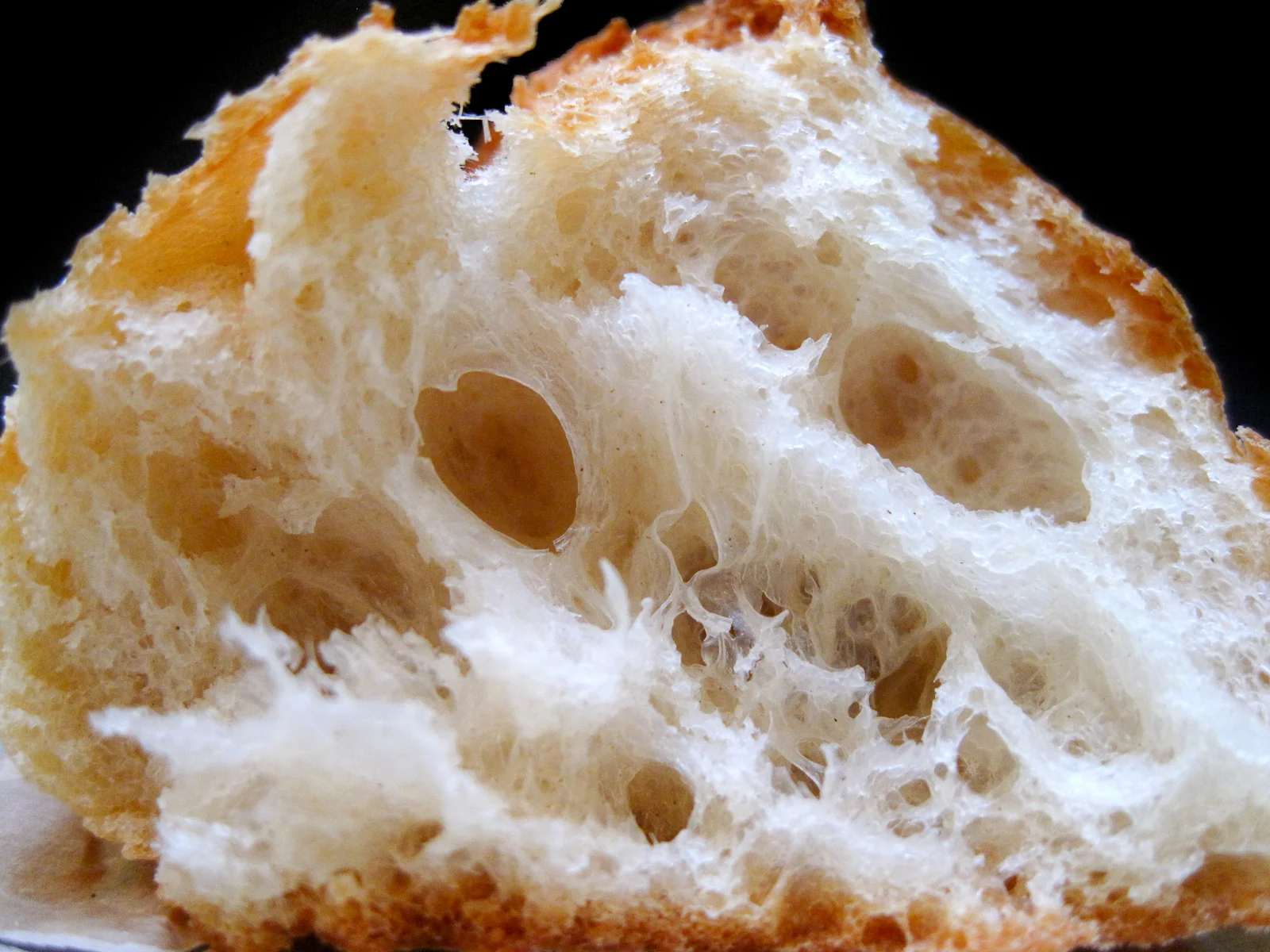
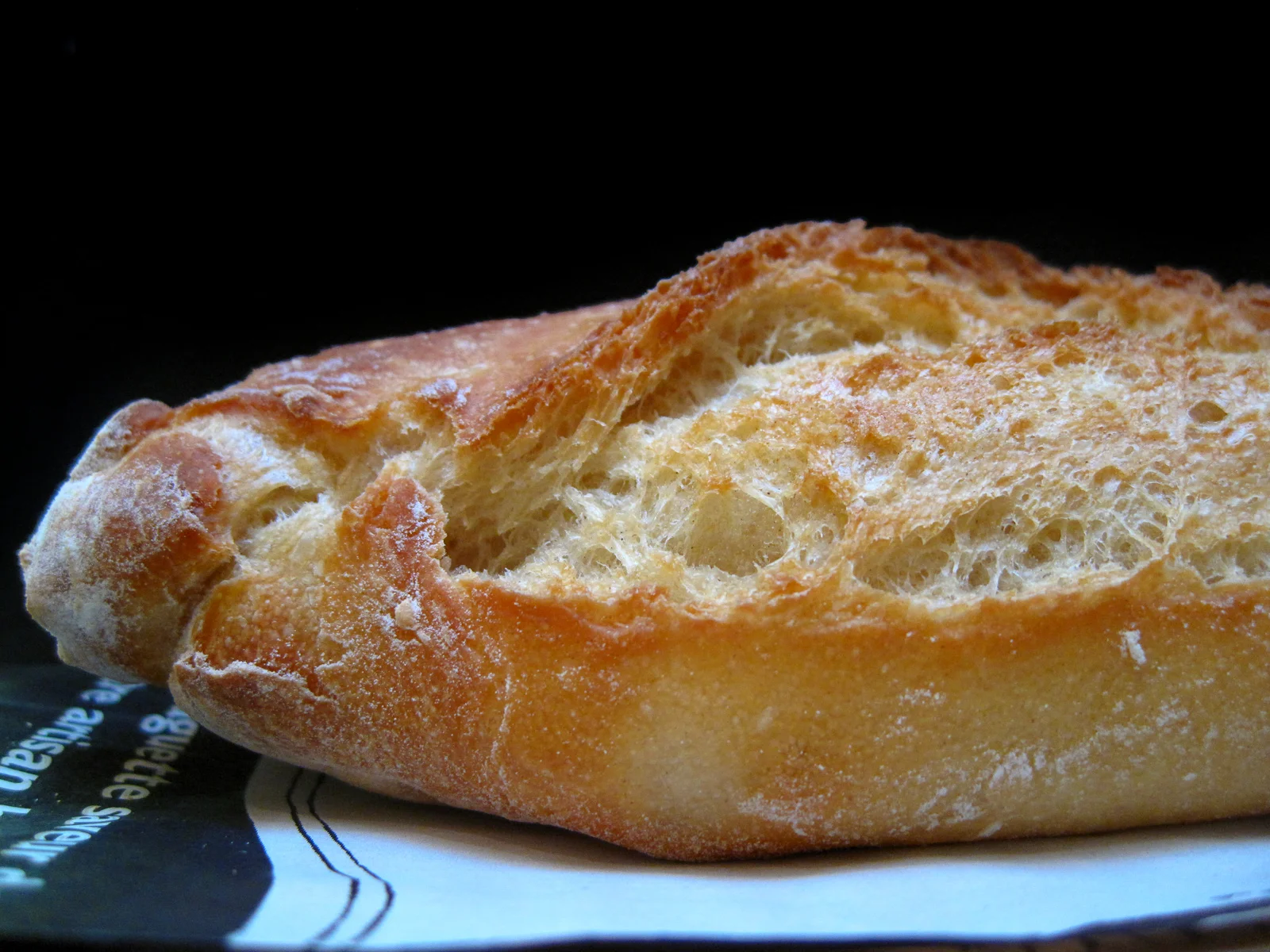
Stohrer's baguettes are thin and cylindrical, minimally puffing towards the middle. These baguettes are so thin that two can fit in a single baguette bag. They're plain in appearance with very little visible flour on the surface. There is a central fissure running through the entire center of the croissant. The texture is crispy and springy, perhaps from the small, uniformly distributed creating a bounce on the inside. The inside was dense and moist, though it smelled slightly of yeast. Breaking off a piece produced a mess of small flakes of toast. The flavor was of toasted bread, dominated by the crust.
Some claim Stohrer invented the baba au rhum. Being as famous as this place was, I was curious to see how non-sweet baked goods tasted. While possibly the best baker in the immediate area, I wasn't blown away by the flavor. But the texture was particularly interesting. Since the baguettes did have such a small diameter, half of each bite was crust: too much for me, but perhaps perfect for others. The smell of yeast also threw me off a little.
Boulanger Julien, 85 rue Saint Dominique, 7e
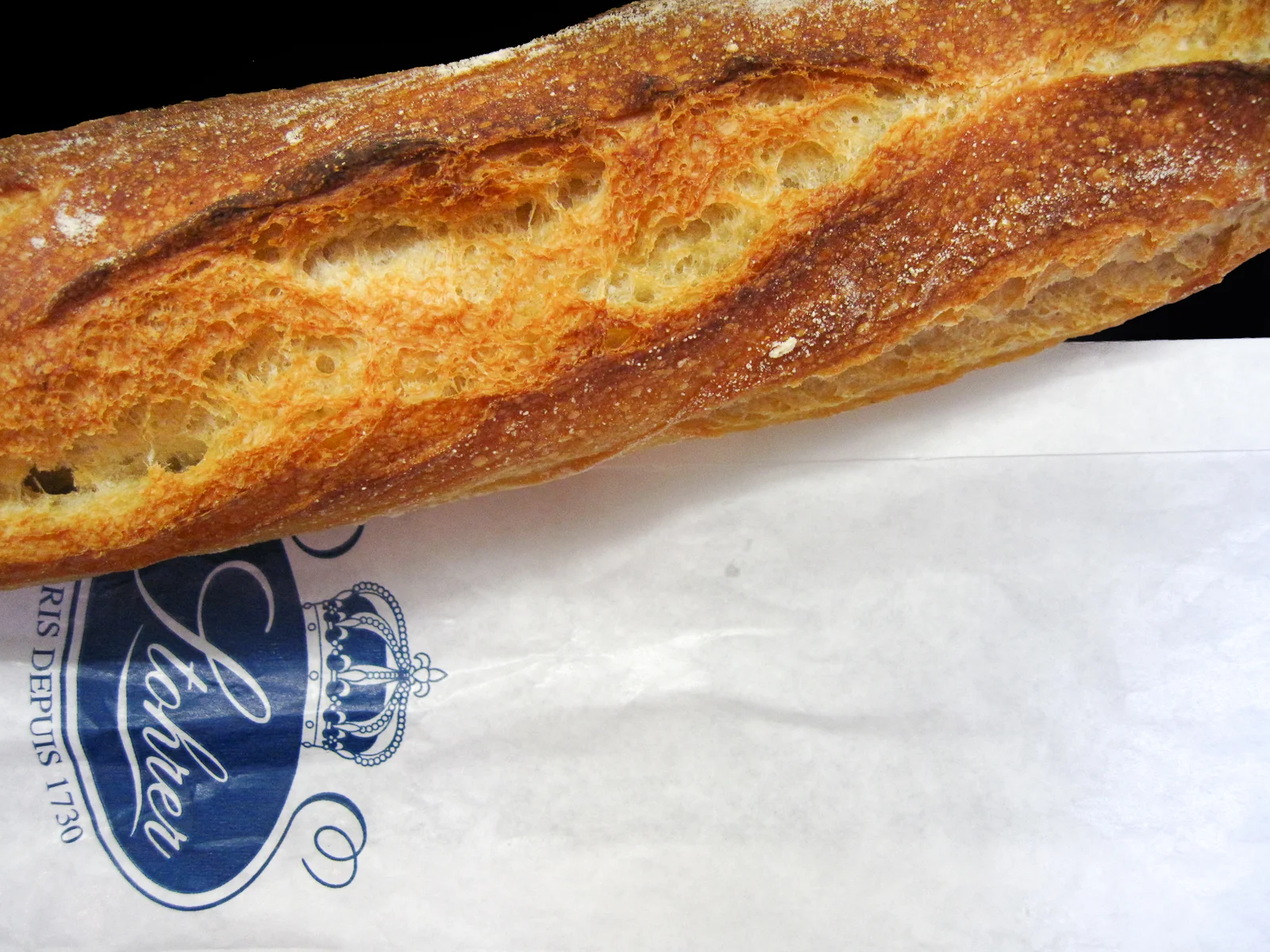
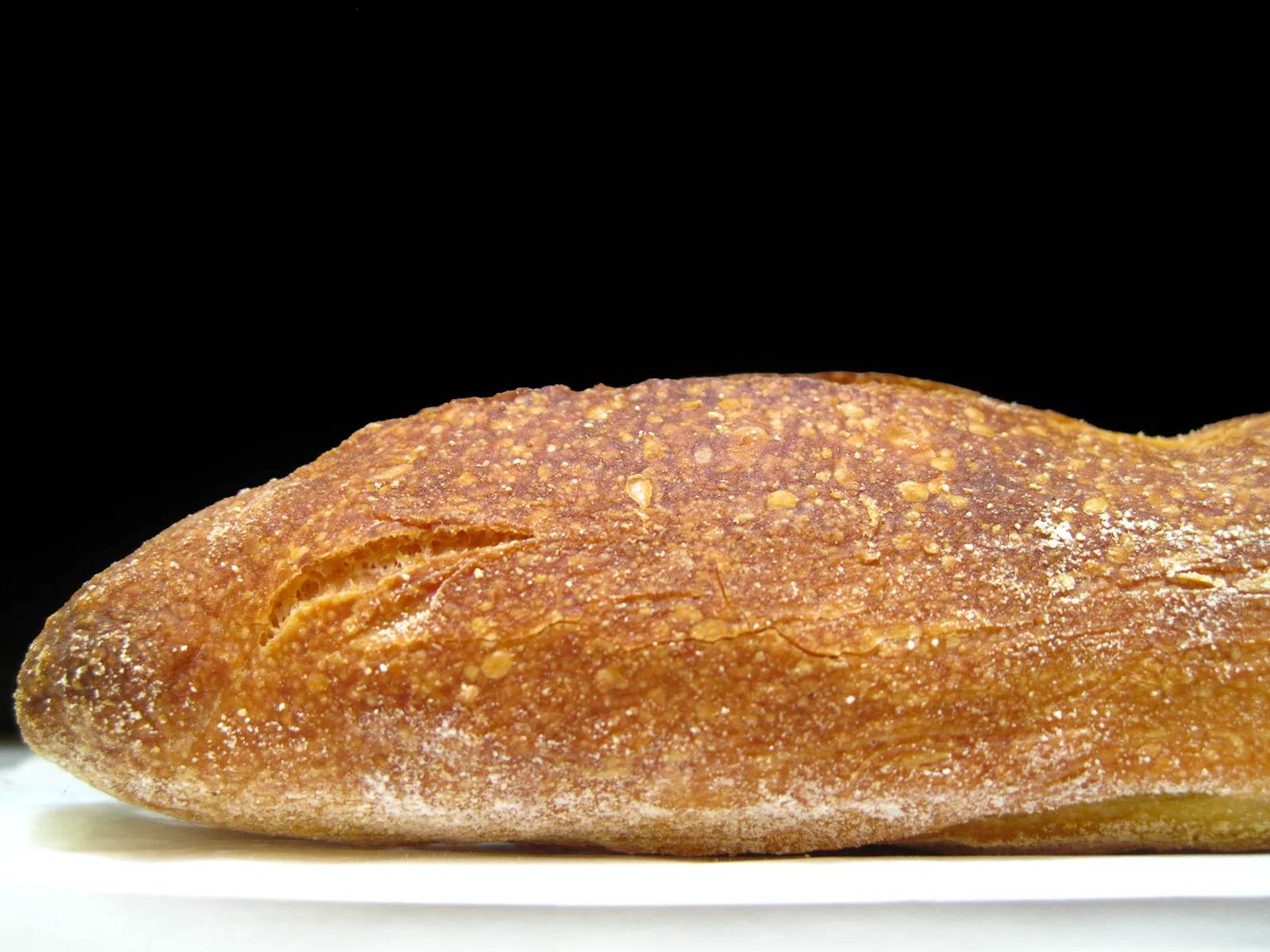
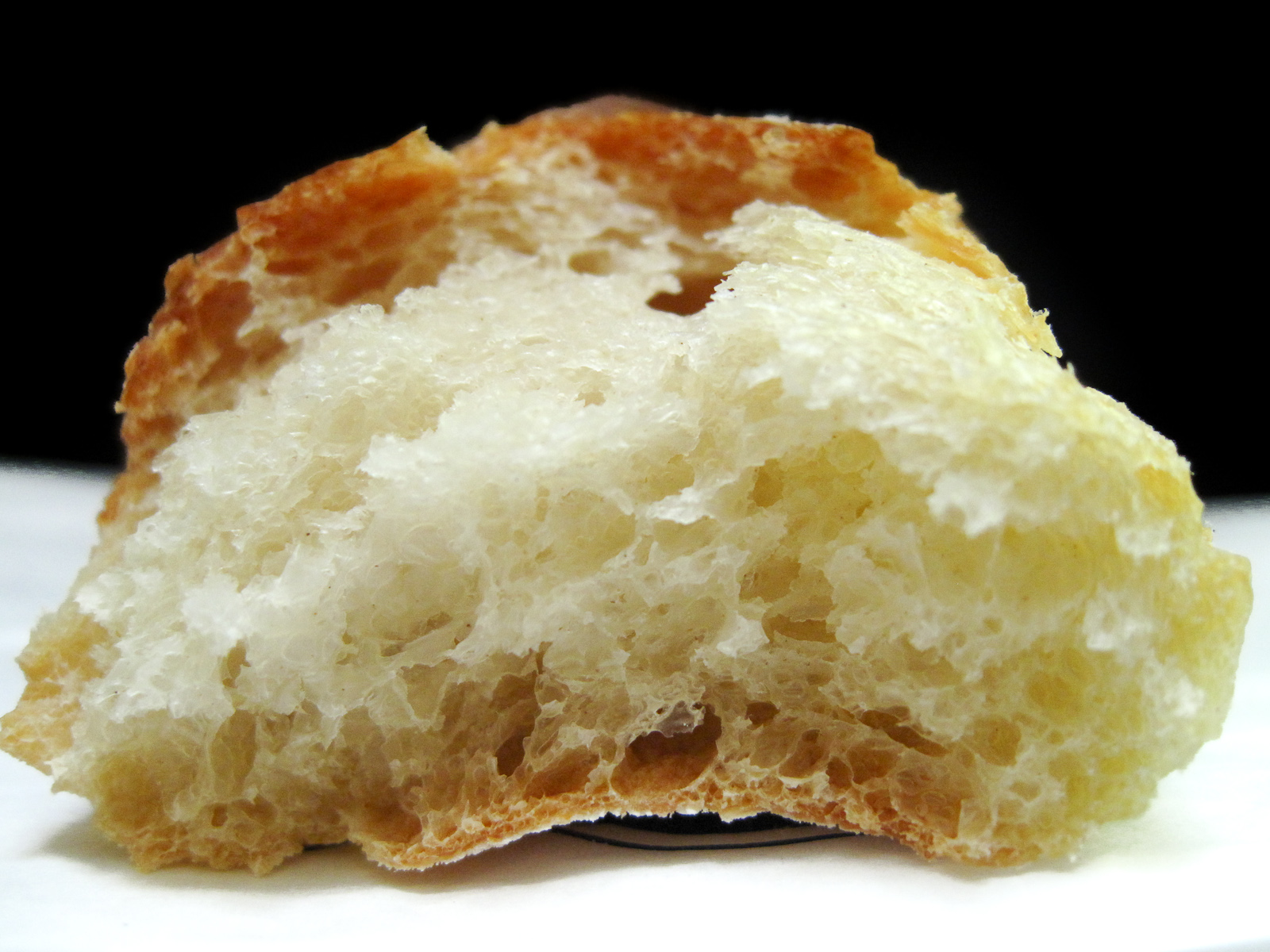
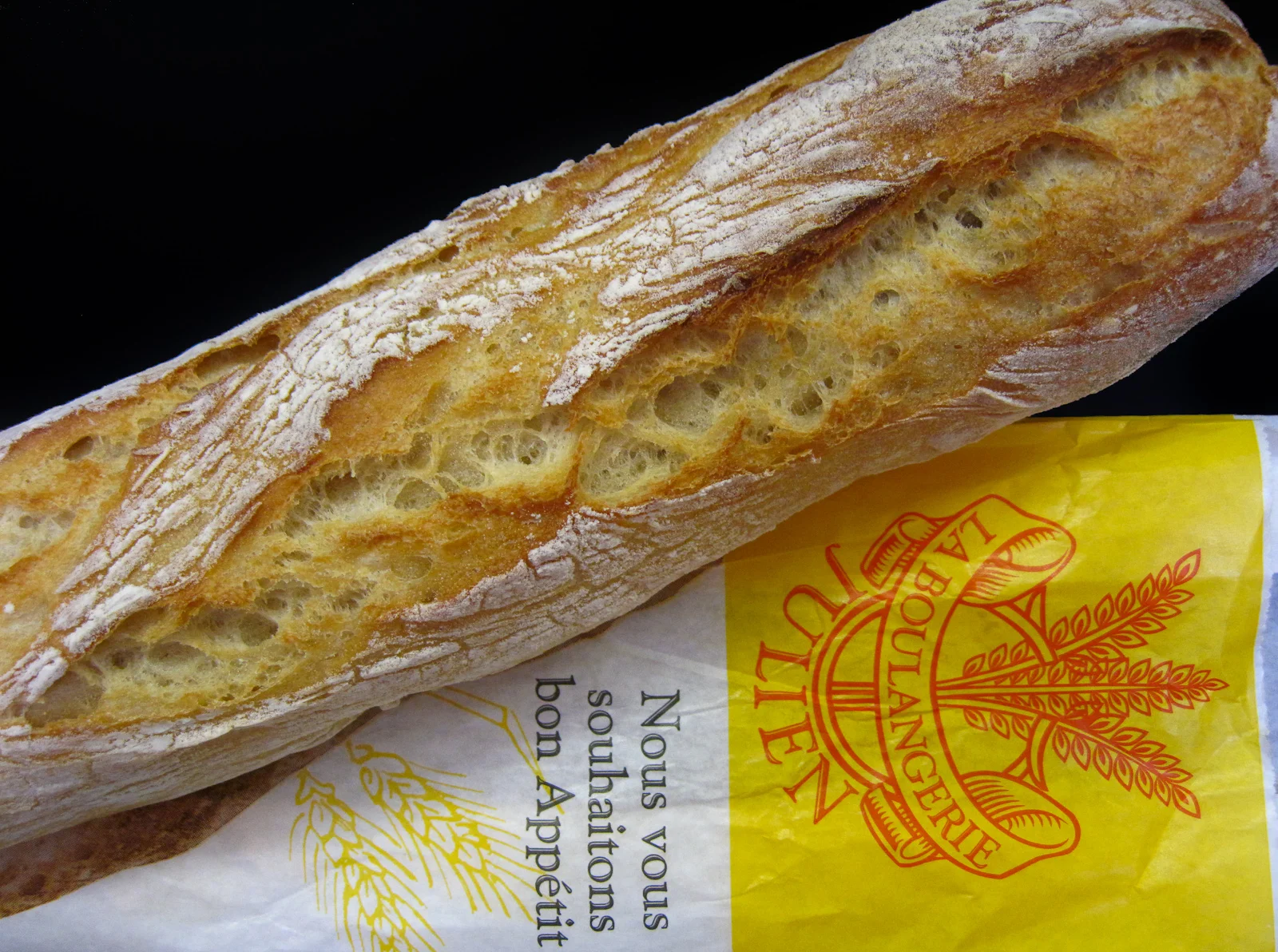
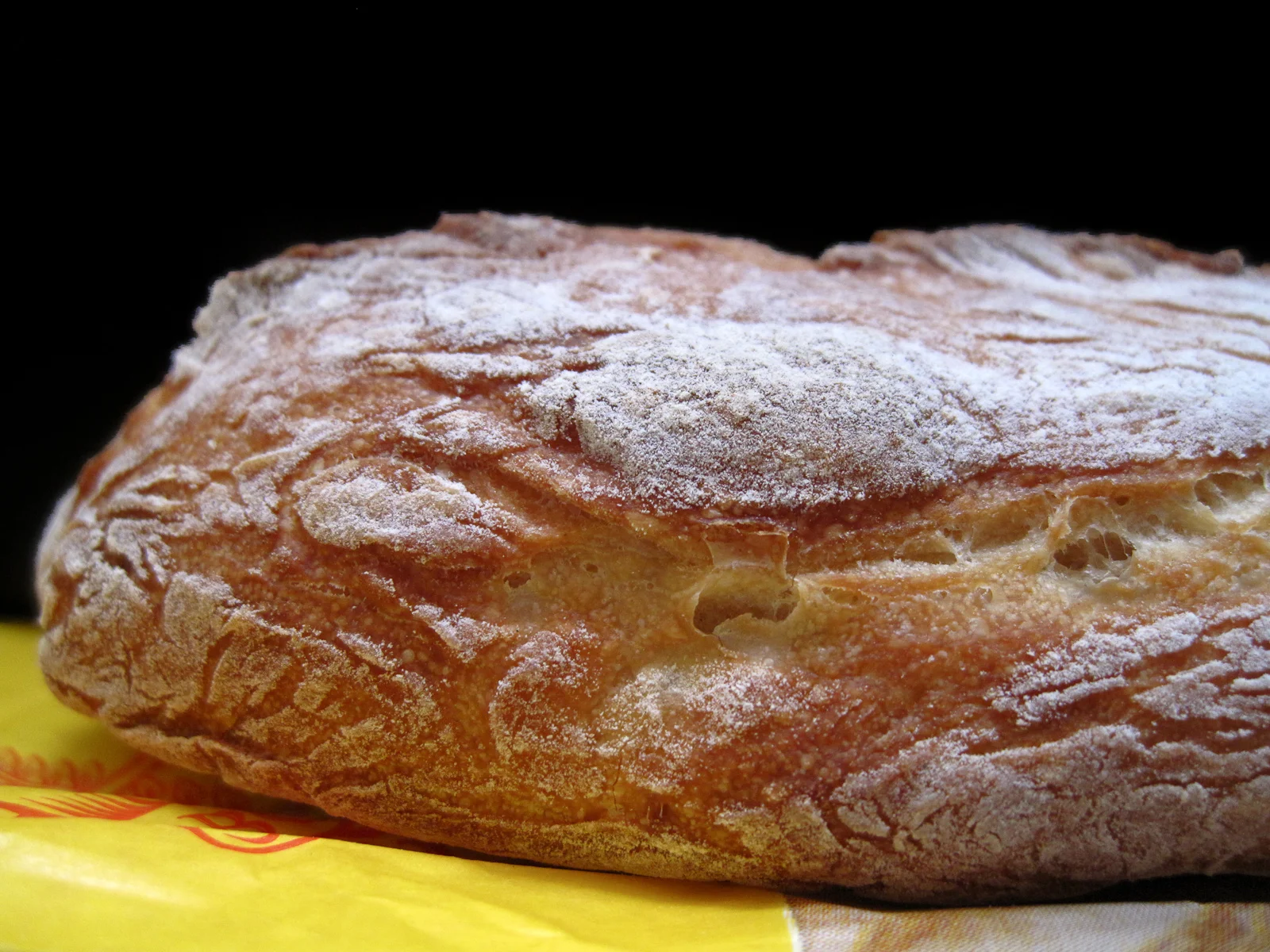
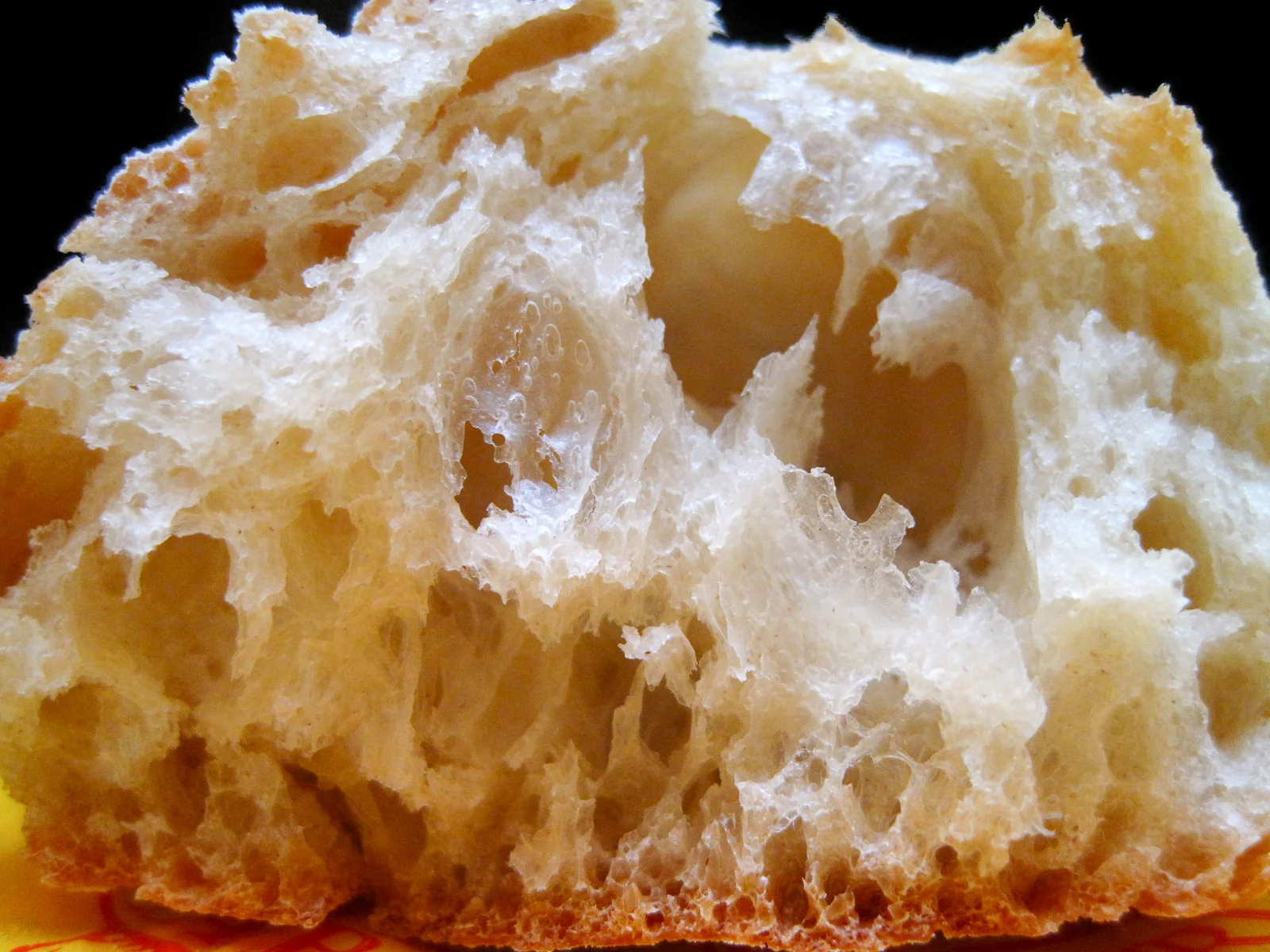
The plump baguettes from boulanger Julien had a nice appearance of both rustic and modern -- sifted with flour to make them visually interesting yet loaded with fissures bound tightly by the glutens revealing that this is indeed a pastry hundreds of years old. The outside was very light with colors ranging from cream to light tan. The baguette was soft to the squeeze and slightly mailable. Pieces broke off very cleanly with minimal to no flakes left on my table; the breakage was also silent. The inside was filled with uniformly distributed air pockets of small to medium size with notable density. The flavor was nutty, similar to chestnut, with a distinct vegetal taste on the finish yet neither salty nor sweet. The sifted flour dusting the surface was fairly thick, making each bite taste first of flour, then of the baguette itself.
This baguette had a lot of potential. My biggest complaint was the texture which was a little soft. I think my first one was slightly undercooked as the inside remained very chewy and the outside shell lacking crisp. The second was a bit more crispy. The most interesting part was the vegetal flavor that would have paired really nicely with salted beurre de bordier. When I broke off my first piece the smell was strongly of chestnut and potato. Really interesting.
Frédéric Comyn, 27 rue Friant, 14e
Located at the last stop of the 4 subway line at Porte d'Orléans, Frédéric Comyn is officially at the outskirts of the city. I heard about Frédéric Comyn from Chez Pim's post on the best croissant in paris. It's easy to walk by this pâtesserie; there are no signs and the well-lit display counter and cash register makes it look a bit like au bon pain. Well, at least I missed it the first time. When I asked for a baguette ancienne the woman told me there were no more left. Then her friend came to the rescue, "I think some just came out of the oven." That was all I needed to hear.
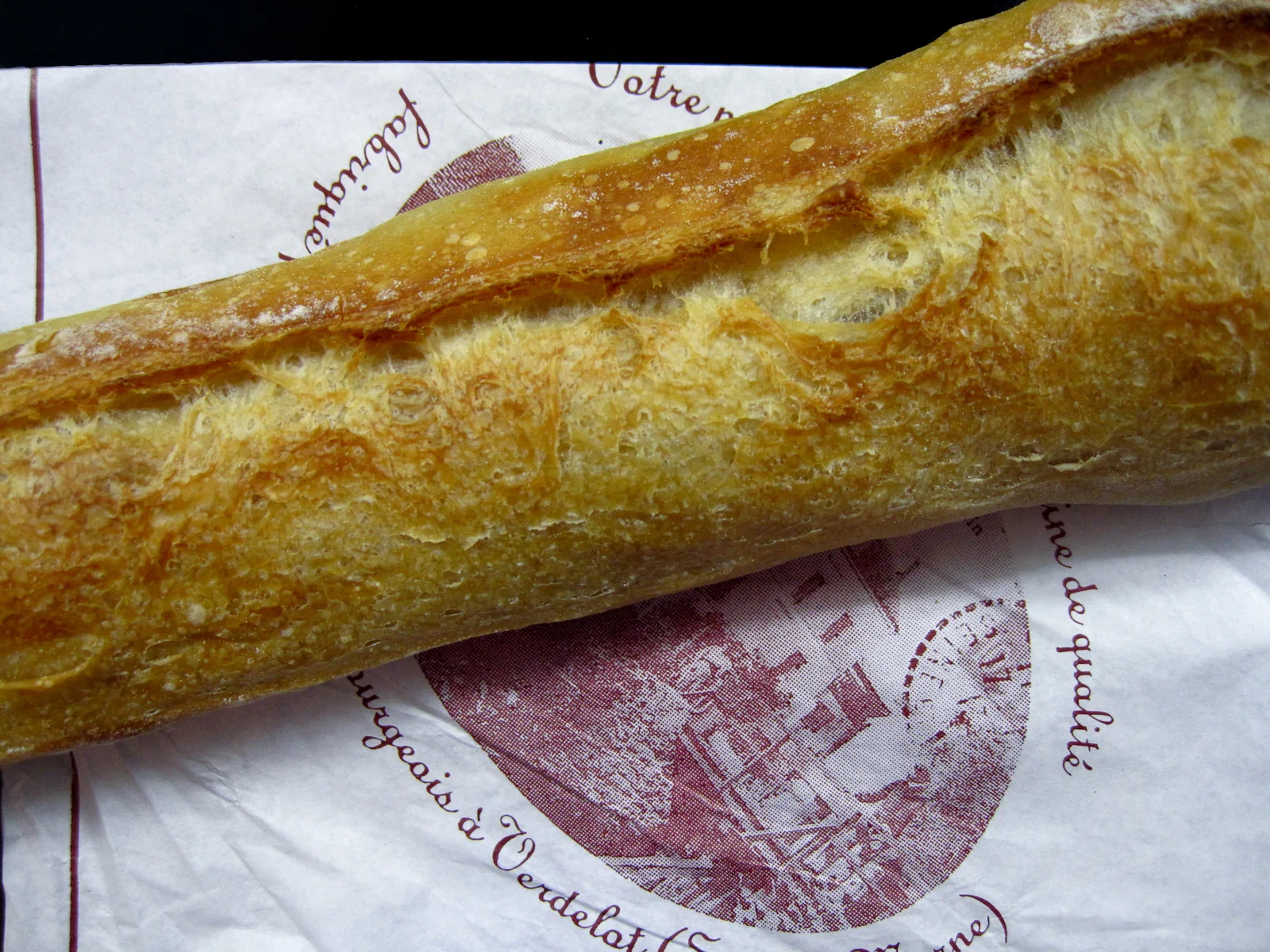
Frédéric Comyn's baguettes are nearly perfect cylindars: in most parts, they're as tall as they are wide. There is a single fissure that traverses the top revealing a lighter colored interior. The top golden-colored surface has moon-like craters with patches of dark brown; the bottom is white with flour. The texture is a lot like a plain New York bagel: a thin and tight shell that doesn't crisp very much when squeezed. There is some rebound; but if squeezed too firmly, the shape will stick. Inside is a little sticky which might explain why there was little rebound when squeezed. When I tore off a piece I was able to twist the baguette without it breaking until I pulled hard enough that a piece tore off: this was not a crispy baguette. The flavor was light with little to no toasted flavor. There was no sourness or whole grain flavor in the dough, the flavor was as basic and simple as possible.
I like a thin crispy crust on my baguettes and so I found these a little too crust-less; though these could very well be the perfect baguettes for those who dislike the flavor of toast. The interior actually seemed a touch undercooked as it was slightly sticky to the touch. Though chewy, the density of this bread worked nicely with salt and the best butter in the world; then again with that butter, anything is delicious.

Le Quartier du Pain, 74 rue Saint-Charles, 15e
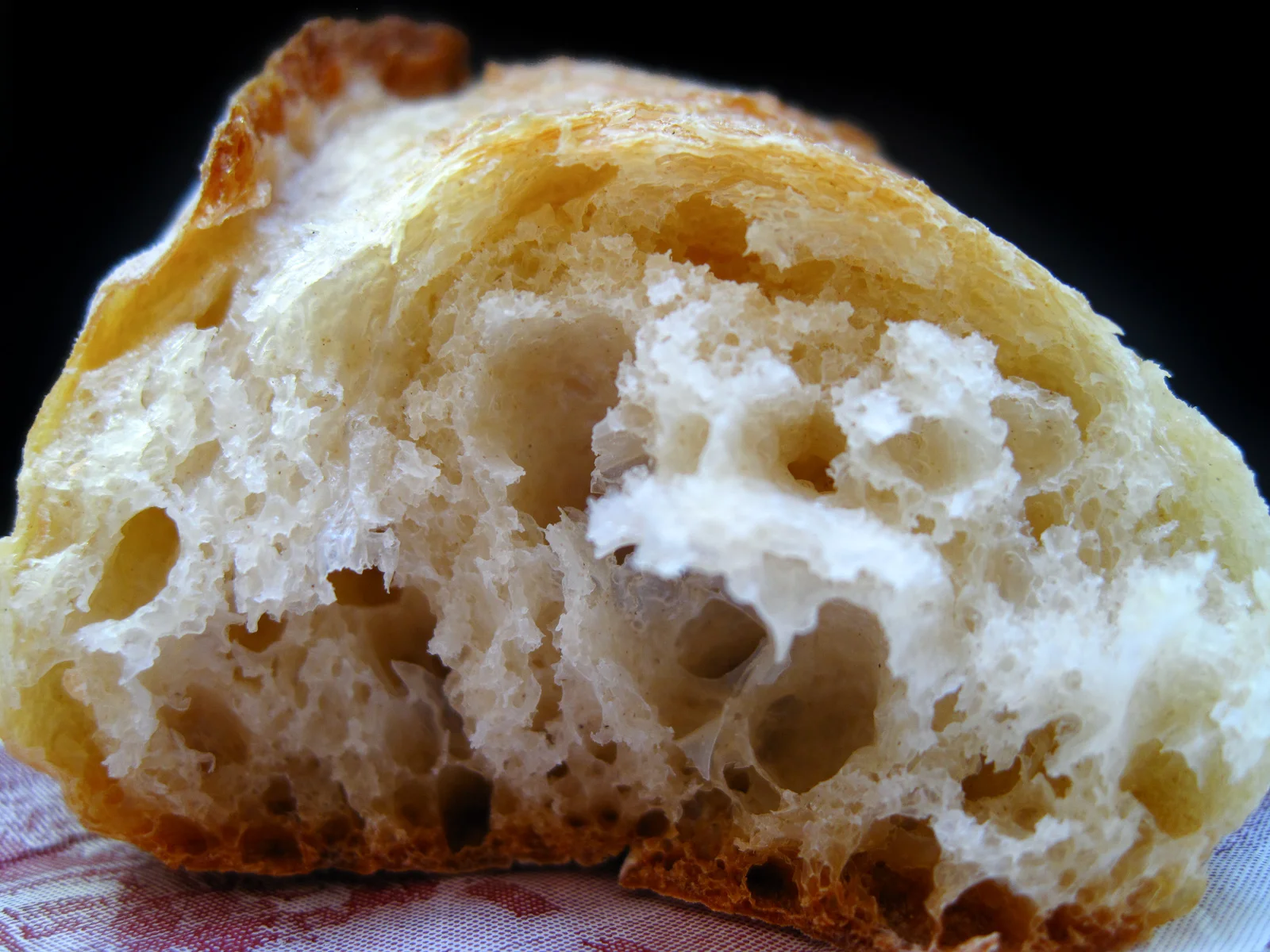
Hiding a few blocks behind the Eiffel Tower lies the best bread in the 15th, found at Le Quartier du Pain. This small corner shop bakes fresh bread throughout the day, so it's no longer necessary to wake up at the crack of dawn to eat something hot. The first thing that struck me about Le Quartier du Pain's baguettes were the tear-shaped crevasses lining the surface. Each symmetric crevass has a crispy ridge along its sides which, when torn apart, produces a crackle similar to wood burning at a campfire. These baguettes are very crispy. In fact, when I was squeezing the baguette on my 30 minute trip back home, I realized there was essentially no spring or rebound to its texture. The crispy crust makes squeezing this bread a risk: too hard and you'll shatter it right then and there. Inside is a light grey-brown with randomly distributed bubbles of small to medium size. The crust is very significant here, and its flavor of toasted bread dominates each bite. This is not a baguette for the Japanese those who do not like crust. The flavor and smell is slightly sour, and the inside borderline chewy. It is wet and moist, perhaps because this crust locks in the moisture so well.
I really enjoyed this baguette with butter and salt. I'm not sure if I would use it with cheese or cured meats due to its significant crust; but with simple garnishes it's predominately toasty flavor is delicious. The skill of the bakery comes across very clearly in this bread's incredible uniform crust and texture -- it is both crispy and soft, without being dry or heavy. I can only imagine what this would taste like hot.
Philipe Gosselin, 125 Rue Saint-Honoré, 1e
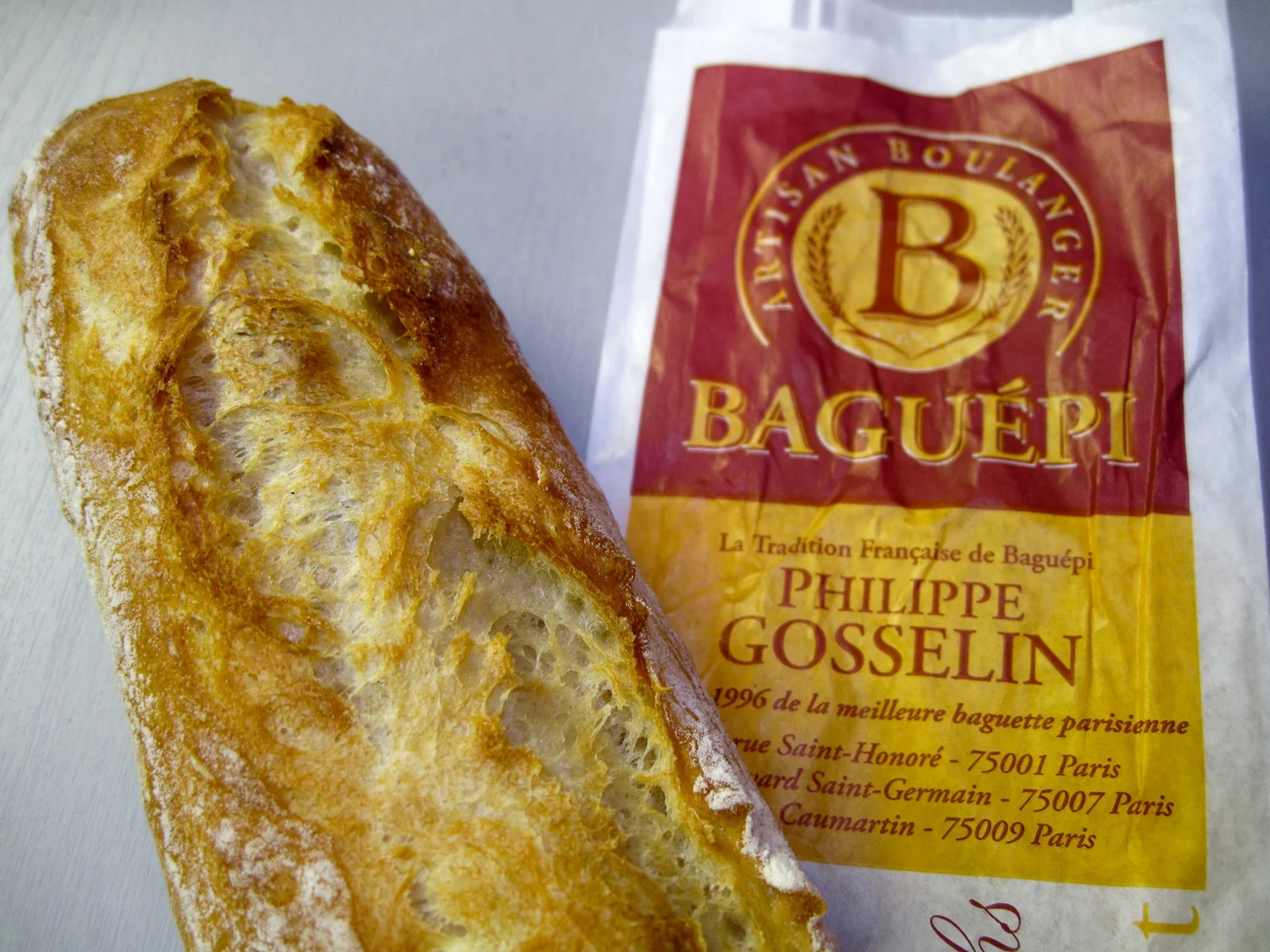
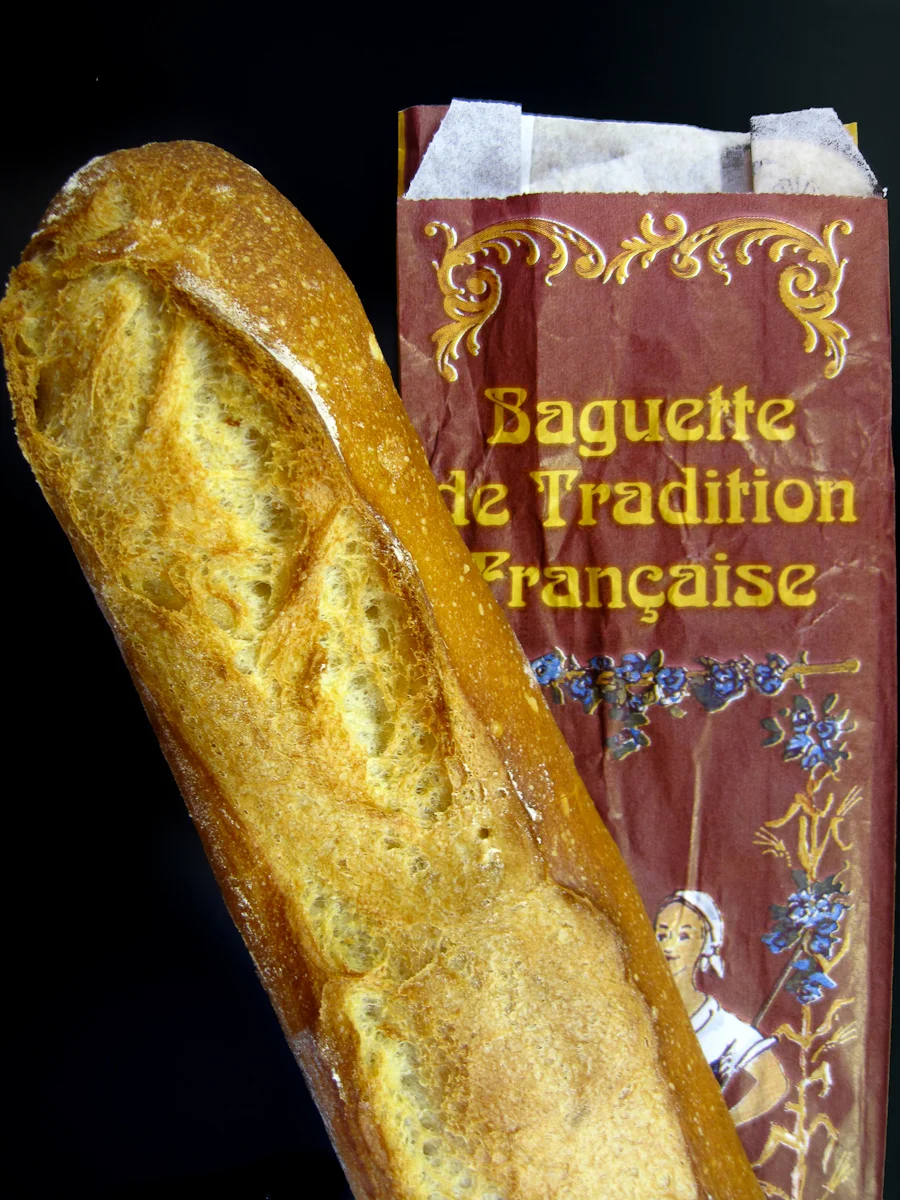
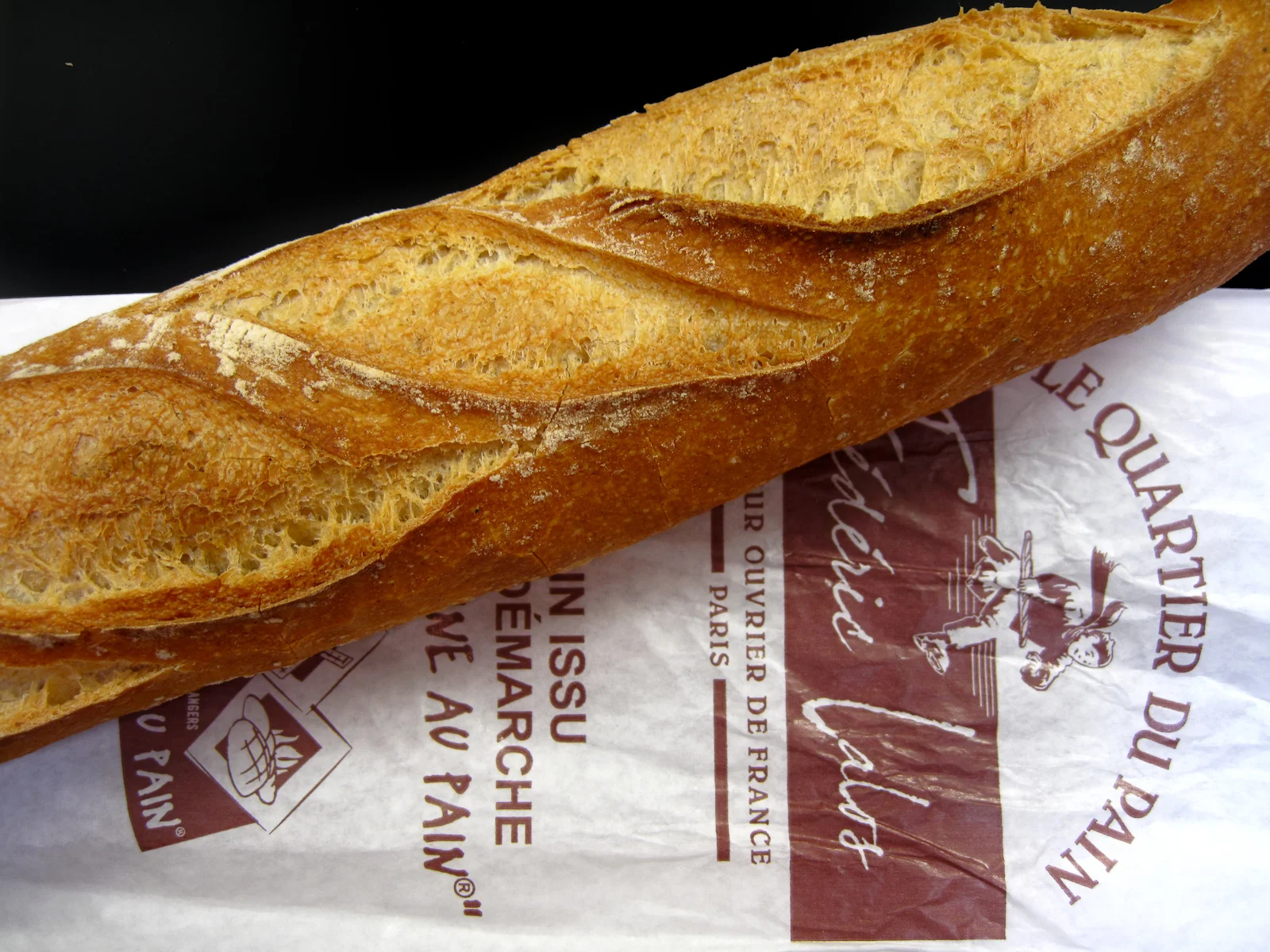
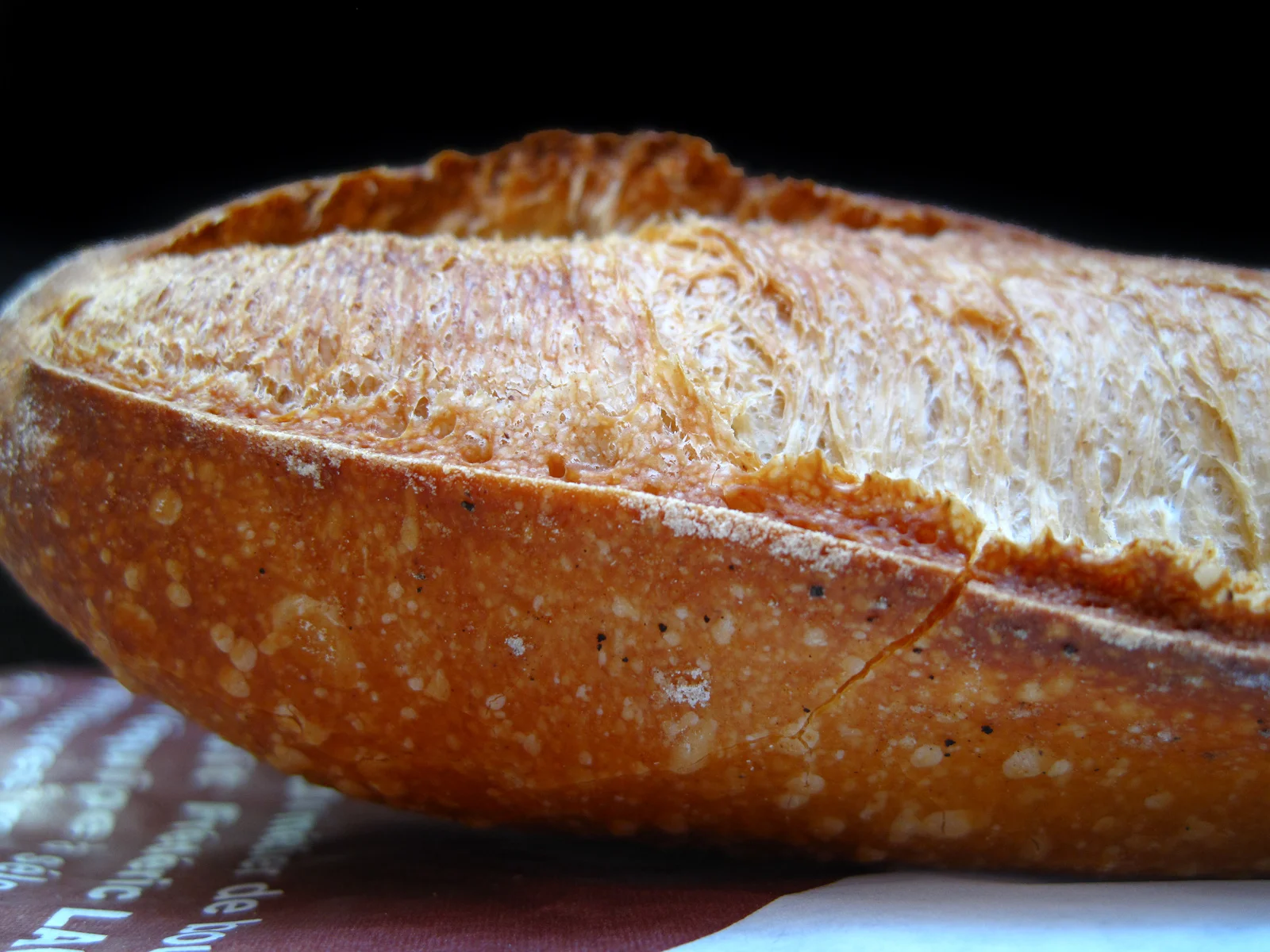
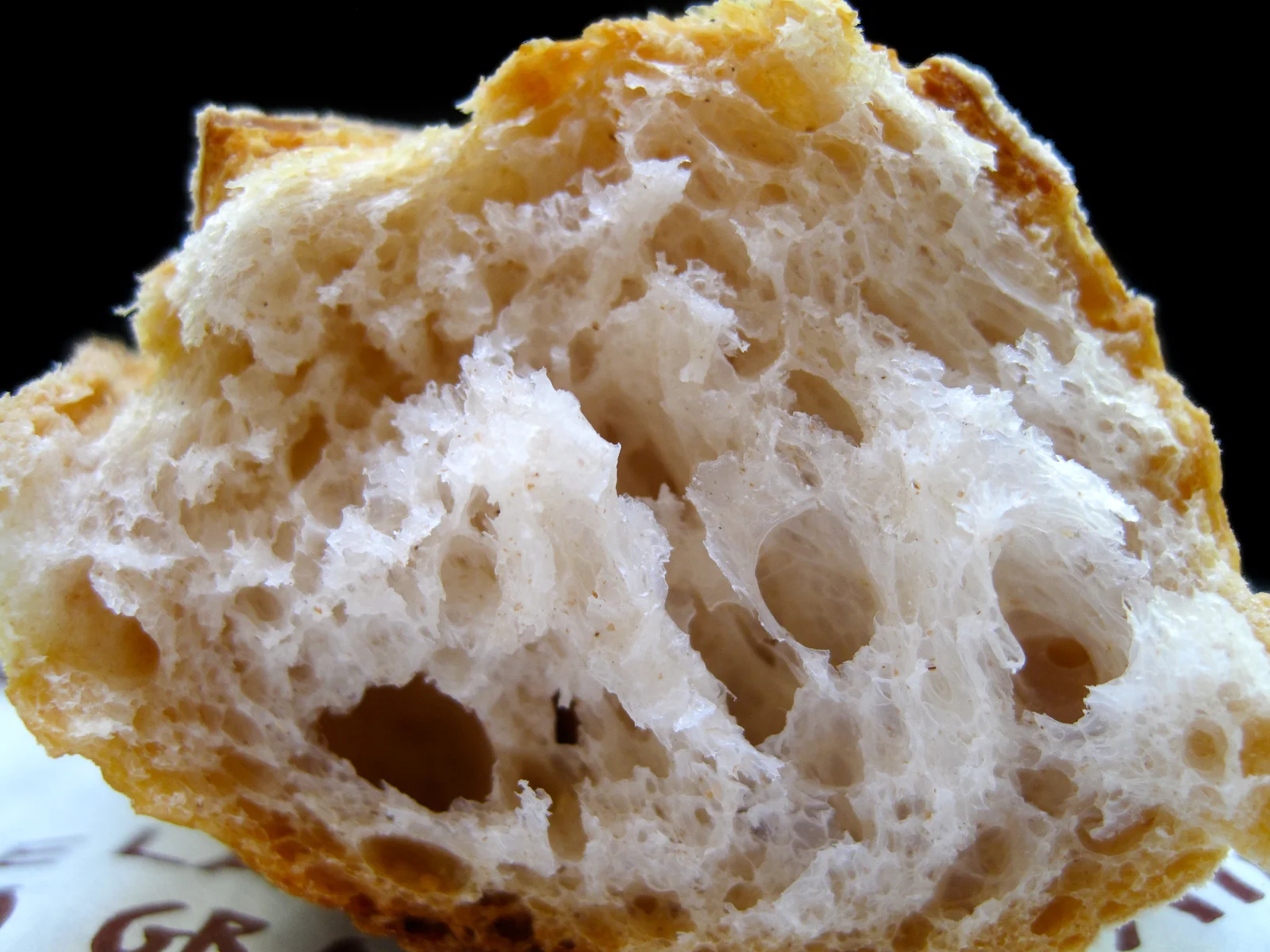
The baguettes here were rated the best in the city in a 1996 survey by Le Grand Prix de la Baguette de Tradition Française de la Ville de Paris, which Gosselin still proudly displays on each of its product bags. A lot has changed since then. These baguettes anciennes are easily distinguished by their gold to dark yellow exterior, with visible traces of flower on the surface. The underside is a darker color, a rich brown, and is the most crisp part of the baguette. The texture is springy, so much so that during my walk home I probably lost a few surface crumbs from the fun I had squeezing it. After breaking, the baguette kept pretty clean with minimal crumbs and fracturing. Since the bottom was significantly more dry than the top, breaking off a piece was a tear for the top half and a crisp for the bottom. There was no crackle sound; the crust was not very dry. The inside of this baguette has a nice distribution of randomly sized iridescent bubbles, indicating a high moisture content. This baguette was fresh. The texture of the interior was very similar to latex in both color and its slight transparency. The first flavor that struck me was the cholorinated water used to make the baguette, clearly not filtered. This baguette was fairly light on the tongue, not salty, and slighty sweet. The surface flour left a powdery texture on both my hands and in my mouth after each bite.
These baguettes have a beautifully symmetrical appearance on the outside, and the flour certainly makes them appear more rustic. My biggest gripe with this baguette was that sometimes the taste of tap water is too strong. Chlorinated water has no place in the flavor profiles of a baguette.