Ten-ichi

It wasn't until I visited Japan that I truly liked tempura. Outside of Japan, tempura batter is thick and greasy -- often soggy and wet -- making this deep-fried food taste more like sloppy, oily leftovers. I can't begin to count the number of times I've tasted shrimp tempura and had the plump tempura shell separate from the shellfish, or a piece of broccoli tempura that oozes fat like a sponge wringing out water. Most of the time, especially in the US, tempura is fried food gone very wrong.

At Ten-ichi, tempura is light and fluffy. Each piece of fish or vegetable is individually flash-fried at such a high temperature that the oil barely has little chance to penetrate the food. The batter is thin and weightless, completely integrating with the food: it would be nearly impossible to separate it.
Takamura

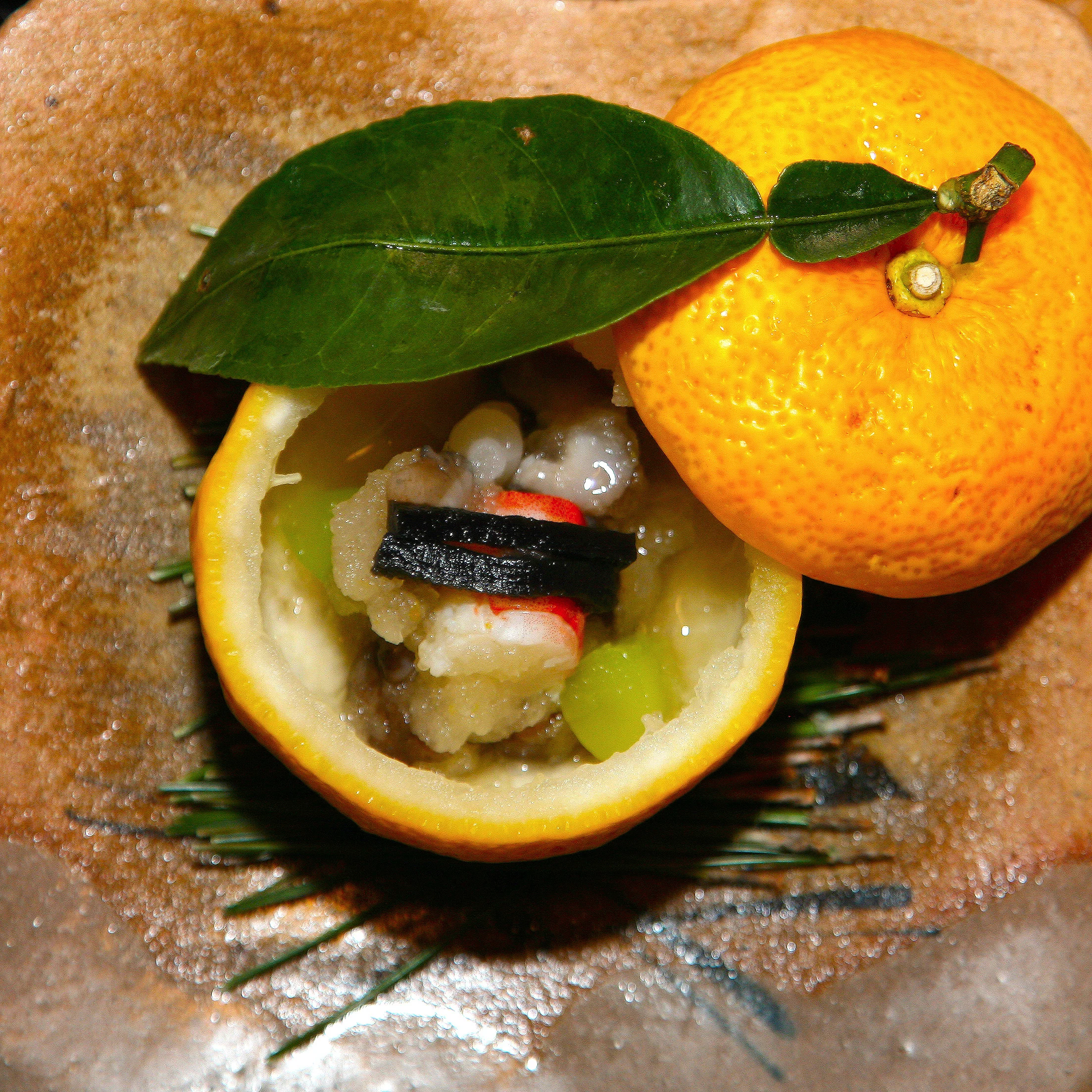
Over the past decade, Roppongi has become the center for Tokyo's nightlife. Full of bars and restaurants, Roppongi is loud, bright, and full of things to do. In contrast, nestled high on one of its hills, is a small oasis named Takamura. Takamura, built over sixty years ago, is a Japanese kaiseki restaurant serving private dinners in one of its eight rooms. The service, as well as the food, are exceptional. The architecture is traditional: wooden construction with rice paper doors and tatami mats. Diners are greeted at the door and taken to their room. The space is small and cosy, however despite the thin walls and presence of other diners, it would be hard to be convinced of their existence.

The table is a modified floor-seating arrangement with a two-foot depression into the floor. This means diners can sit at floor level without sitting uncomfortably with their legs crossed, like sitting in a chair. Underneath the table is a heated floor; so on cold winter nights with the wind howling and garden chimes softly clanging everybody inside is warm and comfortable.

Beige

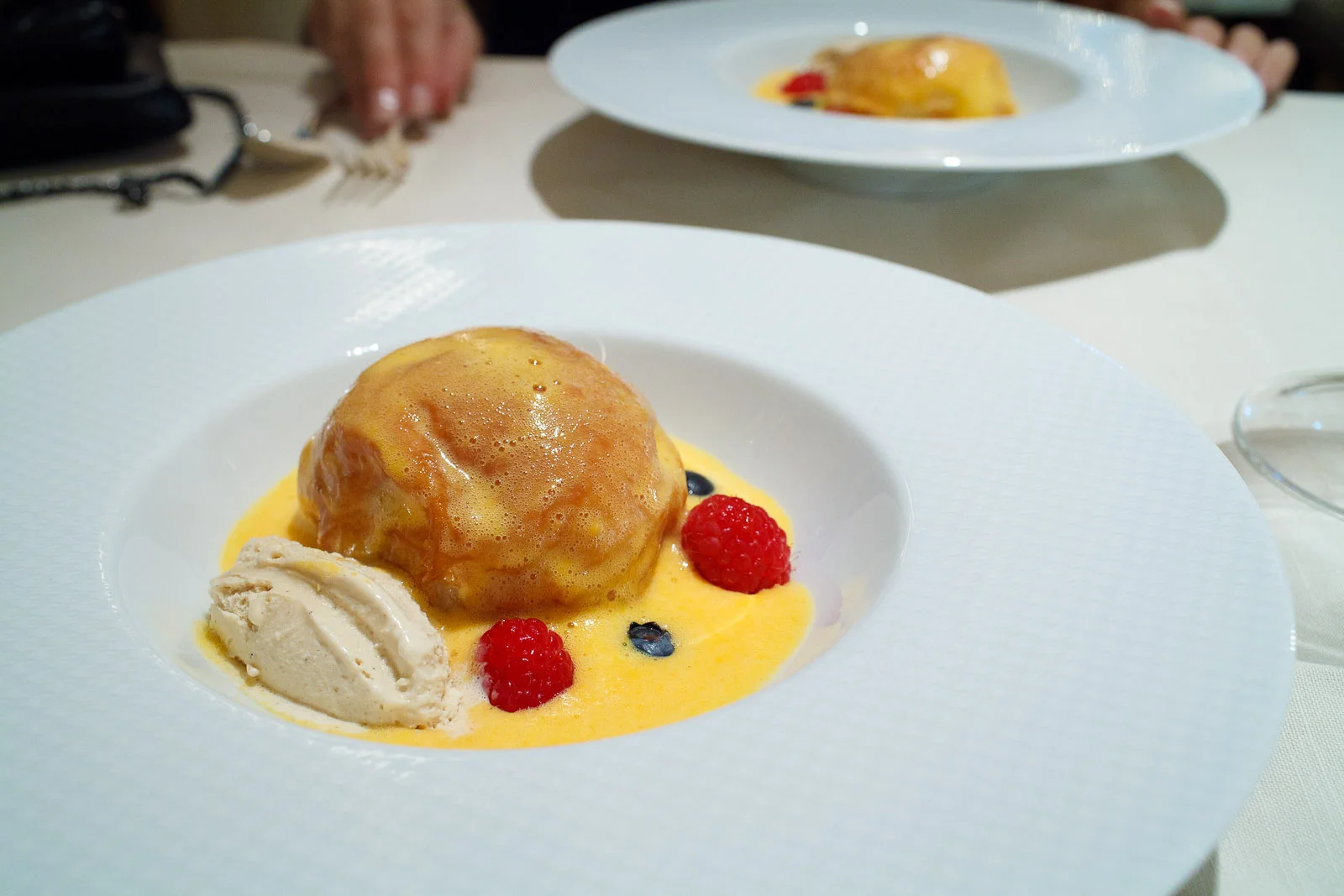
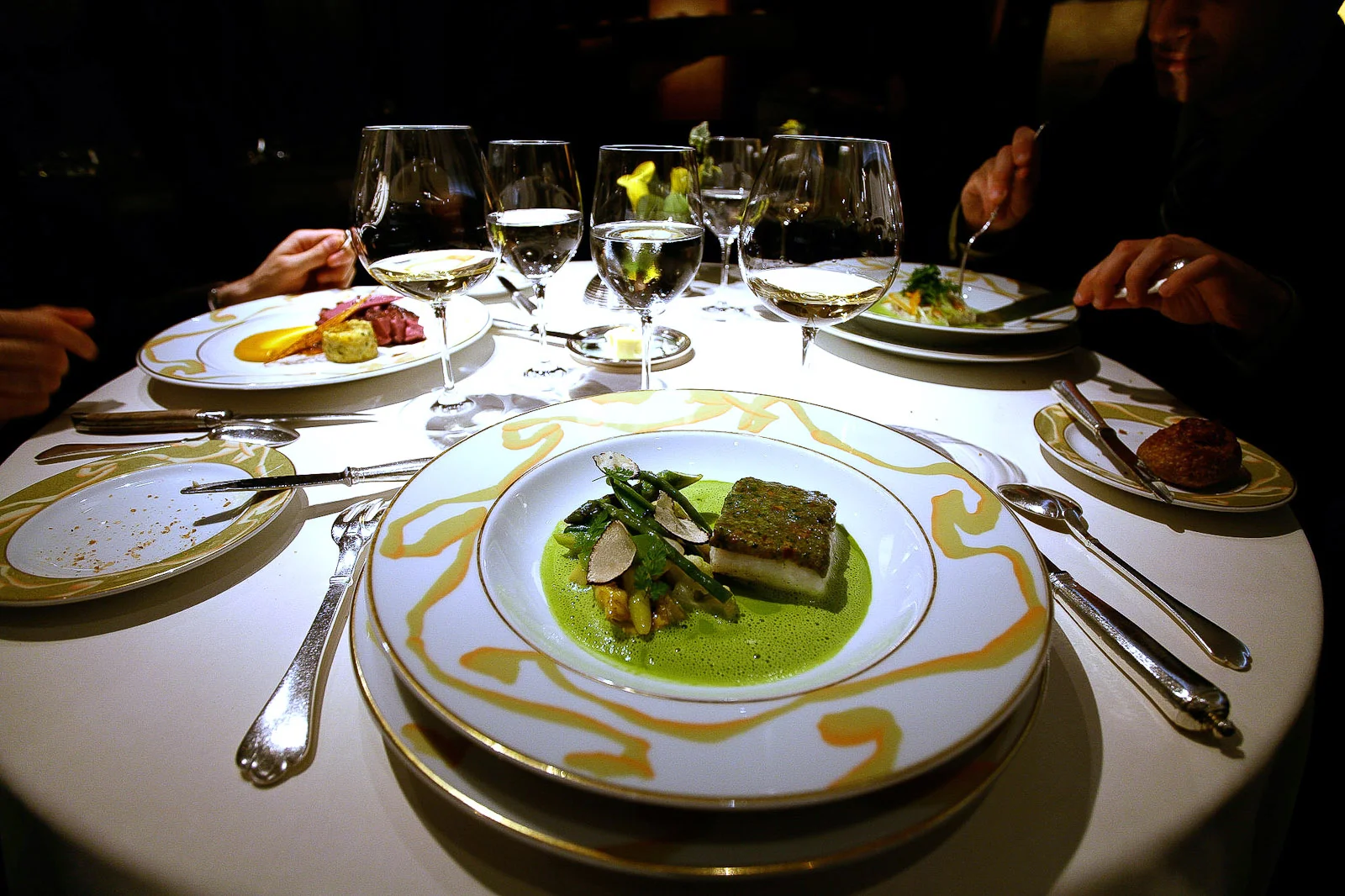
Beige Tokyo, Alain Ducasse's Tokyo outpost, is located at the top of the Chanel flagship store in Ginza. The floor to ceiling windows are framed with thick black borders, much like a pair of Chanel thick-rimmed glasses. The space is decorated in beige tones bringing an element of warmth to the otherwise stark atmosphere. Waiters and waitresses quietly whisk about in custom-fitted black suits. The sleek and stylish restaurant, designed by Karl Lagerfeld, is a must-visit for fashion-conscious diners. Beige is essentially a restaurant by a high-end designer in collaboration with Alain Ducasse. The food is also pretty good. The menu highlights traditional French ingredients, most of which are flown in from Europe. The dishes read in Alain Ducasse style with a simple ingredient made bold by a bombardment of luxurious accoutrements. The restaurant's dishes are consistent and familiar.

La Veduta

This past New Year's Eve we found ourselves in Osaka, one of the "kitchens of Japan." Unfortunately for us, the time around New Year's is a dead zone in Japan: nearly every restaurant is closed for the week-long New Year's holiday. There were some restaurants open, but they were all located inside the major hotels. There was a part of me that wanted to stick to Japanese-only "local" food, but another that was pretty hungry. Having never tried Italian cuisine in Japan, I made a last-minute reservation at the newly opened Italian restaurant at the St. Regis: La Veduta. The dining room was gorgeous: oversized chandeliers illuminating an open kitchen with large windows providing a view over downtown Osaka. Our maitre'd was Piemontese, a pleasant surprise of authenticity being nearly 6,000 miles away from Italy. The menu was prix-fixe which took the stress out of ordering. We ordered a glass of champagne and mentally transported ourselves to Europe.

Mist

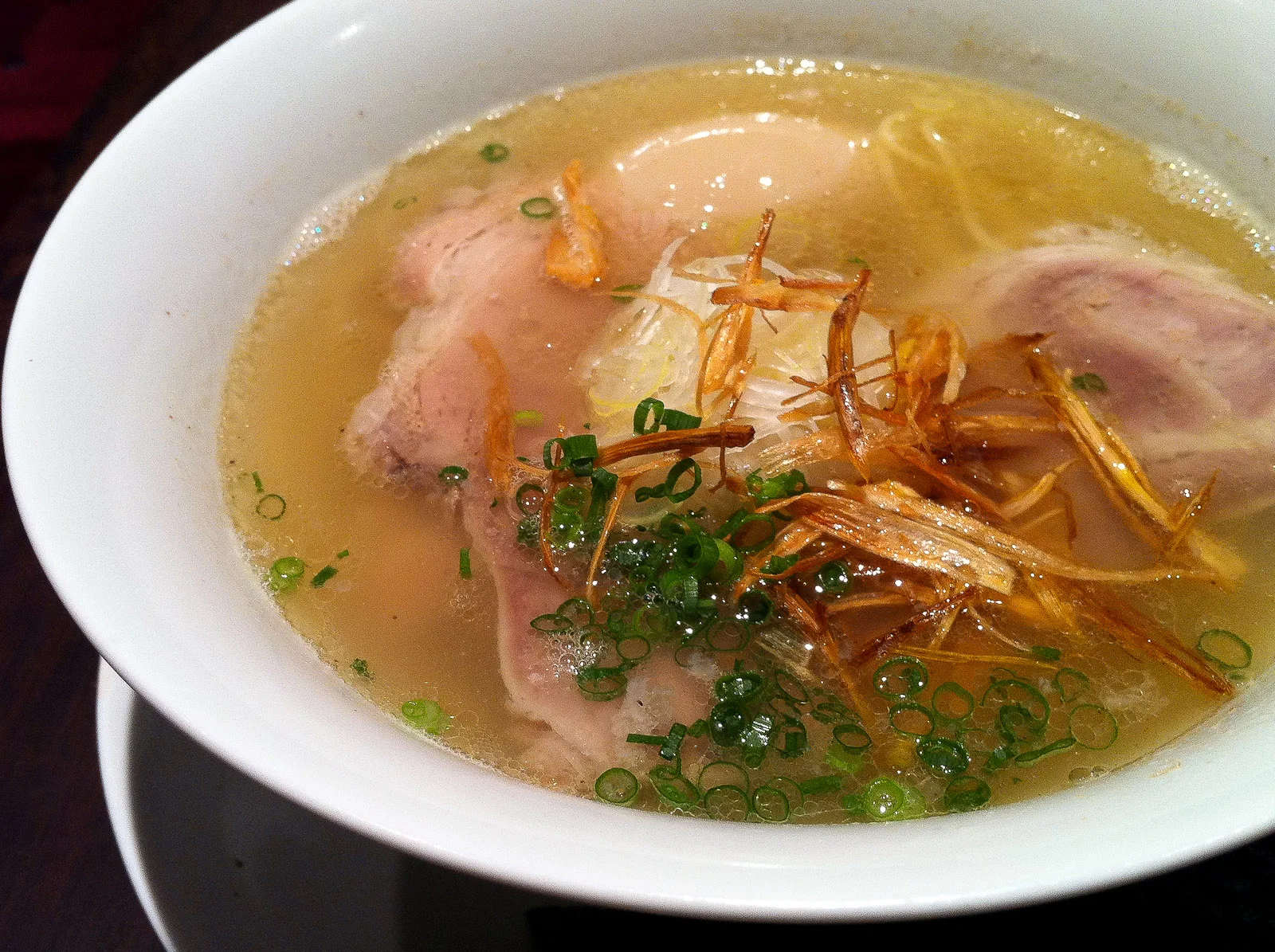
I'd always thought of ramen as a street stall kind of food. In Fukuoka, Yatai (street stalls) line crowded streets with nothing more than a short hanging curtain separating the stall from busy pedestrians. There's definitely something romantic about trying one of these ramen stalls, particularly in the winter where the hot steam from the central pot keeps the crowded of huddled diners warm. But frankly, the backless wooden stalls get uncomfortable after awhile as the sound of traffic becomes less charming and more annoying. There's an increasing trend in Tokyo to take traditional street food, enhance it, and escalate it to the fine dining level. That's exactly what Mist does. Located in on the third floor of Omotesando Hills, Mist occupies a small restaurant space paneled with granite and wood. It's very modern. Behind the stainless steel kitchen lies scales and thermometers ensuring that every step along the way, from shaping the noodles to plating the soup, results in perfection.

Sushi Kanesaka

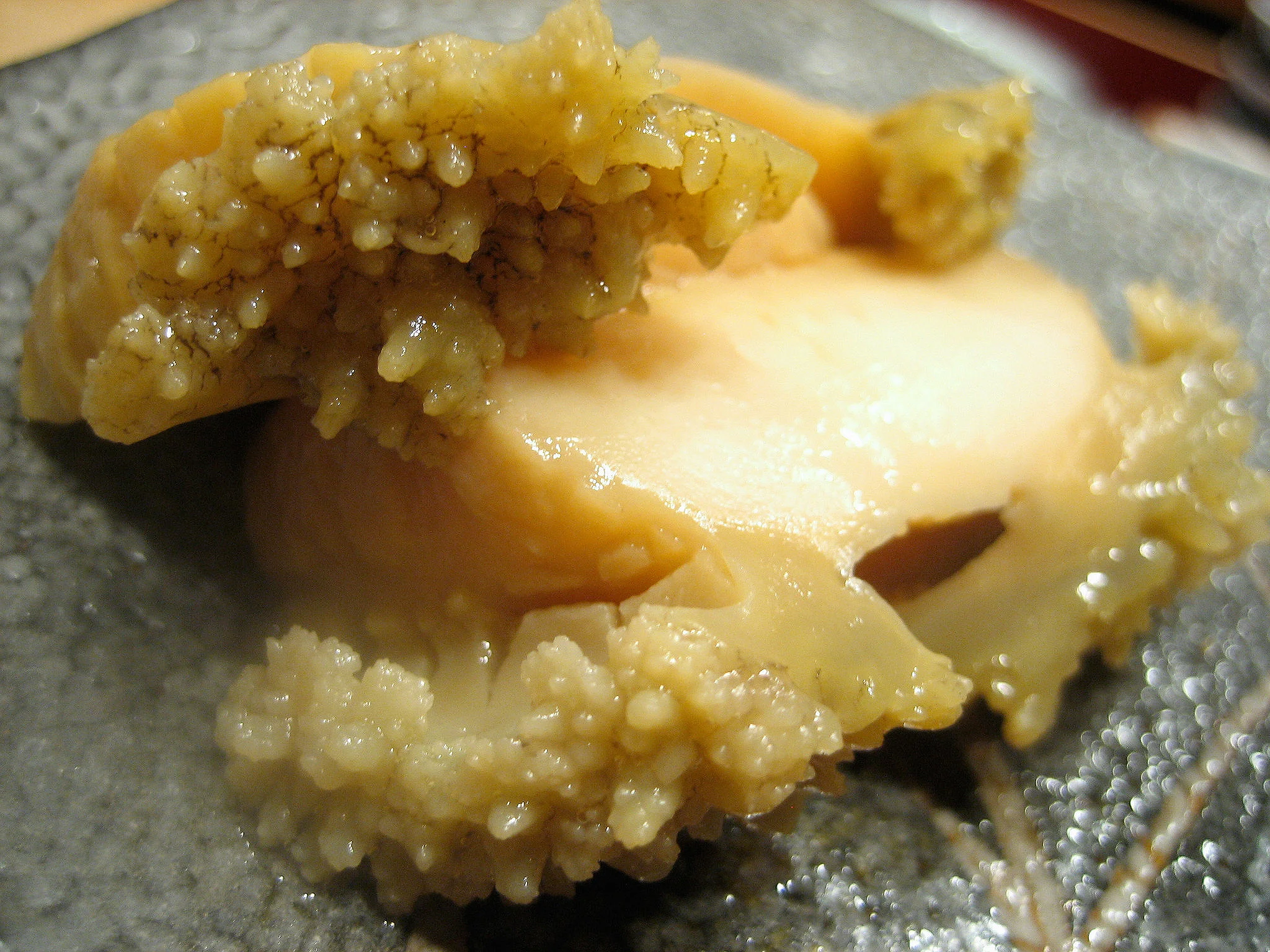
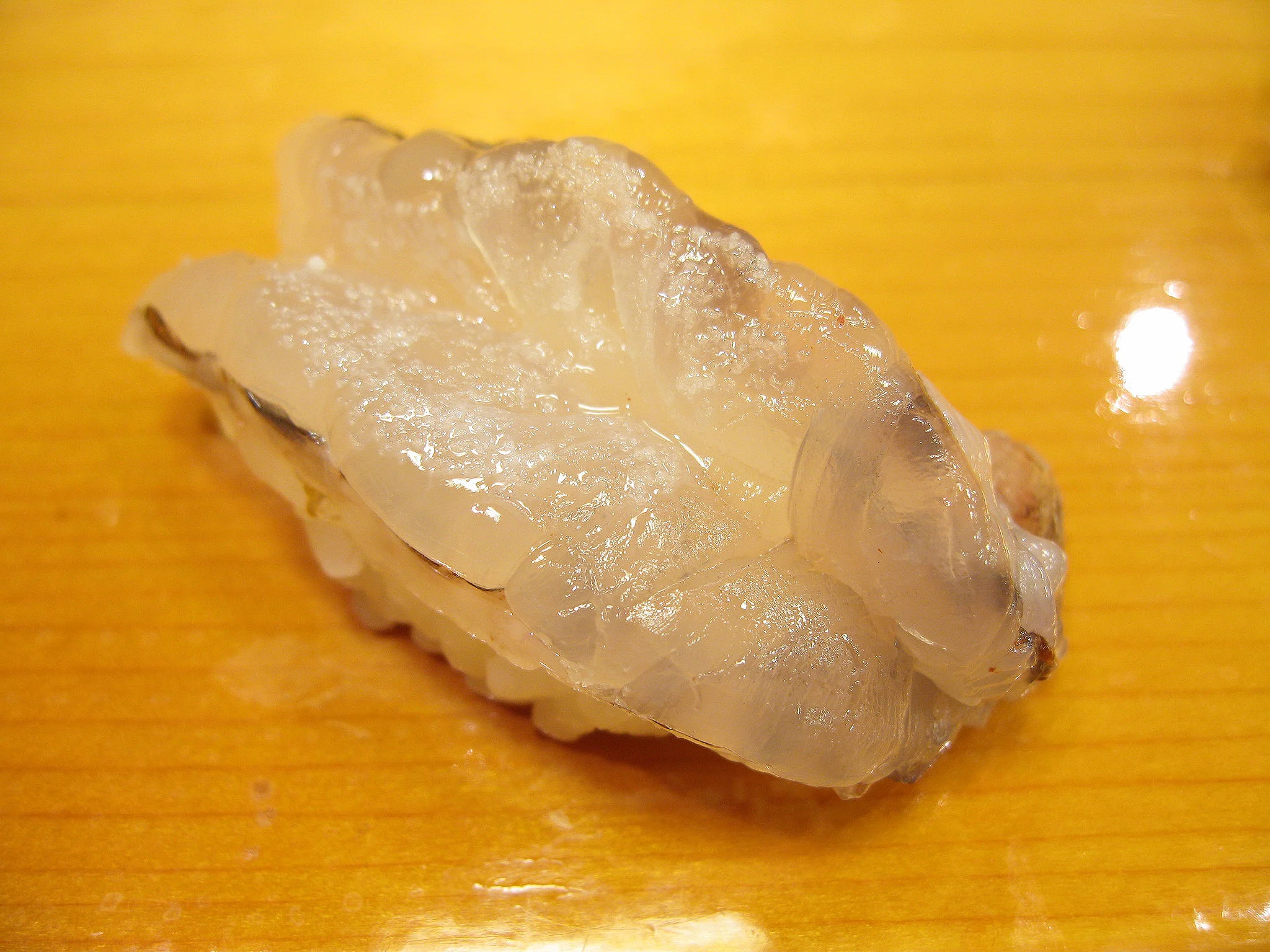
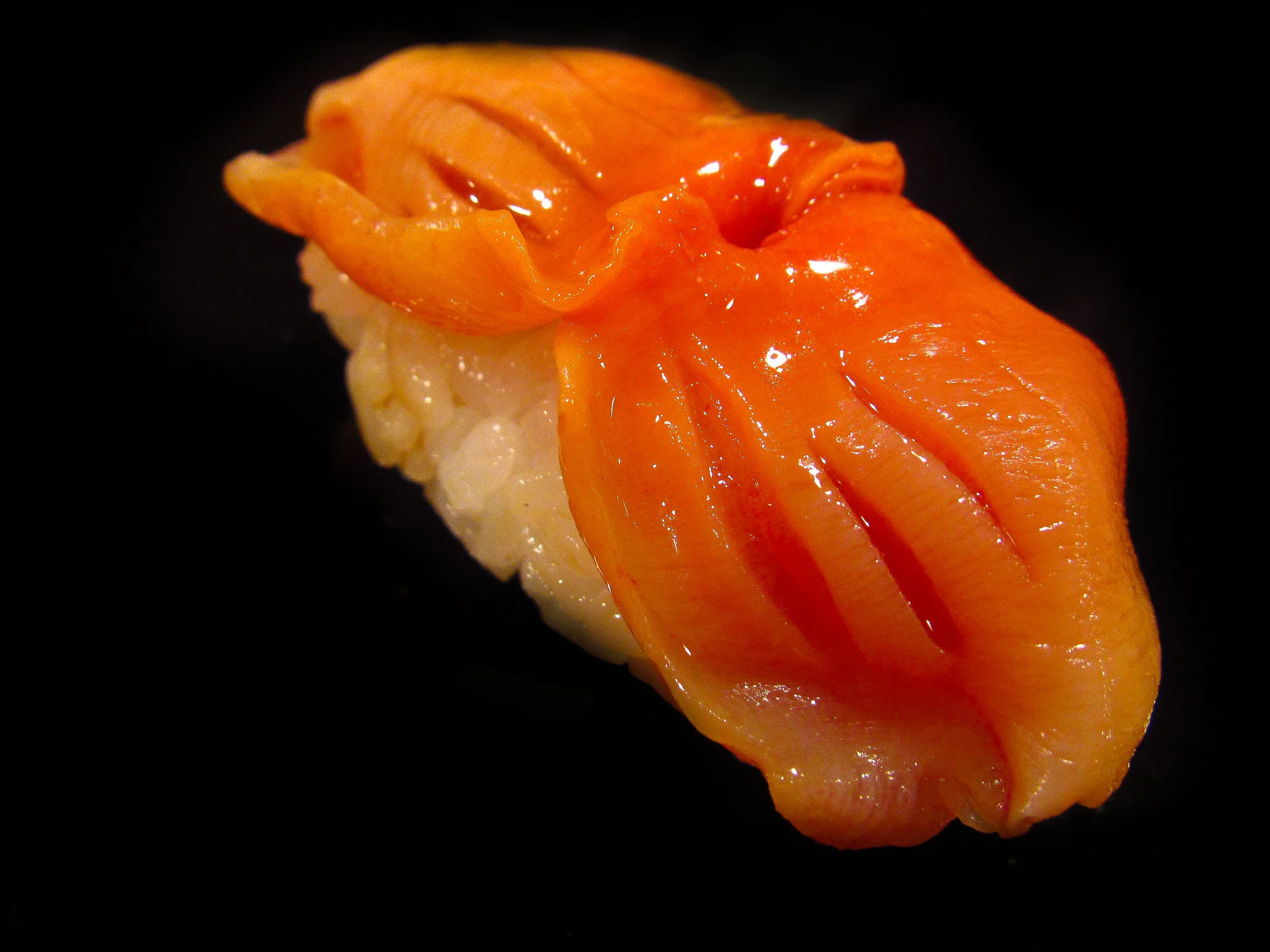
It's fairly easy to find good sushi in Tokyo, but rather difficult to find exceptional sushi. Even the bento boxes at Tokyo Station, which makes for a great accompaniment on a long Shinkansen ride, are of very high quality -- much higher than the average sushi quality in New York. But truly out of the ordinary sushi -- the rare combination of perfect textures, temperatures, and flavors -- is a rare commodity. There are only a handful of places at this level. Sushi Kanesaka is one of them. Located in the basement floor of a nondescript building in Ginza, Sushi Kanesaka is unassuming. Its thirty-something year old chef, Shinji Kanesaka, offers no indication from talking with him that he holds two Michelin stars. He is both humble and friendly.

The restaurant only serves omakase. However Chef Kanesaka's palette seems to prefer shellfish, which is what I would mostly order anyway. What made this restaurant so special aside from the freshness of ingredients was the fish selection: I wouldn't have ordered anything different from what was served. Chef Shinji Kanesaka read my mind.

Chihana

Kyoto's busy Shijo street -- now bordered with arcades, single-item shops, and fast-food -- was something quite different a hundred years ago. Shijo street is located in the center of Gion, the Geisha district of Japan's old capital city, Kyoto. The ancient Shijo-dori, originally constructed as a means for travellers to get directly to Yasaka shrine, is now one of Kyoto's businest streets, full of cars and tourists. Remnants of the street's rich cultural past remain, including hundreds of narrow alleyways leading to quiet courtyards where one can still catch a glimpse of an ancient way of life. Chihana, which translates to "flower patch," was at first difficult to find. It didn't help that the name was written in little kanji: チ花. The restaurant is located at the end of a long and dark alley no wider than an arm's width sandwiched between two modern shops off this busy street. With each step into the courtyard the sound of traffic dissipated into the darkness. At the end was an unlabeled sliding door -- common in this area of Kyoto where private Geisha dinners are held.

Kyubei, Ginza

Sushi is my favorite food. There's nothing so satisfying as a slice of the freshest fish imaginable just barely brushed with soy sauce -- or dusted with a pinch of salt -- atop a small bed of warm rice. Omakase is a great way to enjoy this experience because it introduces the elements of surprise as well as the chef's knowledge of the day's best catch. But how does the chef always know what I want? Sometimes an elaborate sushi meal is too much; sometimes I want to choose a handful fish I'm craving and eat lightly. Sometimes, ordering a la carte at a sushi counter is the way to go. Kyubei sushi, in Ginza, is perfect for diners who want to chose their own fish. The relatively informal atmosphere in combination with ease of getting a reservation at one of its five locations throughout the city makes it a good option for a last-minute dinner decision. Besides, who can object to a meal of eight pieces of unimaginably fresh sea urchin sushi? (I've done it before.) The fish at Kyubei is extremely fresh and the pricing much more reasonable than Sukiyabashi Jiro.

Sukiyabashi Jiro Revisited

My first visit to Sukiyabashi two years ago was one of the best sushi meals of my life. The meal's beauty lies in its apparent simplicity: just rice and fish. Of course this is deceiving. The exquisite sushi is the amalgam of impeccable ingredients and skill, from the hand-selected blend of rice and its meticulous steaming, to the exacting ratio of fish to rice and the timing with which it's served. Even the luke-warm temperature of the rice and its precise grain count per piece, as well as the sushi's position on the plate, is no accident. Chef Jiro Ono, Japanese living legend, is perhaps the world's greatest sushi chef. The atmosphere of Sukiyabashi Jiro seemed more relaxed and comfortable than the last time. While both the chef and his son were friendly and engaging in 2008 food photography -- no matter how subtle -- seemed to make them a bit uncomfortable. Two years later and chef Ono was smiling and welcoming photos. The sushi bar also seemed to have more foreigners. During my last meal I was the only foreigner at the table. Considering my meal in 2010 was on the exact same day as in 2008, it's unlikely a seasonal difference. This is probably due to its Michelin 3* rating permeating out, as well as the increase in internet publicity.

Pierre Gagnaire, Tokyo

My last meal at Pierre Gagnaire, Paris was a roller coaster. Lots of ups and downs and by the end of service I was left holding on to my chair in confusion. Any great restaurant has to take risks in the kitchen to achieve something great. But my original experiences were like a lottery, and after three meals at Gagnaire Paris, I kept losing. Pierre Gagnaire Tokyo, in some ways, was the complete opposite. There were few risks. Everything was consistent. This is good in the sense that no single course was particularly disappointing; bad, however, that nothing was exceptional. Exceptional cuisine balance risk-taking and spontaneity with consistency, and it's no easy task. My meal here was an extremely toned-down version of my meal in Paris.

New York Grill & Bar

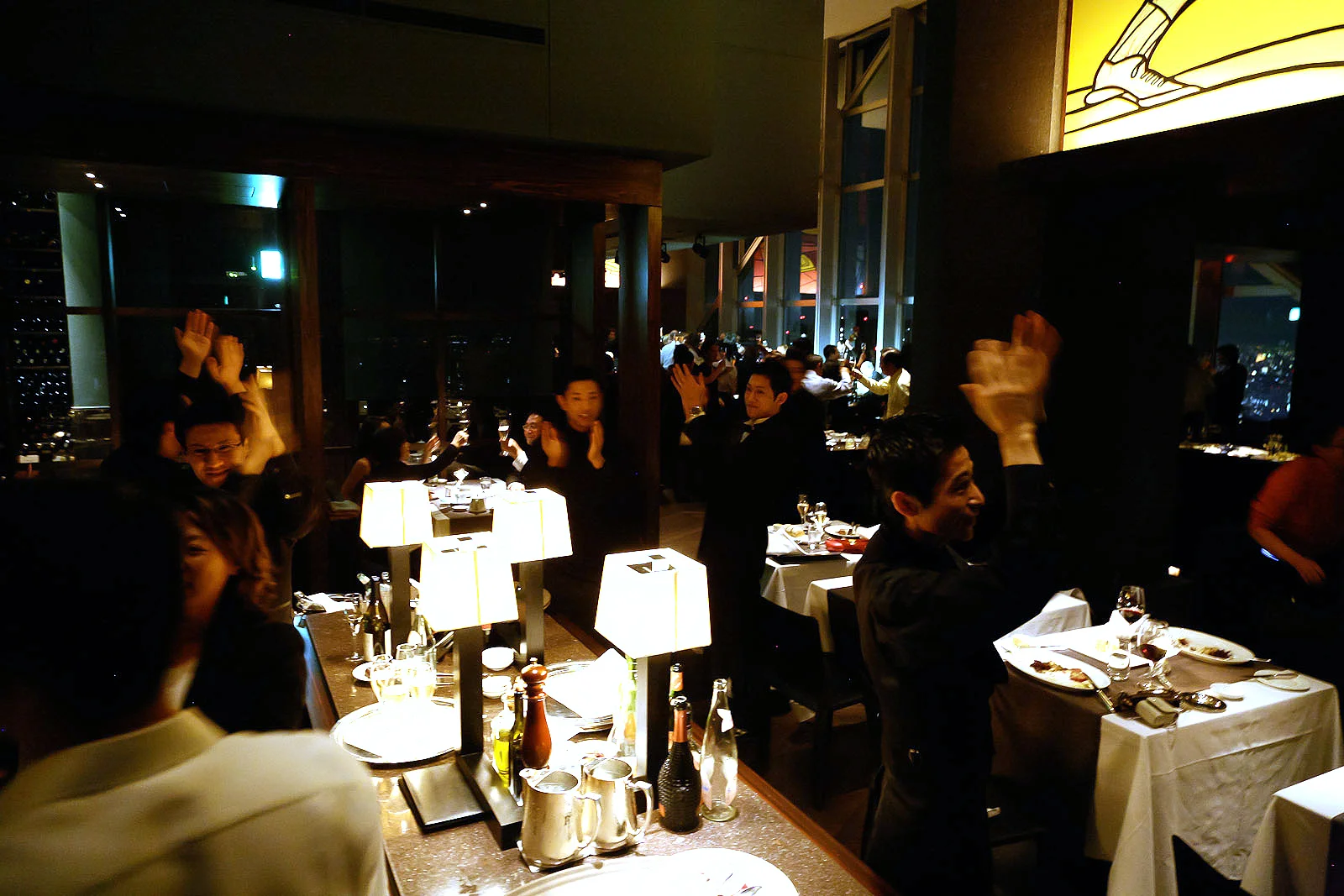
The New York Grill and its adjacent bar sits atop the 52th floor of the Park Hyatt in Nishishinjuku, Tokyo. This hotel, and in particular its rooftop bar, was made famous by the 2003 movie Lost in Translation. As in the movie the bar, with its somber spot lighting de-emphasizing the interior and emphasizing the breathtaking views of Tokyo, has to it an ethereal quality where visitors are at awe by the twinkling panorama while simultaneously in disbelief they are actually there. Or maybe that's just the jetlag. The restaurant, paneled with art deco paintings by Valerio Adami, has gone through several chefs over the last five years, the most recent of whom, Nadine Waechter Moreno, took over as Chef de Cuisine in August of 2010. My experiences at the Park Hyatt were under the previous chef, Stefan Moerth.

L'Osier

Why eat French food in Tokyo? Because it's usually better than in France! Located on the second floor of its own two-story building in Ginza, L'Osier perches over the surrounding street lined with designer stores and Tokyo's fashion-savvy shoppers. L'Osier is both style and substance, however; its plates both visually stunning and delicious. I had a meal here in 2006 and never got around to posting it. But I have such strong and positive memories about my experience here that it would be an injustice not to share it. I'm going to post what I remember based on my notes. I ate here before Michelin came to Tokyo and rated this restaurant three stars. It's interesting to see how this restaurant seems to have only gotten better since then.

Koju

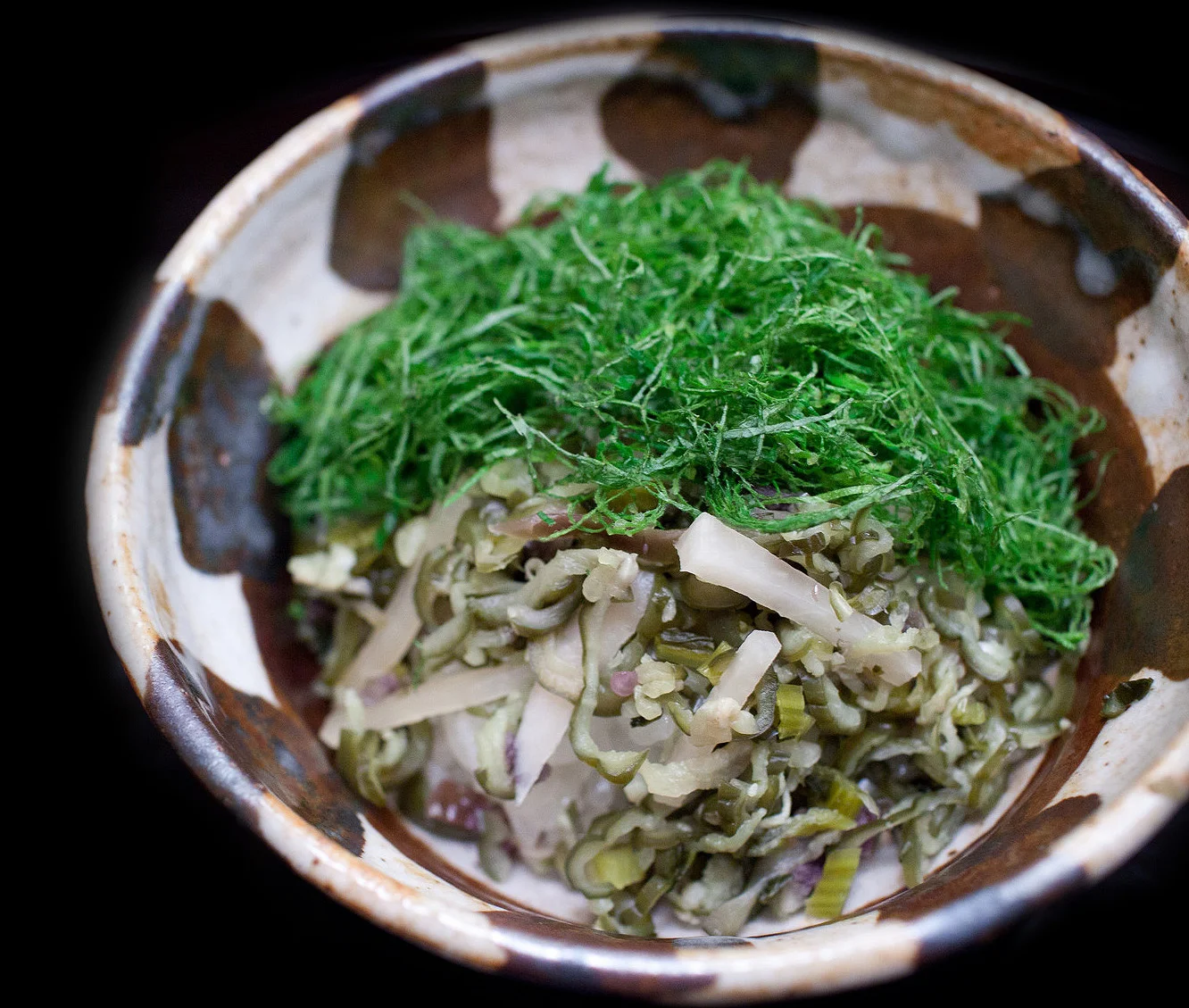
The simplicity and minimalism of Japanese cuisine never cease to amaze me. Particularly with traditional kaiseki, sauces and spices practically don't exist. Instead of flavoring the ingredients in a dish with external condiments, ingredients are chosen for their own intrinsic flavors. This ingredient-focused approach took a bit of getting used to; in fact the first time I tried kaiseki, I didn't like it. I thought the flavors were dull, repetitive, and boring. But the more I ate it and the longer I spent in Japan, the more I began to appreciate it. My barometer of flavor reset. Instead of loud spicy Thai cuisine full of spices and herbs, or very sweet and sticky Shanghainese cusine, Kaiseki lies flat in the middle: nothing too sweet, salty, or sour. It is a cuisine of modesty and humility where the natural flavors of the ingredients are put on a pedestal to shine.

Kozue

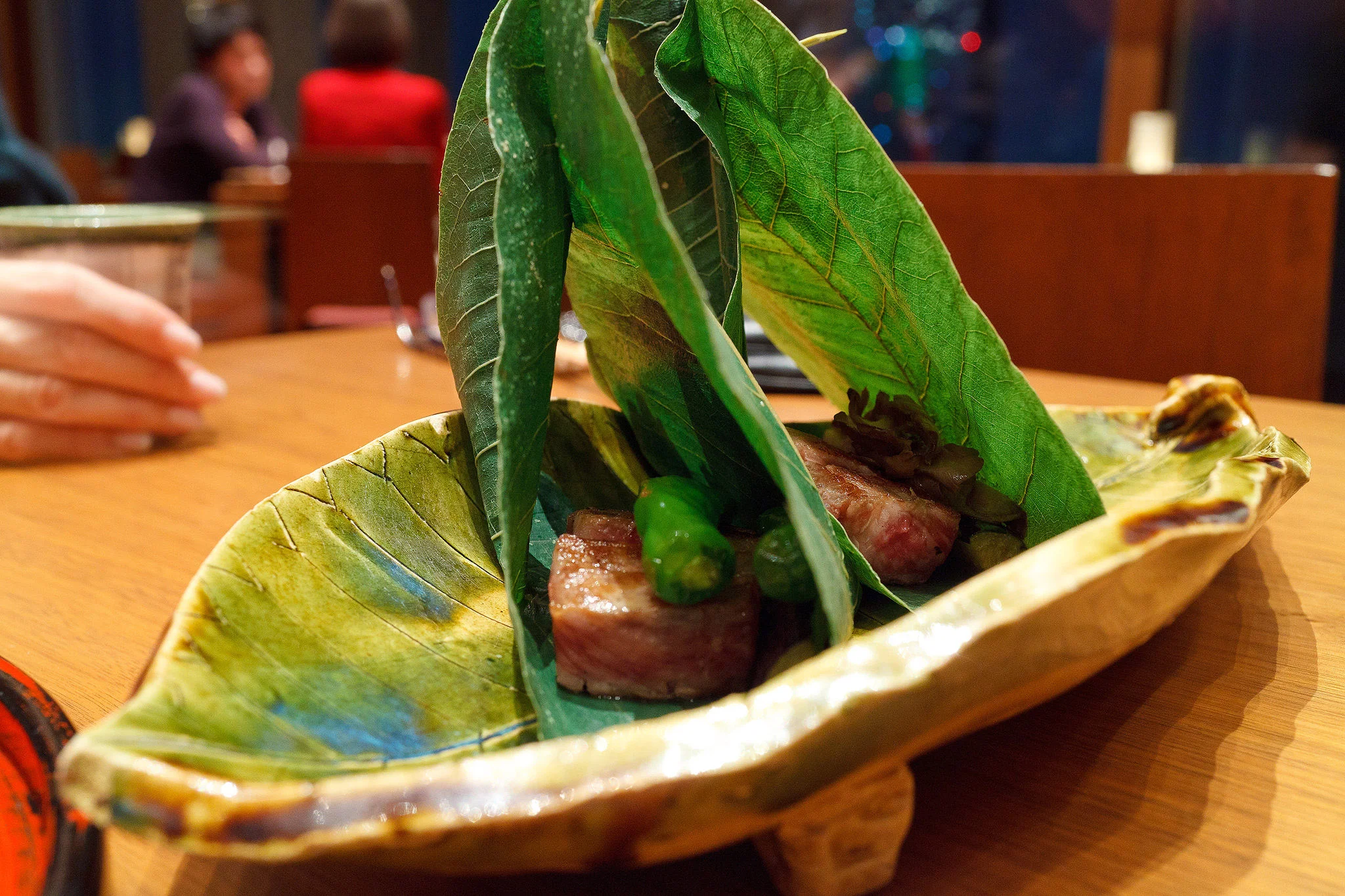
Traditional amber wood and handmade pottery carried by waitresses in kimonos contrast against floor-to-ceiling windows and granite slabs overlooking one of the most impressive restaurant views in the city. Such an explicit juxtaposition of the traditional with the modern -- two concepts whose constant interplay largely defines Japanese culture -- contributes to Kozue's uniqueness. The dishes themselves are very traditional in flavor -- there are no "twists" -- but their presentation and the finesse with which the waitresses explain their components make this type of cuisine extremely accessible to westerners. The views from the restaurant are phenomenal. Perched on the 40th floor of the Park Hyatt, Kozue faces west. On a clear day one can see as far as Mount Fuji. The restaurant's policy is not to guarantee window tables -- even for hotel guests -- but I think it's worth waiting around for the next window table to become available.