Di Fara

New Yorkers take their pizza seriously. Perhaps that's because of New York's Italian roots, considering 30% of Italy immigrated to New York at the turn of the 20th century. The majority of these immigrants emigrated from the south, from areas such as Naples and Sicily, carrying with them recipes, traditions, and skill to turn mere flour and water into one of the most delicious foods ever created. It is no coincidence, then, that New York has been labeled by many as the pizza capital of the world. But is it really? Truth be told, a visitor to America's pizza home may not feel the same way. While great pizza in this city can be found, the majority of pizzerias serve mass-produced pies lacking any sort of character or flavor. With the viral growth of chains like Sbarro, Famiglia, and "CPK," most of the city's great pizza has moved from an Italian artisan craft to the product of a big city assembly line. A relatively mundane mix of ingredients, in theory, pizza should be simple. But simple ingredients lend to complex preparation intricacies that, if left to the wrong hands, can result in a pizza that tastes terrible. Let alone soulless. A lack of skill, care and quality ingredients can lead to soggy crust, excessively salty cheese, oily residue, and a frown. Great pizza is no easy task.
Urasawa

There are few chefs who tell a story without speaking, who can transport diners to a far away place without ever stepping on an airplane, and who can make diners feel at home and comfortable without taking off their shoes. Chef Hiro Urasawa is one of those chefs. And he does it all with a wide smile. Perched on the second level of the luxurious Two Rodeo shopping center, Urasawa sits above some of the most famous designers in the world: Fendi, Cartier, Tiffany, Prada, Cerruti and Versace to name a few. But unlike the downstairs world of fashion and style, upstairs flavor rules. But it's not like the outside world is hidden; in fact, sunlight pours in through the large windows overlooking the most famous shopping street in the United States. Rather, the simplicity of the space combined with Chef Urasawa's humility, sense of humor, and genuine good nature encourage pretense and entitlement to be left downstairs. Without a doubt, the combination of Chef Urasawa's personality, skill, and selection of ingredients made this my best sushi meal in the United States.

Le Château

Fauchon, Pierre Hermé, Tailellevent, Jean Paul Hévin, Hédiard, Alain Ducasse. This list of restaurants and patisseries may seem like a page from a Paris guide book, but it's not just the French who enjoy French cuisine. In fact, Tokyo is the city with the largest number of French restaurants outside of Paris. And if its hungry foie gras-craving citizens are any indication, the Japanese might even demand French food more than the French. It is no surprise then that Joël Robuchon has set up shop in Tokyo with over five different locations. And considering he has more restaurants there than France, Japan may even be considered his home base. Don't forget: this is where L'Atelier started. Surprised by that? I sure was. Imagine my curiousity (not to mention my appetite) when I learned of Chef Robuchon's "Château" in Tokyo. While I'm a huge admirer of chef Robuchon, unfortunately I've only had the opportunity to visit to his L'Atelier restaurants (granted, I have hit the New York, Paris, and Tokyo locations). Visions of the place that has been called the epitome of French cuisine and elegance in Tokyo began to fill my head. And it seemed like Le Château would be a nice place to take my mother, my guest for the evening, who was visiting me that week. We fasted for the morning in anticipation of an evening full of French food and wine. It should be noted, however, that my fasting attempt lasted only until noon (I woke up at 11).

L'Atelier de Joël Robuchon

No matter the time of day, my appetite, my clothing, or my food preference, L'Atelier always seemed like the right place to go, and I think that's a really important quality of a favorite restaurant. Considering the amount of times we've eaten here, it would not be an exaggeration to say that Aaron and I have tried everything on the Fall 2006, Winter 2006, Spring 2007, and Summer 2007 menus, and even some of executive chef Yosuke Suga's experimental dishes. Maybe this is why L'Atelier is perhaps our favorite restaurant in Manhattan. L'Atelier's location inside the Four Seasons Hotel might suggest a level of stuffiness, but this is quickly eliminated by Joël Robuchon's unique sushi-bar style seating, which forces complete strangers to talk with, rather than about, each other. This setup also means that the final platings are done directly in front of diners, allowing them to have an increased appreciation of the work that goes into each course, while cleverly hiding the messier kitchen elements behind closed doors. The energy from the adjacent Four Seasons cocktail lounge also flows into the restaurant, setting a lively tone without airs, something that is very much appreciated in contrast to many other haute French restaurants where the only sound is that of cutlery hitting the plate.

Pierre Hermé

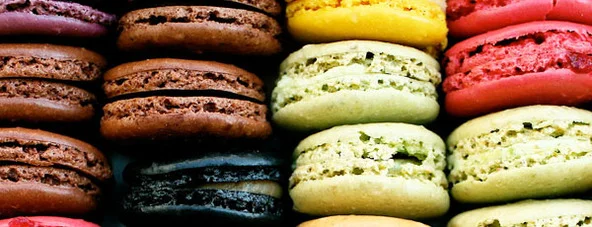
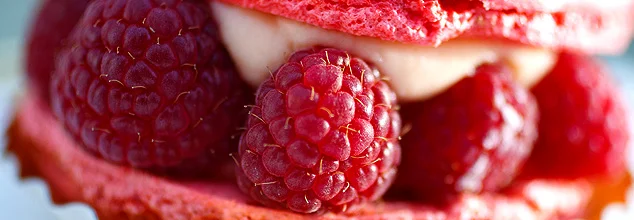
Macarons are my favorite cookies. There's something very special and unique about the versatility of these texturally perfect special treats: light enough for a snack, fancy enough for a gift, yet tasty enough for anytime of the day. Is there any meal that wouldn't pair perfectly with a macaron? I certainly can't think of one. They even come savory, as seen with the foie gras macarons at Eleven Madison. You can only imagine my excitement to find out that Pierre Hermé would be along my walk to school, and also, ironically, on the way back from the gym. But so far, in the two weeks that I've been here, I'd always woken up a little too late and had to walk quickly to classes without time to stop by. And by the time classes end, Pierre Hermé was always closed. My nutritionist friend would be proud; that is, until this past Sunday, when I made it the day's goal to stop by while it was open, and finally taste the wondrous goodies Pierre Hermé had to offer.